How Hinduism Made Me Love Jesus Again

The first Hindu I met was Mahatma Gandhi.  Actually, it was Ben Kingsley in the epic 1982 Richard Attenborough film Gandhi.  I was a senior in high school, and the life of the man who was arguably the most important worldwide figure of the 20th century was, for all rights and purposes, beyond me.  But I remember one statement made in the film and by the actual Gandhi himself: “I like your Christ; I do not like your Christians. Your Christians are so unlike your Christ.” 

Little did I know that hearing that sentence may well have been the first step of my thousand-mile deconstruction journey.  For the next several decades, I would lean farther and farther away from the fundamental, evangelical, protestant Christianity of my childhood and deeper and deeper into the freeing, expansive, profound spirituality I came to realize was ultimately Advaita Vedanta, a.k.a. Sanatana Dharma, a.k.a. Hinduism. 

The religion I left behind was a set of rigid beliefs. Because of that rigidity, it only took one question, one moment of doubt, one raised eyebrow to bring the whole shebang tumbling down. There was great serendipity in the church’s homophobia — it broke the chain binding my questioning mind. 

The spirituality I embraced was a direct experience of Divine Presence.  Advaita Vedanta is the spiritual path of non-dualism.  Rather than a God who is Thou and a me who is pathetically crawling toward the cross, nondualism recognizes the Oneness of all creation, the Unity of all life.  On this path, God is not a being you seek or invite in — She is already there, in you, in me, in all of us, . . . the very life of all of us. 

As I began to know a few more Hindus, I met some who actually keep a picture of Jesus on their home altar right next to their statue of Krishna.  I began to realize that what Gandhi had said all those years back was a fairly common opinion. Hindus had no trouble with Jesus. In fact, many Hindus deeply love Jesus. The Hindu mystic and teacher Ramakrishna even placed Jesus into the Hindu pantheon in the 1870s. This non-restrictive acceptance of any worthy guru opened the door for my own reconsideration.  

I began to read the gospels again through Hindu eyes. I began to see the nondualism of Jesus so clearly.  How had we missed it?  If “the Father and I are one” and “you will do greater things than I have done,” then the Father and this I were one also; the Mother and I shared the same DNA.  Jesus didn’t come to set himself apart; his entire life was one of connection, compassion, and oneness. Considered away from the rigid set of beliefs, I began to see him anew.  

The French poet and writer Charles Pe’guy (1873 – 1914) wrote that “Everything begins in mysticism and ends in politics.” The Benedictine monk David Steindl-Rast (1926 – ) paraphrased it more directly: “Every religion begins in mysticism and ends in politics.” 

The church of my youth has turned into a political force.  But Jesus started it all in mysticism, and that was the Jesus I learned to love again. Not as a Christian. Not even as a Hindu. But as a devotee of Oneness.  

Just like him.     

Letting Everything Go

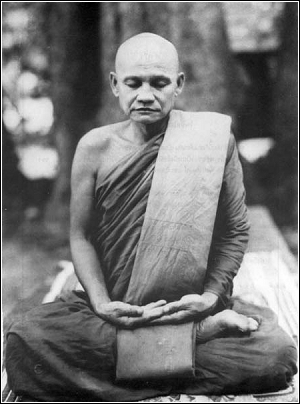
Ajahn Chah (1918 – 1992)

Letting everything go is the spiritual concept I return to over and over. I have spiraled up through the years, elevating my consciousness, but always returning, again and again, to the need for something to be released and the lessons brought by letting go.

The practice of releasing attachments started as a wall against which to kick and scream and beat my head. Over time, it became a closed-bud promise, the kind I knew would bloom one day but still tightly shut against full surrender. Eventually, ever so slowly, the lotus began to open, and wisdom wafted forth like a fragrance in the air.

The Thai Buddhist monk, Ajahn Chah, said, “When the heart truly understands, it lets go of everything.” For me, the opening of the lotus was initiated by the first part of that sentence. During times when releasing everything seemed downright impossible or even a bit irrational, I would choose to focus on a deep and consuming desire for a heart that truly understands. If I couldn’t quite let go, at least I could lean into love. And when I couldn’t do even that, there was always grace.

Grace is when our hearts feel the pull of the divine even while we maintain our death grip on our ego’s desires. Grace is the sacred ability for even our attachments to become guideposts to spiritual awakening. Grace is knowing we are only love even while still feeling the pull of our needs and wants and attachments.

Ajahn Chah also said, “Anything which is troubling you, anything which is irritating you, THAT is your teacher.” And the primary lesson it teaches us is that all the time we’re thinking it has its claws in us, we actually have our claws in it. We can open our hand, open our heart, and learn once again the freedom of letting go.

And when we’ve let go of everything, . . . then we are free.

To Forgive . . .

. . . is to set a prisoner free and discover that the prisoner was you. Those are the words of the theologian Lewis B. Smedes. 

I’ve been thinking a lot about forgiveness lately and its intimate relationship to spiritual awakening. Whether we are talking about forgiving another person or forgiving ourselves or forgiving our past or forgiving our resistance to forgiving — whichever it may be — what we do not forgive, we have not released.  We’re still attached to it. We delude ourselves into believing that it won’t let us go, but the truth is, we won’t let it go. And our awakening happens when we have completely uncovered our true Divine self.  Trying to step into the pure light of grace while dragging that unforgiven baggage along is like trying to dance in a suit of armor. 

I had some work-related conflict with someone a few years back, and he came to see me just recently.  He had been through some challenging times in the years since I had seen him. He looked different. Softer. Kinder. Humble. He sat in my office and said that he wanted to make amends, that he knew he had been difficult in the past, even brash and unpleasant, and he knew I had been on the receiving end of some of that.  He looked me right in the eye and said, “I wanted to tell you that I’m sorry and to ask your forgiveness.” 

I told him he had it.  I told him that I admired his courage and strength in addressing this, and I told him that as far as I was concerned, it was all released and forgotten. 

The truth was, I had released it long ago. He didn’t really need my forgiveness, because I was holding onto nothing that I needed to forgive. The act in which he was engaging was a way of forgiving himself. It was an act of acknowledgement and an act of reconciliation, but at its core, it was the release of something that had clung to him even if it no longer clung to me. And I was happy to be there to participate in his ritual to set himself free. 

That freedom is what every person wants. That freedom is the goal and result of spiritual awakening. When I know who I am and when all those parts of the ego that feel pain and feel betrayal and feel any sense of separation or distrust or fear fall away like tissue paper in the rain, then I am free, and nothing can infringe on that freedom. 

The spiritual journey to awakening is the act of removing layer after layer after layer of ego until nothing is left to cover the Divine Presence that you are. Forgiveness is the removal of a layer. Forgiveness is taking off the suit of armor. Forgiveness is setting a prisoner free.

The more we engage in forgiveness, the freer we are. The more we live in the constant attitude of forgiveness, the more compassionate and loving we are. The more we practice a daily forgiveness of ourselves and our past and the people who are a part of our life, the more we live in spiritual fullness and joy. 

If you want to be fully awake and fully free, forgive everything. 

Yellow Wood

Those roads diverging
are everything.
The simple question
followed by a 
thought experiment,
as if my inner
all-knowing eye could
look fully down each path.

And then a choice. A or B
You could choose A.  
Go to A’s college and work
at A’s career and marry
A’s lover. Have A’s children,
invest with A’s money,
retire at A’s time. 
And maybe wonder, 
wonder always
where B would have led. 

The small religious college,
not the ivy-trimmed degree. 
The elusive career
discovered too late to
climb the same ladders.
The relationships and the
miscarriage and the should-
have-started-earlier 401k. 
That’s where B led. That’s 
the road taken. 

And from the bench I rest
upon halfway, maybe more, 
down B’s path, I think of A. 
I always see it neatly trimmed, 
all downhill. Maybe there’s even
a bike. But there is 
no you.  And  you
are everything. 


© 2021 Deborah E. Moore, All Rights Reserved