The Old Poet

The old poet
behind a desk
reading aloud
from Frost.
Behind him,
a bookcase
filled with
others’ poems
and a few of his own.

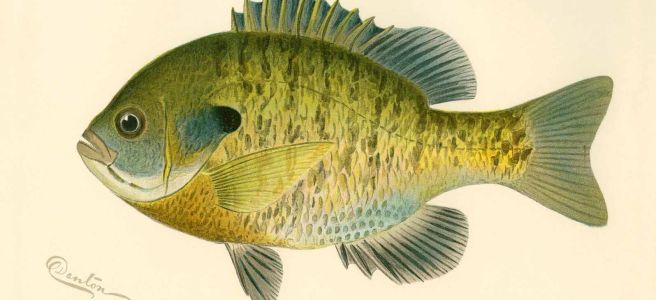
Above the bookcase,
a specimen drawing
of a bluegill.
On top of the bookcase,
between books stacked
and waiting for
a permanent home,
a large feather,
turkey or hawk,
in a mug for soup
long ago surrendered
to pens and feathers.

An Hermes 3000
to his left,
bought new in the sixties,
a well-traveled machine
that has seen Paris,
London, and an
entire season on the
Costa del Sol,
though mostly
untouched then
while the poet
pursued belleza
and drank.

And a shovel,
its handle
propped in the corner
made by the bookcase
and the wall,
waiting to spread
manure or dig
potatoes or take
a side gig as
walking stick
when the reading
ends and the work
of the land
carries on.

The old poet
looks up from
the worn book in
his worn hands
to push the final
words through his
soft stubbled lips.
He closes the book,
assigns reading,
and bids farewell.
A bent finger
clicks the mouse,
and his students
disappear.

© 2020 Deb Moore,  All Rights Reserved

Juxtaposition

So many years
went by when I
didn’t write a word.
Half-finished novels
stuck in exposition.
Protagonists just
setting off on a
hero’s journey,
frozen in mid-stride.

Poems written on scraps
tucked into notebooks
piled in boxes
stacked in a closet.
Epic tales told
in snippets.
Odes to odes.
16-syllable haiku.
13-line sonnets.

Songs, short stories,
essays, comedy routines.
Journals filled for
20 pages,
or 30,
then abandoned,
the thread
picked up later
in another journal.
Eleven journals
covering thirty years,
each with a month here
and a month there
from disconnected years.
A life, cross-indexed. 

But I was busy
teaching people
how to write. 

And when I would come home
from this noble endeavor,
I paid the mortgage and
kept the lights on
and bought the kibble
and gardened
and watched sunsets
from the porch
with you.  

It was this hero’s journey,
a living poetry.
Story after story
I finished.
Whole chapters
on which I
closed whole
books.  

I don’t regret
abandoned manuscripts.
I would, however,
regret missing
a sunset
on the porch
with you.  

© 2020 Deb Moore, All Rights Reserved

100 Novels

100 novels live inside me.

Some I write as poems because I get bored quickly.

Some have a natural hook and a dance beat. They become songs.

A few bloom into a full plot, character sketches, random baubles of backstory.


I finished two.

One lives in a black hole in cyberspace.

The other lives in my memory and on a five-and-a-quarter inch floppy disk.

Both corrupted storage media.


Sometimes, rarely, a novel will arrive in a sense of fullness,

a complete glorious narrative waiting for the telling.

And there it recluses, known only in the flash of my firefly attention.


But what a concept.

What an ending.


Mom’s Advice for Everything

Several years ago, a tiny book called Life’s Little Instruction Book was a best-selling phenomenon.  H. Jackson Browne wrote the book as a gift to his son who was going to college.  If you were alive on this planet 20 or so years ago, you know of this book.  It was everywhere.  I had the privilege of briefly working for the original publisher of the book, jokingly referred to by those of us in marketing as “The House that Jack Built.”

It was such a simple and rather obvious concept.  Despite its simplicity (or maybe because of it), the book spent almost a year at #1 on the New York Times Bestseller List.  Copycat publications began to fall like rain behind it.

As a young writer, I longed for that kind of publishing success and wracked my brain trying to create a similar premise for a book.  Creating the simple is often the most difficult task.

With Mother’s Day just behind us, I’ve been thinking about my mom.  Well, of course.  In the story arc of my time with my mother, what she has taught me is not exactly conducive to book form.  Sure, she has given me quite a few lessons over the years, but there is a definite and predominant theme which would ultimately be the whole of any literary endeavor built around her wisdom.  It has been my mother’s answer to everything:  “Get up and move around; you’ll feel better.”

When I feigned sickness to avoid school as a child, that was her swift reply.  I suppose some mothers might feel a forehead or sit at the edge of the bed in pursuit of further information about the purported illness.  Not mom.  As she would zip through my room, probably putting away freshly folded clothes or (often) running a vacuum cleaner as my alarm clock, she would fling the phrase over her shoulder.  No matter how pathetic I made my plea sound, her response was the same: “Get up and move around; you’ll feel better.”

And the part I couldn’t easily admit as a child was that she was almost always right.  Even when I did have some aches or pains which might have justified my complaint, usually if I just started moving they began to dissipate.

Over the years, I have heard my mother’s voice echoing in my brain on many occasions.  When I was ill or depressed or just in a general funk, I could hear my mother advocating her cure for everything.

When life felt untenable and just generally bigger than me, “Get up and move around; you’ll feel better.”  When a job or my checkbook or the mess in the garage seemed out of control, “Get up and move around; you’ll feel better.”  When my heart or my spirit or my hope was broken, “Get up and move around; you’ll feel better.”

It’s no secret that exercise can combat depression.  My mother knew that far before it became the conventional wisdom of mental health, though in her eyes exercise is a waste of precious time you could actually use to work and accomplish something.  Of all the great wisdom in the world she could have passed on, in her endlessly pragmatic way my mother gave me the one piece that is actually useful in most situations.

I hope my mother is on this earth for many more years.  But, when the time should come for her to slip this mortal coil, this will be my vote for her epitaph: “Get up and move around; you’ll feel better.”