How many poems should an undergrad read? It’s not a riddle or a rhetorical question like licks on a lollipop or the number of years it would take one hundred monkeys to type Shakespeare. It is the dilemma I face again for the 25th or 42nd time devising a reading list for American Literature, 1865 to the Present. I’ve built it, shaped it, tweaked it, trimmed it. I took out Philip Roth and added Toni Cade Bambara. I took out Pound and added Ellison, de- colonizing my syllabus piece by piece, semester by semester. I add up the numbers one more time: white men 13, Black men 11, white women 8, Black women 4. I cling to Frost but release Eliot, trade Fitzgerald for Nella Larsen, and Twain for Chesnutt. I think about the works we’ve read, The voices we’ve heard, the ones we have allowed to shape us, tweak us. How much more we learn about our hidden shames, our hidden selves, from Zora Neale Hurston and James Baldwin than from the retyping of Hamlet or the mimicking of Faulkner. So I pile on Dunbar and Washington and Dubois, Wells and Johnson and McKay, Toomer and Cullen and Wright, I add in Hayden, Brooks, Morrison, Baraka, Lorde, Clifton and Walker, Wilson and Dove and Kincaid. It’s a lot, I know. So I try to ration, pare it down so the students won’t hate me, but how many Langston Hughes’ poems should an undergrad read? All of them. © 2020 Deb Moore, All Rights Reserved
Tag: writing
Maker’s Mark
The finish of my
father’s desk seems
old, perhaps original,
but some brush marks
hint at an ancient
attempt to make things
new. I search in
and out, up and down
for a maker’s mark
or other origin clue,
but only find my father’s
mark. I had to open
the lap drawer, get on
my back on the floor,
under the desk like
a history mechanic,
to see it.
Property of
David W. Moore
Purchased for $7.00
Metropolis, Ill.
Oct. 1962
in permanent
marker. Already old
when he got it at
that flea market or
yard sale before I was
born. And now I have
it, seven years after
he left the earth,
and I run my hands
over the finish and
read his handwriting
again from the iPhone
picture, and I remember
the he who would mark
his things and the
way he marked me,
and I sit here trying
to shrug him off enough
to begin a story about
him.
© 2020 Deb Moore, All Rights Reserved
The Old Poet
The old poet
behind a desk
reading aloud
from Frost.
Behind him,
a bookcase
filled with
others’ poems
and a few of his own.
Above the bookcase,
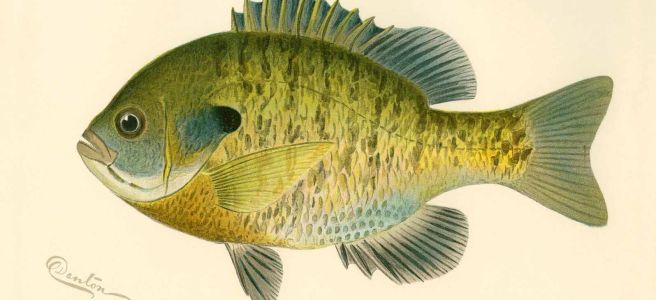
a specimen drawing
of a bluegill.
On top of the bookcase,
between books stacked
and waiting for
a permanent home,
a large feather,
turkey or hawk,
in a mug for soup
long ago surrendered
to pens and feathers.
An Hermes 3000
to his left,
bought new in the sixties,
a well-traveled machine
that has seen Paris,
London, and an
entire season on the
Costa del Sol,
though mostly
untouched then
while the poet
pursued belleza
and drank.
And a shovel,
its handle
propped in the corner
made by the bookcase
and the wall,
waiting to spread
manure or dig
potatoes or take
a side gig as
walking stick
when the reading
ends and the work
of the land
carries on.
The old poet
looks up from
the worn book in
his worn hands
to push the final
words through his
soft stubbled lips.
He closes the book,
assigns reading,
and bids farewell.
A bent finger
clicks the mouse,
and his students
disappear.
© 2020 Deb Moore, All Rights Reserved
Juxtaposition
So many years
went by when I
didn’t write a word.
Half-finished novels
stuck in exposition.
Protagonists just
setting off on a
hero’s journey,
frozen in mid-stride.
Poems written on scraps
tucked into notebooks
piled in boxes
stacked in a closet.
Epic tales told
in snippets.
Odes to odes.
16-syllable haiku.
13-line sonnets.
Songs, short stories,
essays, comedy routines.
Journals filled for
20 pages,
or 30,
then abandoned,
the thread
picked up later
in another journal.
Eleven journals
covering thirty years,
each with a month here
and a month there
from disconnected years.
A life, cross-indexed.
But I was busy
teaching people
how to write.
And when I would come home
from this noble endeavor,
I paid the mortgage and
kept the lights on
and bought the kibble
and gardened
and watched sunsets
from the porch
with you.
It was this hero’s journey,
a living poetry.
Story after story
I finished.
Whole chapters
on which I
closed whole
books.
I don’t regret
abandoned manuscripts.
I would, however,
regret missing
a sunset
on the porch
with you.
© 2020 Deb Moore, All Rights Reserved