How Hinduism Made Me Love Jesus Again

The first Hindu I met was Mahatma Gandhi.  Actually, it was Ben Kingsley in the epic 1982 Richard Attenborough film Gandhi.  I was a senior in high school, and the life of the man who was arguably the most important worldwide figure of the 20th century was, for all rights and purposes, beyond me.  But I remember one statement made in the film and by the actual Gandhi himself: “I like your Christ; I do not like your Christians. Your Christians are so unlike your Christ.” 

Little did I know that hearing that sentence may well have been the first step of my thousand-mile deconstruction journey.  For the next several decades, I would lean farther and farther away from the fundamental, evangelical, protestant Christianity of my childhood and deeper and deeper into the freeing, expansive, profound spirituality I came to realize was ultimately Advaita Vedanta, a.k.a. Sanatana Dharma, a.k.a. Hinduism. 

The religion I left behind was a set of rigid beliefs. Because of that rigidity, it only took one question, one moment of doubt, one raised eyebrow to bring the whole shebang tumbling down. There was great serendipity in the church’s homophobia — it broke the chain binding my questioning mind. 

The spirituality I embraced was a direct experience of Divine Presence.  Advaita Vedanta is the spiritual path of non-dualism.  Rather than a God who is Thou and a me who is pathetically crawling toward the cross, nondualism recognizes the Oneness of all creation, the Unity of all life.  On this path, God is not a being you seek or invite in — She is already there, in you, in me, in all of us, . . . the very life of all of us. 

As I began to know a few more Hindus, I met some who actually keep a picture of Jesus on their home altar right next to their statue of Krishna.  I began to realize that what Gandhi had said all those years back was a fairly common opinion. Hindus had no trouble with Jesus. In fact, many Hindus deeply love Jesus. The Hindu mystic and teacher Ramakrishna even placed Jesus into the Hindu pantheon in the 1870s. This non-restrictive acceptance of any worthy guru opened the door for my own reconsideration.  

I began to read the gospels again through Hindu eyes. I began to see the nondualism of Jesus so clearly.  How had we missed it?  If “the Father and I are one” and “you will do greater things than I have done,” then the Father and this I were one also; the Mother and I shared the same DNA.  Jesus didn’t come to set himself apart; his entire life was one of connection, compassion, and oneness. Considered away from the rigid set of beliefs, I began to see him anew.  

The French poet and writer Charles Pe’guy (1873 – 1914) wrote that “Everything begins in mysticism and ends in politics.” The Benedictine monk David Steindl-Rast (1926 – ) paraphrased it more directly: “Every religion begins in mysticism and ends in politics.” 

The church of my youth has turned into a political force.  But Jesus started it all in mysticism, and that was the Jesus I learned to love again. Not as a Christian. Not even as a Hindu. But as a devotee of Oneness.  

Just like him.     

Letting Everything Go

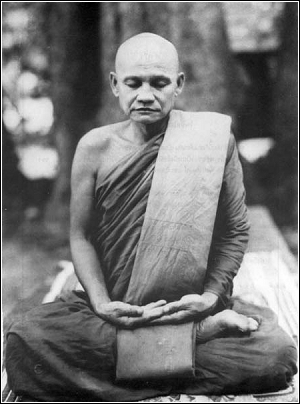
Ajahn Chah (1918 – 1992)

Letting everything go is the spiritual concept I return to over and over. I have spiraled up through the years, elevating my consciousness, but always returning, again and again, to the need for something to be released and the lessons brought by letting go.

The practice of releasing attachments started as a wall against which to kick and scream and beat my head. Over time, it became a closed-bud promise, the kind I knew would bloom one day but still tightly shut against full surrender. Eventually, ever so slowly, the lotus began to open, and wisdom wafted forth like a fragrance in the air.

The Thai Buddhist monk, Ajahn Chah, said, “When the heart truly understands, it lets go of everything.” For me, the opening of the lotus was initiated by the first part of that sentence. During times when releasing everything seemed downright impossible or even a bit irrational, I would choose to focus on a deep and consuming desire for a heart that truly understands. If I couldn’t quite let go, at least I could lean into love. And when I couldn’t do even that, there was always grace.

Grace is when our hearts feel the pull of the divine even while we maintain our death grip on our ego’s desires. Grace is the sacred ability for even our attachments to become guideposts to spiritual awakening. Grace is knowing we are only love even while still feeling the pull of our needs and wants and attachments.

Ajahn Chah also said, “Anything which is troubling you, anything which is irritating you, THAT is your teacher.” And the primary lesson it teaches us is that all the time we’re thinking it has its claws in us, we actually have our claws in it. We can open our hand, open our heart, and learn once again the freedom of letting go.

And when we’ve let go of everything, . . . then we are free.

Be Your Own Guru

Sometime back in the early 2000s, I had that sentence flash through my brain – be your own guru. I thought it was deeply profound and a unique insight. It had arisen in my spirit in an organic fashion, and it seemed to spring from Source itself. Surely, I was a prophet. 

I briefly considered buying the domain name, writing a book, starting a movement, and being the guru that brought “be your own guru” to the people. Briefly. Very briefly.

Come to find out, a person named Betty Bethards wrote a book by that title way back in 1982 (a book I haven’t read, by the way, so this is not a plug, but it could be awesome for all I know). Then I found another book with the same title. And then several books with almost the same title — How to Be Your Own Guru, Be Your Own Change Guru, Find Your Inner Guru. It seems I wasn’t all that special.

Or, perhaps, we were evolving together and a bunch of us were getting the same message: It’s time to take ownership of our spiritual journey.

Evolutionary shifts are often messy, and the leap to being our own guru seems to have its own share of fits and starts. One of the byproducts seems to be some disenchantment with spiritual teachers. I’ve seen several instances lately of people turning away from gurus they once revered. And I’ve noticed that when people reject teachers I don’t resonate with, that is fine with me, but when they turn against those I respect, I feel an internal pushback. I want to parse the ways in which the teacher’s message must have been misunderstood. I want to bring the person back into harmony with the teacher. 

But when I move beyond that initial moment, I start to accept that everyone’s journey is valid, and their rejection of a teacher is what they need in this moment, and learning to listen to our intuition, learning to be our own guru, is often a herky-jerky affair.

On my journey to self-guided spirituality, I’ve learned to hold loosely to those I revere. We’re on this journey to begin with because we’re seeking answers, and when we find someone who seems to have them, we tend to clutch their teachings with a tight grip. We become a disciple, and we want to spread the gospel of our guru. But every single time I believe I’ve found a guru who has transcended this life and the ego completely, I’ve soon been given the opportunity to witness their humanness.  If I hold them loosely, though, I leave room for what rings true to wiggle into my spirit, and I stop wasting the energy of holding them hostage to my delusion of their perfection. 

If we don’t hold them loosely, then when we see their humanness, we tend to reject them, call them a false prophet, and even wage our own little smear campaign. We call them narcissists and money-grubbers. We sneer when someone mentions their name. Our newfound insight into “truth” might even cause us to judge someone else’s journey just because they are currently listening to that teacher. 

Please note, I’m not talking about the true charlatans. Those who have put on a spiritual disguise to collect wealth and power are their own special kind of repulsive. Preying on a person’s desire for spiritual growth is the lowest of all cons in my book. 

No, I’m simply talking about the many, the increasing many, who have had an insight and felt called to share it with the world. Some might even suggest that I am in that number, and in my very small way, I suppose I am. I’ve learned some important lessons on my journey, and for whatever reason, I feel so led to make them public. So, for those who are listening, and I’m glad that you are, I urge you to hold anything I say loosely. Let it roll around in your spirit. See how it feels. Take it for a test drive. If it feels like truth, you are welcome to it, free of charge. If it doesn’t, well, I’m only human.

Maybe I Know Too Much

Sometimes it feels like my brain is stuffed to the gills — if a brain had gills, of course. In my work, there are certain times of the year that feel like the seven seconds of a bull ride, except the seven seconds goes on for two weeks or even two months.  A life that not all that long ago felt quite manageable and even easy-going has suddenly morphed into a juggling act of meetings and deadlines and unavoidable tasks.  And here’s the kicker — not one of these responsibilities, taken by itself, is all that difficult. It’s the combination, the conglomeration, the complicated stew of stuff that becomes a little, well, crazy-making. 

When you were a kid, did you ever get a jar, poke holes in the lid, and then run around outside at dusk collecting fireflies — maybe you called them lightning bugs — and put them in the jar like a natural lantern or a neon entomology exhibit? Well, if you can remember what it looks like to have 25 bugs desperately searching for a way out with their emergency flashers on, then you have a sense of what my brain looks like during these bull-ride moments.  

And I know I’m not alone. Perhaps you, as well, face these times when it’s all you can do to stay barely ahead of the closest looming deadline. 

During these intense times, we shift from our heart to our head. It feels like a matter of survival. I stop listening to my intuition because I frankly don’t have time. My daily devotional is a to-do list. My meditation is the monotonous hum I enter into while grading paper after paper after paper. My prayer is the plea I give to students to get their work in on time.  And, truth be told, I know they have their own jar of fireflies to deal with. 

At this stage, I know what my calendar says I have to do, and I know what my to-do list says I have to do, and I know what my internal chore-minder says I have to do, and . . . well, I think I know too much right now. 

So, I’m going to take the only time I have, this moment here with you, to unknow some things. I’m going to steal this time, if you will be so gracious as to allow it, to set aside every deadline, and every item on that to-do list, and every piece of writing waiting to be created. For you see, even writing this was one of the fireflies bouncing on the walls of my spirit all week.  I pondered and struggled and tried oh so hard to think my way into a heart message. And it really can’t be done. 

When it comes to the life of the spirit, it is possible to know too much, to know so much that you become ineffective. From an overwhelmed brain we receive stress and frustration. This stress and frustration can lead to depression or anger or even illness. The antidote for an overwhelmed brain is an overflowing heart. 

Now, let’s be clear, I’m not anti-intellectual. The brain has skills we need, and I’m glad it knows things. But the brain is a tool, not the boss.  When it becomes the boss is when we have problems. In our busiest times, it’s easy for the brain to feel so indispensable that it thinks it’s the boss. And because our heart doesn’t blow its own horn as the brain does, it just sits there quietly waiting for us to remember it, waiting for us to realize that maybe we’re knowing too much and not feeling or being or loving enough. 

So for this moment, I’m going to trade my to-do list for beingness and my deadlines for awareness. I’m going to sit here in this moment, with you, and let my consciousness expand into awakening. I’m going to release my stress and frustration and for just this moment feel only love and peace and joy. I’m going to remove the lid of the jar and let my light shine freely into the world, sending that love, peace, and joy to anyone with a willingness to receive it. 

Do you feel it? 

Yeah. Me, too.  

Namaste.