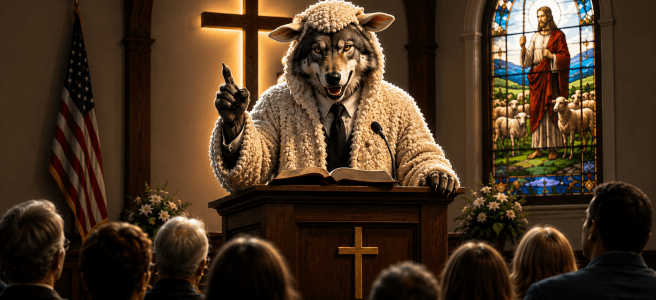
Reverend — More or Less

I hold the title of Reverend because of my studies with a seminary.  I use this title in my work as the community minister of Many Paths Spiritual Center in Goodlettsville, TN.  It is a title that has some legacy for me.  

My father was a minister. And my grandfather, and my uncle, and three of my first cousins.  Although there is some variety in the denominations represented in my family, for those I just listed, the title Reverend means that they are ordained to be a Christian pastor in a Protestant Christian denomination.  

I am not a Christian.  My deconstruction began in my 20s and has continued now for four decades.  That process included, as it does for most people, deconstructing the language of religious heritage.  I had to rethink heaven, hell, god, sin, salvation, baptism, and pretty much every word contained in the Christian Bible.  One of those words is “reverend.”  

If we go back to the font of all knowledge, the dictionary, we read that “reverend” is a title given to a member of the clergy, and if we look up clergy, we see that this refers to someone ordained to perform pastoral duties in a Christian church.  So why do I, a non-Christian, who ministers to an interfaith community with a diverse array of spiritual paths, use this word?  

Well, first, I earned it.  I graduated from the ministerial program at All Faiths Seminary, and my successful completion came with the earned honorific of “reverend.”  

Second, I perform the duties of ministry.  I speak every Sunday at 11:00 a.m. to a group of amazing souls with whom I am privileged to share the journey.  I listen to congregants’ personal stories and offer what words of comfort or encouragement I have to give.  I will pray with them or for them.  I carry their hearts in mine and do my best to always be a source of compassion, acceptance, and love.  

Third, other words don’t seem to work.  I am not a priest or a rabbi or an imam or a lama or a guru or a shaman.  I haven’t earned those titles.  Also, I’m sensitive to the potential for cultural appropriation which might unnecessarily offend.  I might like being a rabbi or a guru, but I was raised culturally Christian, and those words belong to other traditions more naturally.  If I traded in “reverend” for anything, I suppose it would be “teacher.” 

Fourth, sometimes a Reverend is just what a congregant needs.  I love the people with whom I am in spiritual community.  I consider them friends.  But I always want them to know that they can come to me and say, “Deb, right now I need my minister.”   

I had to reframe and reclaim a whole lot from my religious upbringing.  I had to decide what could stay and what HAD to go.  Jesus stayed.  Christianity, or what it has become over time, that went. Love stayed.  Judgment went.  Inclusivity stayed.  Exclusivity went.  

I thought the family business of ministry would be a casualty of my deconstruction as well.  And then the path I followed led me back to something that felt familiar and also brand new.  I don’t preach.  I don’t convert.  I don’t insist anyone follow a specific path.  But I do minister, and I feel the responsibility of that calling as a beautiful and joyous burden to carry through this life.  

Reverend Moore was my father, and Reverend Moore is me.  Or as my congregants call me — Rev Deb.  The man my father was would be appalled at the Reverend I am today, but I believe the version of him that now exists only on a spiritual plane might just be smiling.  

Unlimited Compassion

I posted a meme to social media recently quoting an influencer named Pastor Brandon.  His quote, the one I liked so much that I stole it, is “When I stand before God, I’d rather answer for loving too freely than explain why my theology made people feel unwelcome at His table.” 

It reminds me of another favorite quote by another minister, Rev. Eston Williams: “At the end of the day, I’d rather be excluded for who I include than be included for who I exclude.” 

Though my personal spiritual journey may differ from these two Christian pastors, I welcome anyone into my energetic circle who maintains inclusive guiding principles such as these.  Because, let’s face it, our world could use all the welcome-home, lemme-give-you-a-hug, soup’s-on kind of acceptance it can get these days. 

Of COURSE, someone had to leap onto my post and make this comment: “Loving does not mean condoning. Compassion can coexist with strict adherence to God’s laws.” 

But can it?  Can it really? And what precisely does one mean by “God’s laws”? 

Let’s deal with the laws first and get my response to the poster out of the way.  My reply was: “Humans made all the laws. The closest thing we have to a divine law is when Yeshua said to love God and love our neighbor as ourself. Everything else is debatable through various lenses of interpretation and culture.”

But the far more important question here is the one about compassion and just what it can and can’t coexist with.  Compassion and judgment don’t seem to be natural friends.  Judgment comes from a place of moral superiority, a sense of rightness in the face of another’s wrongness.  It comes from believing we have the ultimate definition of “God’s Laws.” The Buddhist nun Pema Chödrön said that “Compassion is not a relationship between the healer and the wounded. It’s a relationship between equals.”  The delusion of moral superiority cannot exist in the same space as true compassion because it assumes inequality. 

Another part of the commenter’s phrase that slips by almost undetected is “strict adherence — Compassion can coexist with strict adherence to God’s laws.” 

I’m probably stepping into a deep pool here, but I’m a swimmer, so let’s do it. In and of itself, there is nothing wrong with “strict adherence.”  I’d like to live a life that strictly adheres to love and joy and freedom and spiritual expansion.  Yet I’ve found that doing so inherently leads me away from words like “strict” and “adherence.”  Compassion, just like love and joy and freedom, requires suppleness, flexibility, an artistic walk with the sacred rather than a lockstep adherence to a prescribed set of dos and don’ts. Compassion requires an ever-present awareness of how my sacred urging can meet the needs of the one in front of me, not a creed or manual or how-to book.  Compassion requires that I stay awake to the moment, not that I memorize ten commandments or twelve steps or eight beatitudes.  

Mostly, I wonder what compels someone to rush judgment into a declaration of inclusion.  Why the urgent need to counterbalance an expression of love? 

So much in this life leans toward the other side of the scale.  It just seems to me that unlimited compassion might be a good way to go.  

Soup’s on.  Get you a bowl.  

Barbara

I make myself sit still to
write, to think, to feel
who you were to me all
those years ago when
I was a lost child with
emotions too large for my
body and no place to store
them until I could understand.

You gave me a space to be
honest and verbose and lost
in safety. Lost
in arms always open.
Lost in love with no
conditions.

You gave me the country and
tick checks and canoeing
the Finley with the children
everyone thought were the reason,
your children, a year above and
below me, who provided cover
for my true purpose — to be held
to your bosom, to be mothered.

Hearing you died landed as
an anvil. Despite the memory
you had already released and the
hospice and the impending
truth I knew would come, still,
knowing that for the first time
in my life I was on the earth
without you forged iron grief.

Before I knew you, you were
here. After we moved away, you
were here. And during those sacred
years of blooming in a sanctuary
you built for me, you were
here, always here. And now
I’m here without you, and
I feel a little lost. Not sure
what to write, what to
think, what to feel.

Nothing has changed.
You lived your life there,
and I lived my life here. We
stopped being daily parts of
each other decades past.

No, nothing has changed, but
it didn’t need to. Because
you loved me enough in two
years to last a lifetime, and that
changed everything for me,
how I understood love and
the world and my space in it.
Everything changed when
you loved me back to myself.

Myrtle Dance

The night before the full
moon, I make plans. A
Beltane fire will be lit, wine,
the remembrance of
the light within and
a solemn bow to all that
grows and causes
growth.

I will journal and cut
cords, chant harm ye
none under my breath,
simmer cinnamon and
cloves, rosemary and orange
in a cast iron pot to
invoke health, prosperity,
and all goodness.

I will sing to the moon,
inviting the crepe myrtles I
prune and water
during the day to
recognize me in this
new light. I will get
tipsy on the wine, perhaps
even dance round the
myrtles believing they
dance with me.

I will charge my crystals
and myself under the light
of the grandmother.
The dewy night will feel
strange on my skin until
I remember I belong to it.

My wife looks up from her
iPad just long enough
to remind me that our
godson’s birthday dinner is
tomorrow night.

The wine will save.
The moon will understand.

The myrtles may still dance though.