Oh, To Have Been ‘Round the Moon

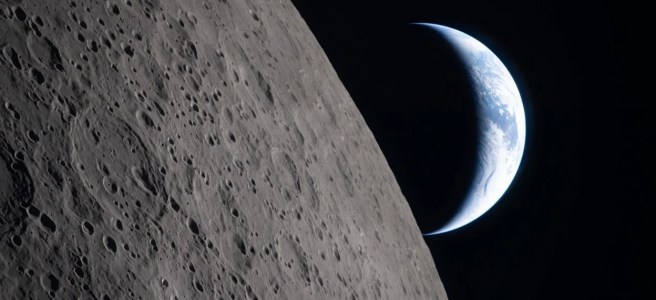
How jealous we all were of the crew of Artemis II. To leave this third rock for even an abbreviated fortnight, to see the world without borders, to be pleasantly news-less.

We think we live in unprecedented times. On one hand, we do, and on the other, these times are grossly precedented. We still fight over religion and land and power and politics, like the ancient Sumerians and Egyptians did. Like the Britons and Vikings did. Like the Muslims and Christians did. Oops . . . do.

The only path to peace I know in the midst of it all is to regularly and meaningfully transcend. Exit the gravitational pull. Step away. The Buddhist Heart Sutra gave us the perfectly concise mantra Gate, Gate, Paragate, Parasamgate, Bodhi Svaha. The meaning is simple: Gone, gone, gone beyond, gone completely beyond. Oh, what an enlightenment.

The most consistent question I receive as an interfaith minister is the question of how we live in this world, how we juggle politics and family, how we maintain bliss in the face of chaos. SHOULD we maintain bliss in the face of chaos. Honestly, I don’t have one go-to answer. I often respond based on how the day feels, what has been shown to me, and/or how the inquiry is couched. I do think we have to be artful with this question — what works one day may not be the next day’s answer.

I do know, however, that the way to be ready for what each day holds is to remember who we are, go into the silence, enter the inner spaciousness where Divine Presence lives in us as us. Succumb to the stillness. Sit still and listen with ears of the heart.

The German poet, Rainer Maria Rilke, wrote a poem that serves as a good reminder of what is real in the beyond. Here it is translated into English by Stephen Mitchell:

BUDDHA IN GLORY

Center of all centers, core of cores,
almond self-enclosed, and growing sweet—
all this universe, to the furthest stars
all beyond them, is your flesh, your fruit.

Now you feel how nothing clings to you;
your vast shell reaches into endless space,
and there the rich, thick fluids rise and flow.
Illuminated in your infinite peace,

a billion stars go spinning through the night,
blazing high above your head.
But in you is the presence that
will be, when all the stars are dead.
Spirituality’s Knottiest Problem

Quick story — in 333 BC, Alexander the Great, who at the time was still merely Alexander the Mildly Impressive, was challenged to untie a complex knot that tied an oxcart. Legend had it that whoever could untie the knot would be destined to rule all of Asia. Alexander took his sword and dramatically cut the knot in half. Problem solved.

The most complex problem I’ve encountered in spiritual evolution is the problem of attachment. It is the knotty topic I find myself returning to time and again in my own practice and the one I get most questions about from others. It is the sticky wicket of awakening.

The idea of releasing attachment is often misinterpreted as relinquishing what we love. We become afraid that our spiritual journey will demand the sacrifice of happiness, excitement, and the delicious joy of anticipation. Even after we become fully aware that the world of spirit has no push or pull, no up or down, no craving or aversion, we wonder what we might miss without them.

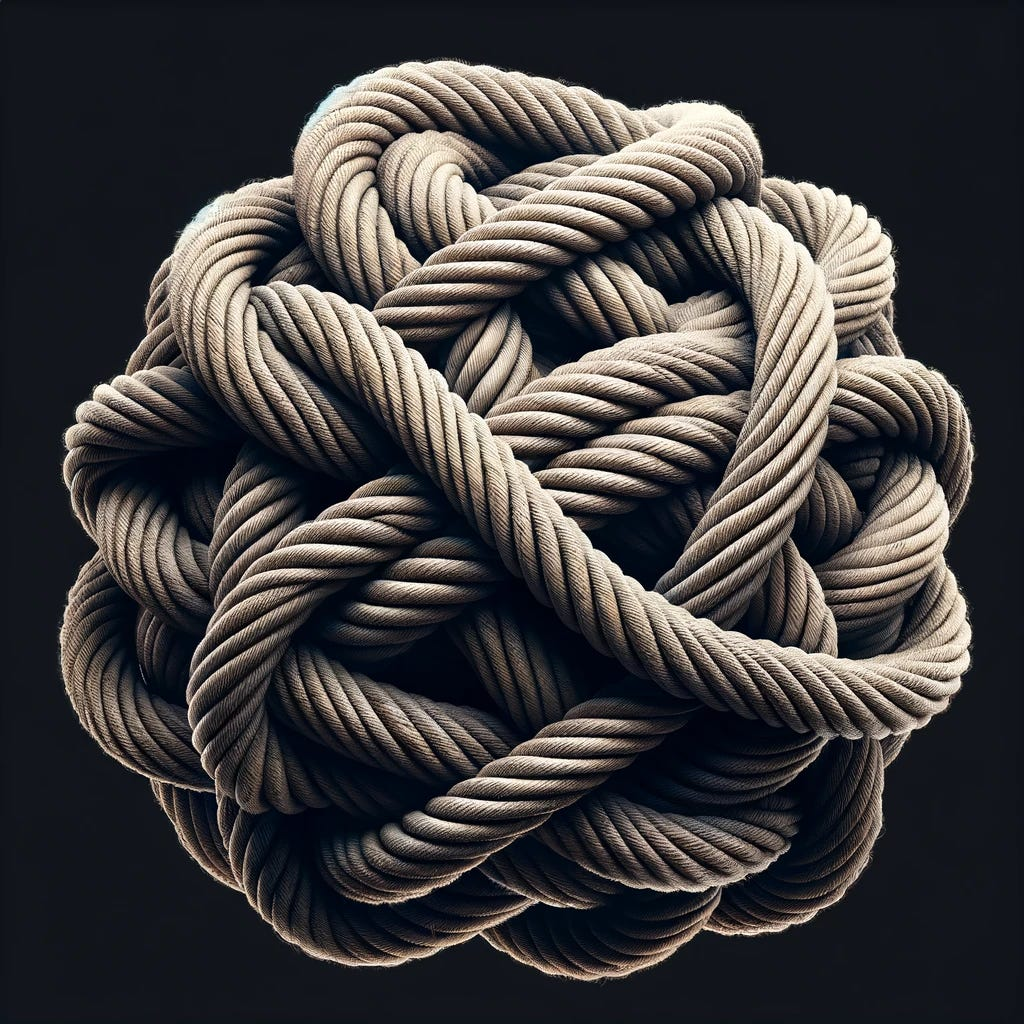
The attachment to even one craving or one aversion becomes a Gordian knot tying our beingness to ego.

But never fear — the metaphor stretches.

The sword that slices through the knot is joy. You see, the great mystical paradox of non-attachment is that we actually make room for more joy. So many parts of this human life are gloriously fun and immensely thrilling. Do all of them, if you wish. Non-attachment never asks you to say no to glorious fun. The attachment is not in the event we crave — it’s in the craving. Whatever you might look forward to, try releasing everything about it except the joy. That means releasing the need for it to happen and the need for it to happen in a certain way. Most importantly, it means releasing the belief that this event is the dispenser of your joy.

True joy exists independently of any happening in the dynamic push-pull, up-down world of material reality. If I go on that trip of a lifetime or not, if I get that new car or not, if I can buy that dream house or not — still joy.

We used to sing a song in Sunday School that borrowed lyrics from a verse in the Old Testament book of Nehemiah. It said, “The joy of the Lord is my strength.” It’s still a maxim that rings true even in my non-traditional, interfaith, syncretic journey. The joy of spirit is my sword. It cuts through every knotty attachment and sets me free.

Practice makes . . .

. . . better. Practice makes that which once seemed difficult easier.

In athletics, and even in playing a musical instrument, or doing any other action requiring motor skills, practice can create something commonly called “muscle memory.” The repetition of an action makes the action more natural and less dependent on intense concentration. An accomplished basketball player might be able to spin a ball on the tip of her finger, for instance, a skill I would find immensely difficult and even, at least currently, impossible.  The basketball player does it almost without thinking. 

Our spiritual journey can also benefit from repetition.  That’s the part we call “practice.” 

I think it’s important that we differentiate between beliefs and practice. Someone can have beliefs with no practice. It’s also possible to have a practice without specific beliefs. But when we combine the two, we create a spiritual life that is alive and growing and engaged and the source of a consistent river of peace and joy that flows through our lives.  Perhaps most important, it is the ongoing practice of our beliefs that strengthens our intuition and allows us to be the primary guide on our own journey. It’s how we become our own guru. 

A spiritual practice can be almost anything as long as it occurs with some regularity and is meaningful to you. Meditation, yoga, mindfulness, mantra chanting, prayer, reading a spiritual text, listening to music that centers you — these are some of the more common spiritual practices. But a practice can also be planting flowers or looking up at the full moon or lighting incense or volunteering or acknowledging the four directions or making good use of that magic wand you bought on a whim at The Wizarding World of Harry Potter.  You give symbols their meaning, and whatever you decide is significant . . . is. 

The paradox is that it’s not the practice, but it is the practice.  Let’s break that down a bit. It’s not the practice in the sense that any physical action or practice we engage in within the temporal realm of ego and this physical existence is not inherently important. The Truth with a capital T is that the Divine Essence that you are remains the same regardless of any act you carry out.  Whether you meditate today or not, you remain the Presence of Divine Love. 

But, in this dynamic life, the life of time, the life of beginnings and endings, it sometimes takes a practice, even just a quick breathing exercise or making prayer hands, to remind us again, and again, and again, of who we truly are and what is truly real.  And in time, we create a spiritual muscle memory that helps us to live more consistently from the core of our being, the place where only love and peace and joy reside. 

That’s what practice can do.  It can help us uncover our Divine Nature, and it can help us live from that place more and more consistently all the time.  It can be the conduit to the the most important discovery of this life — the discovery of the Self. 

But there is one thing practice won’t do.  Practice won’t make perfect. Because it doesn’t need to. You already are.