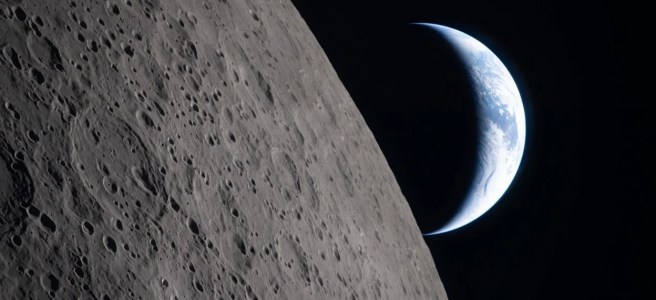
Oh, To Have Been ‘Round the Moon

How jealous we all were of the crew of Artemis II. To leave this third rock for even an abbreviated fortnight, to see the world without borders, to be pleasantly news-less.

We think we live in unprecedented times. On one hand, we do, and on the other, these times are grossly precedented. We still fight over religion and land and power and politics, like the ancient Sumerians and Egyptians did. Like the Britons and Vikings did. Like the Muslims and Christians did. Oops . . . do.

The only path to peace I know in the midst of it all is to regularly and meaningfully transcend. Exit the gravitational pull. Step away. The Buddhist Heart Sutra gave us the perfectly concise mantra Gate, Gate, Paragate, Parasamgate, Bodhi Svaha. The meaning is simple: Gone, gone, gone beyond, gone completely beyond. Oh, what an enlightenment.

The most consistent question I receive as an interfaith minister is the question of how we live in this world, how we juggle politics and family, how we maintain bliss in the face of chaos. SHOULD we maintain bliss in the face of chaos. Honestly, I don’t have one go-to answer. I often respond based on how the day feels, what has been shown to me, and/or how the inquiry is couched. I do think we have to be artful with this question — what works one day may not be the next day’s answer.

I do know, however, that the way to be ready for what each day holds is to remember who we are, go into the silence, enter the inner spaciousness where Divine Presence lives in us as us. Succumb to the stillness. Sit still and listen with ears of the heart.

The German poet, Rainer Maria Rilke, wrote a poem that serves as a good reminder of what is real in the beyond. Here it is translated into English by Stephen Mitchell:

BUDDHA IN GLORY

Center of all centers, core of cores,
almond self-enclosed, and growing sweet—
all this universe, to the furthest stars
all beyond them, is your flesh, your fruit.

Now you feel how nothing clings to you;
your vast shell reaches into endless space,
and there the rich, thick fluids rise and flow.
Illuminated in your infinite peace,

a billion stars go spinning through the night,
blazing high above your head.
But in you is the presence that
will be, when all the stars are dead.

The Modern Mantra

“I don’t want to be here anymore.” 

I’ve been hearing this phrase more often lately.  I’m not talking about a literal determination to end one’s life*, but rather a whale-size disillusionment with the world.

When my spouse hears or reads yet another instance of overt and grotesque racism in our society, for instance.  I’ve tried to be understanding of her position, one I will never fully understand, no matter how hard I want to or try, but it still makes me wince to hear it come from her mouth.  

When she first said it a couple years back, I didn’t know what to do with it.  At first, I took it personally.  How could she possibly desire to leave this life, i.e., ME? After I surgically excised my ego’s narcissistic belief that everything in the world was about me, I was a little better at just letting it be, even while still not completely comfortable with the statement.  Sometimes this world is too much.  I understand that. 

Just this past week, though, I heard a friend relaying a conversation he had wherein the other person said, “I don’t want to be here anymore.”  My friend said, “I told her, ‘Honey, none of us want to be here!’” And then he laughed, and the group laughed, and the moment passed, but I sat there trying to take it in. 

What was I to make of this apparent upward trend in general dismay about existence?  

I get it, of course.  We live in times I never thought I’d see.  We seem to be revisiting ideologies and demagoguery so unevolved and outdated that their return is a sad surprise. The marginalized are more marginalized every day.  The vulnerable, more vulnerable. How can happiness, contentment, peace, and self-actualization live in the midst of all the crapitude around us?

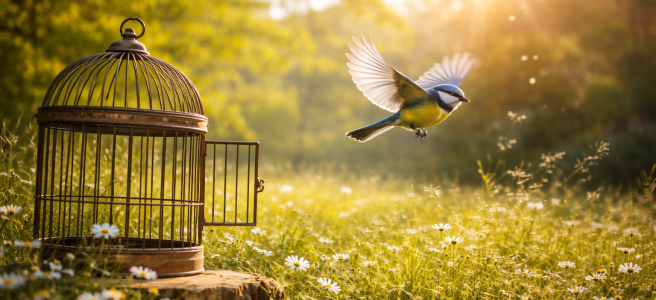
We’re tired of the cage of this era and ready for any freedom escaping it might provide.

A 1997 Italian film called Life is Beautiful tells the story of a Jewish man and his son who are imprisoned in a concentration camp during World War II. To protect his son from the horrors of the Nazis, the man pretends it’s all a game. They are simply playing, and there is still reason to laugh. 

The movie is not really about the Holocaust, despite the setting.  It’s about the strength of the human spirit to overcome obstacles to peace.  It’s about salvaging whatever hope and joy can be found in the midst of trauma and war.  It’s about hope, the hope every generation has held, that we have the power to build a better world for our children.

And, historically, we’ve been right to hope.  The moral arc of the universe really does bend toward justice in the long run. Despots often reach their demise in bombed-out bunkers and international tribunals. The goodness of the human heart ultimately does prevail. 

I can almost hear you say . . . “but in the meantime . . .”  I know.  I know. In the meantime, lots of shit goes down. 

The times are tough, and people are suffering.  More may suffer before this season passes. A lot is required of those who choose to stand in solidarity with democracy and hold the high watch for immigrants and women and the LGBTQ community.  It takes equal doses of courage and compassion to do this work. 

But we are up to the challenge. Just as generations before have answered the call, we have what it takes to meet the moment and direct it back toward justice. We have the strength of will and the strength of heart to make our world safe for democracy again.  We have the fortitude and determination to return our society to one that values its diversity and is proud of its inclusion.

And I, for one, want to be around to see that day.   

*(Note: If you need emotional support, call or text the Suicide and Crisis Lifeline at 988 or online at 988lifeline.org)  
A Time I Knew


Digging a hole to plant some
purslane, I found a penny,
old, worn, thin, dirty. I rinsed
it in the kitchen sink and
squinted, then took a picture
I could enlarge.
1982.
I was 18. Graduated from
high school that May, then
off to college in August. Feeling
grown, feeling alone, feeling
hopeful. The world ahead bloated
with possibility.

If I hadn’t planted the purslane,
the penny might have remained
buried for years or longer,
much longer, until it aged into
a relic from a time no one
would remember.

Like this time will one day be – the
demons and the dangers and the demagogues
of this era rubbed thin and rusted
and hard to even read. Buried.
Spent. Their bloated possibilities
nothing but history, nothing but
the dirt-caked bones of a time
no one will know.

Exposition of a Modern Time

I’ve read this book.  
I can’t remember who wrote it.
King? Atwood? Orwell?  
If the three of them could 
have a love child
(surely possible in
this narrative),
and if that love child
wrote a book,
this would be it. 

A dystopian future
complete with a virus,
an insurrection, 
fearless mobs, 
cages of children,
knees on necks,
wildfires,
deaths,
conspiracy theories behind each,
families divided
like the blue and the grey.

I lived 55 years in a dormant
volcano, mistaking quiet for death. 
What needs to be sacrificed to
the gods to put them back
to sleep? Whom should we throw
from the ridge?

We don’t even talk about the
“new normal” anymore.  
It’s passé.
We make adjustments
that may be permanent
Who knows? 
We hang on  
to shards of hope. 
A vaccine. 
An inauguration. 
A miracle. 
Garden hoses 
aimed at rapids
of lava.

Each climax, the 
narrative arcs up
again. Chapter
after chapter of 
rising action, new
inciting incidents, still 
more characters. 
Epic. 
Sweeping. 
Homeric. 
Absurdist. 

I need John to smoke a doobie
and bring the revelations.
I need denouement. 
I need the movie rights sold
and that film to stay in the can. 
I need a final chapter, 
resolution, 
loose ends tied up
in neat little bows.  

They lived 
happily ever after.  

That was the
ending they promised
us in the seventies.
In the middle-class seventies.
In the white middle-class seventies. 
Wars and epidemics and despots
lived only in history books and 
countries with jungles.  
They never told us we 
were children living 
on the blank page
between chapters.

I’ve read this book, 
but I’m only now living
this story. 
I don’t recommend it
right before 
bedtime. 


© 2021 Deborah E. Moore, All Rights Reserved