I’ll be seeing you . . .

. . . in all the old familiar places, that this heart of mine embraces all day through. You know the song. It was written in 1938 by Sammy Fain and Irving Kahal, and it was recorded by just about everybody – Billie Holliday, Bing Crosby, Frank Sinatra, even as recently as 2020 by Norah Jones. It became wildly popular during World War II when it so perfectly captured the inner longings of those separated from ones they loved.  

When the pandemic began . . . I was in India.  Jaipur, India, to be precise, in the state of Rajasthan. It was my second time in India. On both trips, I had taken students for study abroad. We had ridden on rickshaws through Old Delhi, visited the place where Gandhi was assassinated, walked in and around the magnificent Taj Mahal, . . . but the part of India that reached into my heart was Jaipur. 

If you’ve ever watched the Best Exotic Marigold Hotel movies, first and second, then you’ve seen Jaipur. Most of the filming for those movies was done there. 

When I think of Jaipur, yes, I think of the bazaar and the Hawa Mahal or Wind Palace and the Amber Fort, those places that tourists tend to go.  But those things only come to mind.  The parts of Jaipur that live in my heart are the drums of Rajasthani music, the ever-present incense, the mounds of marigolds at the flower market, the cold soft marble of the floor in my room at Ikaki Niwas, the smells of the dal and chapattis and samosas coming from the kitchen, that spring night when my friends and I ate outdoors under the stars just 24 hours past the full moon of Holi. 

And, of course, the people — both the ones I know and have grown to love, and the countless, nameless ones in the shops and on the street and driving tuk-tuks and pedaling rickshaws and selling mutton tikka on the sidewalk and waiting for the curtain to be pulled away and the god to be revealed at the temple, and putting sandalwood paste on my forehead in welcome, and bowing slightly with the prayer hands of a thousand Namastes. 

That is the Jaipur that this heart of mine embraces.

And just last night, without warning, for no reason, I was there.  I mean, I was in my house in the United States, but for a split second, I was distinctly and absolutely in Jaipur.  It stays with me still.  I could close my eyes right now and feel the marble and smell the incense and hear the drums. 

The English Romantic poet, William Wordsworth, wrote about this phenomenon in several of his poems – the power of memory, the realness of memory, the way a reminiscence can hide in our spirit until it is called upon, either by our conscious mind or something that lives buried underneath it, and then it’s there.  Because once the experience has been ours, it is always ours. 

Wordsworth wrote a poem called “I Wandered Lonely as a Cloud,” but it’s also known as “Daffodils.”  The first three stanzas describe a field filled with thousands of daffodils by a lake.  The last eight lines of the poem summarize the poet’s gratitude for this encounter.  They go like this: 

I gazed — and gazed — but little thought

What wealth the show to me had brought.

For oft, when on my couch I lie

In vacant or in pensive mood,

They flash upon that inward eye

Which is the bliss of solitude

And then my heart with pleasure fills,

And dances with the daffodils. 

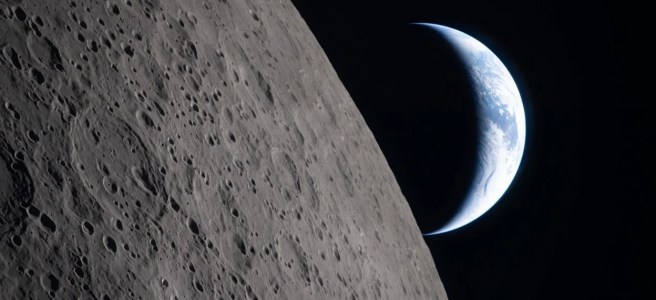
I hope to return to Jaipur one day.  To walk among the marigolds.  To see my friends again. To bow in reverence at the temple. But until I do, Jaipur, I’ll be looking at the moon, but I’ll be seeing you.

Beauty is Truth . . .

. . . Truth beauty. That is all ye know on earth, and all ye need to know.

Those are the final two lines of John Keats’ “Ode on a Grecian Urn.” The poem is considered one of the greatest odes ever written in the English language.  

Here’s the nutshell:  The poet, or the persona of the poem, encounters a piece of ancient Greek pottery which depicts two scenes: one of lovers about to kiss and one of a group of people apparently preparing to offer a sacrifice at the temple.  The entire poem is the poet expressing how this work of art will outlast living people. The lovers will always be young and in love, and the people in the other scene will never reveal the purpose of their journey or their sacrifice.  

Those last two well-known lines are the poet’s conjecture about what the urn would say to all who encounter it.  But those last two lines are also some of the lines most debated by scholars.  What do they mean exactly?  Beauty is truth? Truth beauty?

Recently, I had the honor of hearing Lisa Fischer perform. If you don’t know Lisa Fischer, you should look her up.  She has toured as a background singer for Luther Vandross, Tina Turner, The Rolling Stones and others.  She is featured in the 2013 film Twenty Feet from Stardom, and she is a Grammy-Award winning artist in her own right. 

But all that aside, let me engage in the futile attempt to describe an ineffable performance. Her vocals are simply impeccable. Almost other-worldly. She doesn’t perform songs; she moves into them and takes up residence, inhabiting the words of others as if they sprang from her own experience. She is a musician whose instrument is her body — not just her lungs and diaphragm and tongue and teeth, but her feet and hands and knees and neck. Her talent was not just the greatest I had ever witnessed, but it was greater than I might have imagined was humanly possible.

But there was something more than talent on stage.  I sat through the entire performance with my hands in a prayer position against my lips. The unfiltered display of naked authenticity was almost more than I could take. Somehow I knew that I was watching her very essence — uncovered, unhidden, unashamed, unafraid — and in beholding her highest and truest self free and unfettered, I knew in that instant that this way of being was available to us all.  

For 90 minutes, Lisa Fischer stood at the intersection of talent and authenticity, and it was holy ground. 

She didn’t talk about god or spirituality or faith or a journey.  I mean, other than the tanktop under her tunic that had the chakras running down the back.  She didn’t have to talk about spirituality. The moment itself was sacred, and she was fully in the moment.  And by her silent invitation, so were we. 

That is the power of art — to create an image, a sound, a moment that transcends the material world and shows us the truth of who we are.  Like a mirror that reflects our soul.  

For you see, beauty is truth, truth beauty . . . 

Shepherd’s Pie

Twice I’ve had shepherd’s pie.  
The first time I was maybe three, 
probably two, 
back when children graduated
from high chairs much earlier and 
rode bikes with no helmets. 
Back when I stood in the middle 
of the bench car seat holding onto 
daddy’s shoulder while he drove,
his extended arm my only
seat belt. 

The pie was mother's attempt to
make something special 
on a meager grocery budget. 

Once,
when we were down to our last mason jar 
of green beans, 
my sister and I, toddlers, 
oblivious, 
mom made the green beans, 
seasoned them as if part of a grand meal, 
set the table, 
poured the tea, 
put the beans in a glass serving dish 
          (a cookpot on the table would never do), 
lifted the dish from the counter, 
and then, 
hands wet, 
the glass slipped, 
and the green beans exploded on the kitchen floor, 
spiced with shards too splintered to remove.  
And mom sat down right there
in the middle of the green beans 
and cried. 

The shepherd’s pie happened
around the same time. 
Sixties food wasn’t fancy.  
Grocery stores didn’t stock 
arugula and truffle oil and quinoa. 
Life was more 
meatloaf and mashed potatoes.  But,
shepherd’s pie, it was
all mixed together.  
And was that a pea?
I didn’t like it on sight.  
Dad said, “you eat 
what your mother prepares.” 
I tried and gagged. 
My sister and I slumped in our chairs 
and stared at our plates in terror. 
Dad dug in. 
“You will sit here until your plate is clean.” 

Hours passed.  
Still we sat.  
Still dad glared.  
I think we ate it, but I don’t remember.  I just remember
The sitting and the staring and the glaring.  

Years later, dad said, 
“I sure made some mistakes,
and there are some things I wish I could change.  
I would never have 
made you girls stay at that table and 
eat something you didn’t like, for one thing.”  
His 60-year-old self 
was now embarrassed 
by his 23-year-old choices.  
All I know is 
his stubbornness, his mistake,
made a day I remember 
in a childhood 
I have largely forgotten,  
a bookmark in my story, 
the clearest picture I have 
of my boy father. 

Last night, Nickie made shepherd’s pie.  
She didn’t know the story.  I told her -- 
smiling, laughing, remembering, I told her.  Then
I tasted shepherd’s pie for the first time. 

And then I went back for seconds. 


© 2020 Deborah E. Moore, All Rights Reserved

How to Make An English Professor Cuss

I jumped in to help 
on our college Facebook 
page. A mother posted 
concern about her daughters, 

two of them, who don’t
like online learning,
though pandemic
college can’t be fully

face-to-face, not just
yet, and I thought I 
typed “daughters,”
but I typed “daughter,”

and some man jumped
on the thread and said,
“Daughter are? And you’re 
an English professor?

I’m not surprised.”  And
all 23 years of my career
reared up behind me 
and begged to be allowed

to respond.  They wanted
to say, “You want to go
head-to-head on grammar,
fuckbucket?  Because I’m 

down for that, you inbred
single-celled shitgibbon.”
But I was on the college
page, so I took a couple

of deep breaths and wrote,
“Thanks for the catch!” (Note
the exclamation point. It makes 
it friendlier. It’s how women

are socialized to appear
less aggressive. I would
love to see a study that
compares exclamation

point usage between women
and men, though I don’t 
really need official data.)
As I breathed through my

response, I thought 
about how common
snark has become, toxic
thrusts and parries, and

how people will throw
schoolyard taunts at
others without any 
knowledge of who

they really are.  And
I wondered how this
man would feel if I 
questioned him in a

snide manner about his
life’s work. And then I
wondered if I had ever done
just that to someone. It’s 

possible, though I don’t
recall details. So I looked
in the mirror and let that 
man go. 


© 2020 Deb Moore, All Rights Reserved