Conversion Blues

In the almost 40+ years I’ve been deconstructing my inherited faith and discovering a lived and meaningful spirituality, I’ve known a shit-ton of people.  Each of those people brought a unique perspective from a unique place on a unique path. One of my core beliefs is that all paths lead up the mountain. I deeply value the insight others bring, and I only ask the same respect in return for my own path.  

Overwhelmingly, the people I’ve met along the way have been those who, much like me, walked away from a rigid, one-pointed belief where they were taught to accept a particular ideology completely and put all others into a pile labeled “evil.”  Not “unimportant,” or “useless,” or even “rejected.”  “Evil.”  The evangelicalism of my youth taught me that if I was not 100% pro-Jesus as they understood him, then I was worse than neutral; I was on Satan’s payroll and guided by demons.  

It takes a lot to shake that.  So those of us who do and then find each other are often immensely grateful to have encountered kindred spirits.  And because the deconstruction has included an opening of the heart and mind to the beauty in so many spiritual paths, this group is usually quite diverse.  While often eschewing specific labels, most of my spiritual tribe tends to be those who take inspiration and comfort in Buddhism, Christianity, Hinduism, Islam, Judaism, Paganism, Sikhism, Wicca, and whatever other path one might add to the mix.     

But here’s where it gets weird.  A couple of times, rarely and randomly, someone will come into my circle, usually a younger person, who displays great open-mindedness and a natural bent toward the esoteric and mystical.  About the time I’m thinking, “oh, how wonderful it would be to have been that free so young,” they post something to social media announcing their conversion to Christianity.  And then it builds. They post more and more. Eventually, they share pictures of the mega-church they now belong to.  Instead of the latest Tik-Tok dance, they’re now posting Bible verses.  

Now that, in and of itself, is wonderful.  All paths lead up the mountain, and if this is their path, then I’m so happy they’ve found it. The rub comes, though, when they’ve bought in so completely that their posts begin condemning all other paths.  New Christian converts seem to pass into the “I’ve got to save everyone from hell” phase quite quickly. 

They’ve moved from joy to condemnation without skipping a beat, which makes an awkward dance-move.  

In full disclosure, I’ve seen this happen twice in 40+ years, so we’re not talking about a tsunami here.  I often find that people who open their minds rarely close them again.  And for fear I am misunderstood, let me emphasize that the closing of the mind is not in converting to Christianity; it’s in the off-putting and judgmental sense of spiritual superiority that sometimes accompanies it. 

I’m curious about their path.  I wonder if this will stick or a more expansive appreciation will return for them.  I wonder what the twists and turns will do to them in the dark nights of the soul they are undoubtedly yet to experience — not because they’re Christian but because they’re babies.  I wonder if they will ever again have a moment of darkness in which they see light coming from a Rumi poem or a Buddhist idea or a new moon.  I wonder if they’ll leave room for the mystic Yeshua, the Jesus of the Gnostics.  

So many places they will go.  So many miles down the path that is theirs to trod.  

I don’t judge their path.  I wish them well on it.  I wish them eyes that see and ears that hear.  I wish them peace and freedom.  I wish them an experience of the Sacred that renders them speechless and transformed.  I wish them enlightenment, nirvana, moksha, even if they only ever call it sanctification.  

Mostly, I pray they will see the Jesus they love as a champion for compassion rather than a measuring stick for judgment.  

Oh, To Have Been ‘Round the Moon

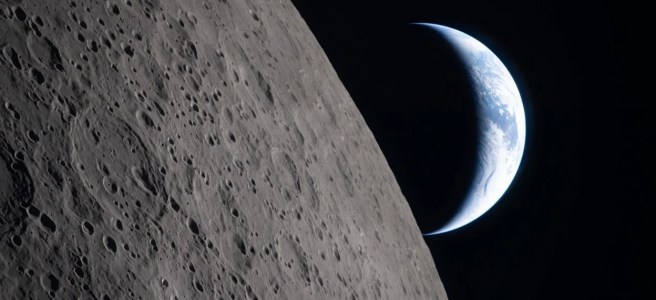
How jealous we all were of the crew of Artemis II. To leave this third rock for even an abbreviated fortnight, to see the world without borders, to be pleasantly news-less.

We think we live in unprecedented times. On one hand, we do, and on the other, these times are grossly precedented. We still fight over religion and land and power and politics, like the ancient Sumerians and Egyptians did. Like the Britons and Vikings did. Like the Muslims and Christians did. Oops . . . do.

The only path to peace I know in the midst of it all is to regularly and meaningfully transcend. Exit the gravitational pull. Step away. The Buddhist Heart Sutra gave us the perfectly concise mantra Gate, Gate, Paragate, Parasamgate, Bodhi Svaha. The meaning is simple: Gone, gone, gone beyond, gone completely beyond. Oh, what an enlightenment.

The most consistent question I receive as an interfaith minister is the question of how we live in this world, how we juggle politics and family, how we maintain bliss in the face of chaos. SHOULD we maintain bliss in the face of chaos. Honestly, I don’t have one go-to answer. I often respond based on how the day feels, what has been shown to me, and/or how the inquiry is couched. I do think we have to be artful with this question — what works one day may not be the next day’s answer.

I do know, however, that the way to be ready for what each day holds is to remember who we are, go into the silence, enter the inner spaciousness where Divine Presence lives in us as us. Succumb to the stillness. Sit still and listen with ears of the heart.

The German poet, Rainer Maria Rilke, wrote a poem that serves as a good reminder of what is real in the beyond. Here it is translated into English by Stephen Mitchell:

BUDDHA IN GLORY

Center of all centers, core of cores,
almond self-enclosed, and growing sweet—
all this universe, to the furthest stars
all beyond them, is your flesh, your fruit.

Now you feel how nothing clings to you;
your vast shell reaches into endless space,
and there the rich, thick fluids rise and flow.
Illuminated in your infinite peace,

a billion stars go spinning through the night,
blazing high above your head.
But in you is the presence that
will be, when all the stars are dead.

How to Not Be Pissed Off

How would you like to live in a world where no one ever pissed you off?  A world where no one ever irritated you or rubbed you the wrong way or made you crazy?  A world where everyone knew how to drive? 

Well, you can.  

I’m not yanking your chain.  You absolutely can live in that world.  It’s not a dream or an always-just-out-of-reach utopia.  

I’m not talking about changing the behavior of 8.3 billion people. That’s silly.  No one would even consider that course of action.  And yet, we seem to live

every. single. day. of. our. lives.

trapped in that delusional endeavor. We know this because we feel the frustration, the anger, the irritation, the insanity.  The only way we can have these reactions is if we are attached to the behavior of others and believe that it should change.  Frustration is our control issue temporarily forgetting we’re enlightened.  

That one person in your yoga class who interrupts the instructor to prove they already know everything being taught plus so much more.

That woman in front of you at the checkout who digs around endlessly in her old school wallet for exact change when you are in a hurry and stand ready to quickly tap your phone and go.  

That meeting that could have been an email. 

We face countless people and situations on a daily basis that can drive us absolutely bonkers if we let them.  The good news is that we don’t have to let them.  

In fact, we can take that one step further — we can learn to appreciate them as spiritual guides. Every instance that shines a spotlight on our attachments is a gift from the heavens helping us see what work remains to be done.  

This work is not for the faint of heart.  It requires brutal honesty and a sincere intention to live in spiritual alignment rather than just visiting it periodically.  It calls us to look the irritant right in the eye and admit it caught us in our ego.  Perhaps we got complacent or flat-out lazy.  Every time that happens, the ego races to the front of the line like an eager corporal trying to earn another stripe. It is so adept at easing into the leadership position that we don’t even feel the shift to a different marching rhythm. 

The first time I did this, looked squarely at what irked me and acknowledged that the behavior might be theirs but the irksomeness was all mine, it was physically painful.  Not “almost.” Not “literally” as in figuratively.  But “literally” as in literally.  Releasing my grip on “you’re an idiot who needs to change” and focusing instead on my ego-draped reaction was uncomfortable, and I felt that discomfort in my very bones. 

The good news is that with time and practice it really does get a little easier.  I doubt I will ever live frustration-free despite the hopeful absolutism of my initial claim.  But the bottom line is that if we want peace, then we have two options: change the behavior of 8.3 billion people or release the attachments to that behavior that keep us in hell.  

Practice every day.  Notice frustration and then step back into the place of the observer.  Consider the option you have of choosing release rather than attachment. For more consistently present irritants, consider making them the focus of a compassion meditation. Thank them for being your reminder that living without attachment makes miracles happen, miracles like 8.3 billion people changing in an instant.   

March Madness Zen

I used to be a sports fan.

My father had been a star athlete in high school, and his coulda-woulda-beens came out in the form of teaching me the games as we watched on our black-and-white TV, then the color TV, then cable. Because of him, I could spot a foul before the whistle blew and confidently yell at the screen when the refs so obviously got it wrong.

He taught me basketball, baseball, and football. With those transferrable skills, I picked up on hockey, golf, tennis, and soccer with relative ease.

Then, at some point in my early 30s, I stopped watching all of it. It didn’t happen all at once. I started to become concerned about the potential brain injuries in football. I became increasingly sensitive to the angry atmospheres of basketball arenas and hockey rinks. I began to see championships as exercises in futility followed immediately by the 0-0 record reset. What was the point? So, gradually, I stepped away from sports completely.

I blamed my spiritual journey. A world of win-loss competitiveness didn’t seem compatible with non-duality. And the inability to endure the vitriol of a live game atmosphere seemed to share DNA with the hours I had accumulated spent in meditation. I had evolved, and athletics were clearly happening on the level of base materialism.

Then the world started to fall apart. One Trump term, a worldwide pandemic, a second Trump term, a direct attack on DEI, a gross lack of compassion, an entire generation of social security recipients facing a fear they never imagined, . . . the list is endless, it seems. I can’t hide under a rock and ignore it, but my sanity can’t take a steady drip of horrible news. I can’t meditate 24 hours a day, but I also can’t survive engaging in life in continually demoralizing ways.

And then I turned on a basketball game.

For a couple of hours, I focused solely on the Memphis Grizzlies. The understanding of the game instilled in me by my father returned with gusto. Most importantly, I was 100% PRESENT. I was in the moment. The very brass ring I reached for in meditation was the free gift of sportsball.

So I’ve filled out not one, but four NCAA tournament brackets — two each for the women’s and the men’s tournaments. I’m taking my wife to her first live NBA game in a couple of weeks. I’m a proud supporter of the basketball, baseball, and softball teams at the community college where I work. And I’m already excited about Vandy football this fall.

I am once again a sports fan. Who meditates. A double-header.