March Madness Zen

I used to be a sports fan.

My father had been a star athlete in high school, and his coulda-woulda-beens came out in the form of teaching me the games as we watched on our black-and-white TV, then the color TV, then cable. Because of him, I could spot a foul before the whistle blew and confidently yell at the screen when the refs so obviously got it wrong.

He taught me basketball, baseball, and football. With those transferrable skills, I picked up on hockey, golf, tennis, and soccer with relative ease.

Then, at some point in my early 30s, I stopped watching all of it. It didn’t happen all at once. I started to become concerned about the potential brain injuries in football. I became increasingly sensitive to the angry atmospheres of basketball arenas and hockey rinks. I began to see championships as exercises in futility followed immediately by the 0-0 record reset. What was the point? So, gradually, I stepped away from sports completely.

I blamed my spiritual journey. A world of win-loss competitiveness didn’t seem compatible with non-duality. And the inability to endure the vitriol of a live game atmosphere seemed to share DNA with the hours I had accumulated spent in meditation. I had evolved, and athletics were clearly happening on the level of base materialism.

Then the world started to fall apart. One Trump term, a worldwide pandemic, a second Trump term, a direct attack on DEI, a gross lack of compassion, an entire generation of social security recipients facing a fear they never imagined, . . . the list is endless, it seems. I can’t hide under a rock and ignore it, but my sanity can’t take a steady drip of horrible news. I can’t meditate 24 hours a day, but I also can’t survive engaging in life in continually demoralizing ways.

And then I turned on a basketball game.

For a couple of hours, I focused solely on the Memphis Grizzlies. The understanding of the game instilled in me by my father returned with gusto. Most importantly, I was 100% PRESENT. I was in the moment. The very brass ring I reached for in meditation was the free gift of sportsball.

So I’ve filled out not one, but four NCAA tournament brackets — two each for the women’s and the men’s tournaments. I’m taking my wife to her first live NBA game in a couple of weeks. I’m a proud supporter of the basketball, baseball, and softball teams at the community college where I work. And I’m already excited about Vandy football this fall.

I am once again a sports fan. Who meditates. A double-header.

The Whole Self

Over the past few months, I’ve dropped some weight — about 30 pounds now from my highest point. And 30 pounds is a lot. For perspective, a jug of milk weighs about 8.6 pounds. So if you could pick up approximately three-and-a-half gallons of milk, that’s how much weight I’ve lost. My knees and my heart and my belt all are quite happy about this.

So is my spirit.

Now, let’s get one thing clear right from the start. This isn’t some kind of body-shaming, finger-wagging, skinny=sacred kind of post. We don’t play that. This is about Deb.

And it’s about that diagram above. Notice that the triquetra isn’t divided into body-mind-spirit as is usually done. Instead, the human triad is body-mind-emotions, and all of that is contained within the spirit — our sacred essence that is, ultimately, the I AM that I AM and YOU ARE.

Our Sacred Self is unchanging. It wasn’t born and will not die. It is Infinite Joy, Boundless Love, Perfect Peace. So how could a few pounds here or there have any impact?

We pay attention to our physical, emotional, and mental health not because the Spirit suffers if we don’t, but because our ability to clearly connect with our higher Self can be inhibited. We remove layers of distraction, layers of attachments so we may become awake to and aware of our true Self.

This is why yoga includes asanas, the postures that are merely a part and that many in the West believe are the whole of yoga. If you’ve ever wiggled and squirmed through meditation because your body felt uncomfortable, it may be because you didn’t stretch and prepare the body for its role in attaining sacred stillness.

My weight loss began slowly and wasn’t initially connected to this understanding. As the months passed, I added a daily yoga practice to my newly focused attention on what I ate. Despite my Aries tendency to DO ALL THE THINGS RIGHT NOW, I discovered that ten minutes a day, every day, is better than an hour once a week which soon is dreaded and eventually falls by the wayside. My ten-minute asana practice is followed by a five-minute silent meditation. Just five minutes. (Note: I meditate at other times of the day and sometimes for longer, but that’s of no importance — five minutes is fine.)

My body has become an important part of my spiritual practice. I am responding to it as it needs and in the best way I can for me. I take care of it so that when I need it to be still, it listens. Your response to your body may look completely different. In fact, I would say it absolutely should. But I encourage you to start somewhere. Start small. Really small. Small and big are irrelevant to Spirit.

Remember that the most important part, the only part that matters, in fact, is the Oneness with Divine Presence. Anything that serves this alignment is a sacred practice.

Even calorie counting.

How Hinduism Made Me Love Jesus Again

The first Hindu I met was Mahatma Gandhi.  Actually, it was Ben Kingsley in the epic 1982 Richard Attenborough film Gandhi.  I was a senior in high school, and the life of the man who was arguably the most important worldwide figure of the 20th century was, for all rights and purposes, beyond me.  But I remember one statement made in the film and by the actual Gandhi himself: “I like your Christ; I do not like your Christians. Your Christians are so unlike your Christ.” 

Little did I know that hearing that sentence may well have been the first step of my thousand-mile deconstruction journey.  For the next several decades, I would lean farther and farther away from the fundamental, evangelical, protestant Christianity of my childhood and deeper and deeper into the freeing, expansive, profound spirituality I came to realize was ultimately Advaita Vedanta, a.k.a. Sanatana Dharma, a.k.a. Hinduism. 

The religion I left behind was a set of rigid beliefs. Because of that rigidity, it only took one question, one moment of doubt, one raised eyebrow to bring the whole shebang tumbling down. There was great serendipity in the church’s homophobia — it broke the chain binding my questioning mind. 

The spirituality I embraced was a direct experience of Divine Presence.  Advaita Vedanta is the spiritual path of non-dualism.  Rather than a God who is Thou and a me who is pathetically crawling toward the cross, nondualism recognizes the Oneness of all creation, the Unity of all life.  On this path, God is not a being you seek or invite in — She is already there, in you, in me, in all of us, . . . the very life of all of us. 

As I began to know a few more Hindus, I met some who actually keep a picture of Jesus on their home altar right next to their statue of Krishna.  I began to realize that what Gandhi had said all those years back was a fairly common opinion. Hindus had no trouble with Jesus. In fact, many Hindus deeply love Jesus. The Hindu mystic and teacher Ramakrishna even placed Jesus into the Hindu pantheon in the 1870s. This non-restrictive acceptance of any worthy guru opened the door for my own reconsideration.  

I began to read the gospels again through Hindu eyes. I began to see the nondualism of Jesus so clearly.  How had we missed it?  If “the Father and I are one” and “you will do greater things than I have done,” then the Father and this I were one also; the Mother and I shared the same DNA.  Jesus didn’t come to set himself apart; his entire life was one of connection, compassion, and oneness. Considered away from the rigid set of beliefs, I began to see him anew.  

The French poet and writer Charles Pe’guy (1873 – 1914) wrote that “Everything begins in mysticism and ends in politics.” The Benedictine monk David Steindl-Rast (1926 – ) paraphrased it more directly: “Every religion begins in mysticism and ends in politics.” 

The church of my youth has turned into a political force.  But Jesus started it all in mysticism, and that was the Jesus I learned to love again. Not as a Christian. Not even as a Hindu. But as a devotee of Oneness.  

Just like him.     

Letting Everything Go

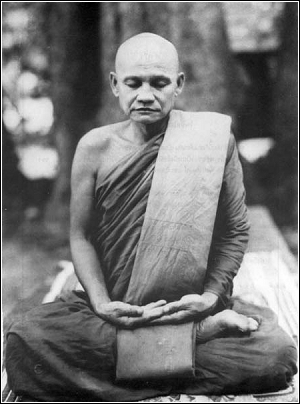
Ajahn Chah (1918 – 1992)

Letting everything go is the spiritual concept I return to over and over. I have spiraled up through the years, elevating my consciousness, but always returning, again and again, to the need for something to be released and the lessons brought by letting go.

The practice of releasing attachments started as a wall against which to kick and scream and beat my head. Over time, it became a closed-bud promise, the kind I knew would bloom one day but still tightly shut against full surrender. Eventually, ever so slowly, the lotus began to open, and wisdom wafted forth like a fragrance in the air.

The Thai Buddhist monk, Ajahn Chah, said, “When the heart truly understands, it lets go of everything.” For me, the opening of the lotus was initiated by the first part of that sentence. During times when releasing everything seemed downright impossible or even a bit irrational, I would choose to focus on a deep and consuming desire for a heart that truly understands. If I couldn’t quite let go, at least I could lean into love. And when I couldn’t do even that, there was always grace.

Grace is when our hearts feel the pull of the divine even while we maintain our death grip on our ego’s desires. Grace is the sacred ability for even our attachments to become guideposts to spiritual awakening. Grace is knowing we are only love even while still feeling the pull of our needs and wants and attachments.

Ajahn Chah also said, “Anything which is troubling you, anything which is irritating you, THAT is your teacher.” And the primary lesson it teaches us is that all the time we’re thinking it has its claws in us, we actually have our claws in it. We can open our hand, open our heart, and learn once again the freedom of letting go.

And when we’ve let go of everything, . . . then we are free.