How Hinduism Made Me Love Jesus Again

The first Hindu I met was Mahatma Gandhi.  Actually, it was Ben Kingsley in the epic 1982 Richard Attenborough film Gandhi.  I was a senior in high school, and the life of the man who was arguably the most important worldwide figure of the 20th century was, for all rights and purposes, beyond me.  But I remember one statement made in the film and by the actual Gandhi himself: “I like your Christ; I do not like your Christians. Your Christians are so unlike your Christ.” 

Little did I know that hearing that sentence may well have been the first step of my thousand-mile deconstruction journey.  For the next several decades, I would lean farther and farther away from the fundamental, evangelical, protestant Christianity of my childhood and deeper and deeper into the freeing, expansive, profound spirituality I came to realize was ultimately Advaita Vedanta, a.k.a. Sanatana Dharma, a.k.a. Hinduism. 

The religion I left behind was a set of rigid beliefs. Because of that rigidity, it only took one question, one moment of doubt, one raised eyebrow to bring the whole shebang tumbling down. There was great serendipity in the church’s homophobia — it broke the chain binding my questioning mind. 

The spirituality I embraced was a direct experience of Divine Presence.  Advaita Vedanta is the spiritual path of non-dualism.  Rather than a God who is Thou and a me who is pathetically crawling toward the cross, nondualism recognizes the Oneness of all creation, the Unity of all life.  On this path, God is not a being you seek or invite in — She is already there, in you, in me, in all of us, . . . the very life of all of us. 

As I began to know a few more Hindus, I met some who actually keep a picture of Jesus on their home altar right next to their statue of Krishna.  I began to realize that what Gandhi had said all those years back was a fairly common opinion. Hindus had no trouble with Jesus. In fact, many Hindus deeply love Jesus. The Hindu mystic and teacher Ramakrishna even placed Jesus into the Hindu pantheon in the 1870s. This non-restrictive acceptance of any worthy guru opened the door for my own reconsideration.  

I began to read the gospels again through Hindu eyes. I began to see the nondualism of Jesus so clearly.  How had we missed it?  If “the Father and I are one” and “you will do greater things than I have done,” then the Father and this I were one also; the Mother and I shared the same DNA.  Jesus didn’t come to set himself apart; his entire life was one of connection, compassion, and oneness. Considered away from the rigid set of beliefs, I began to see him anew.  

The French poet and writer Charles Pe’guy (1873 – 1914) wrote that “Everything begins in mysticism and ends in politics.” The Benedictine monk David Steindl-Rast (1926 – ) paraphrased it more directly: “Every religion begins in mysticism and ends in politics.” 

The church of my youth has turned into a political force.  But Jesus started it all in mysticism, and that was the Jesus I learned to love again. Not as a Christian. Not even as a Hindu. But as a devotee of Oneness.  

Just like him.     
Letting Everything Go

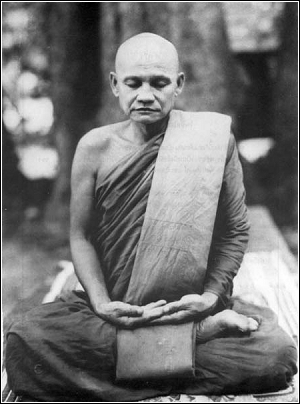
Ajahn Chah (1918 – 1992)

Letting everything go is the spiritual concept I return to over and over. I have spiraled up through the years, elevating my consciousness, but always returning, again and again, to the need for something to be released and the lessons brought by letting go.

The practice of releasing attachments started as a wall against which to kick and scream and beat my head. Over time, it became a closed-bud promise, the kind I knew would bloom one day but still tightly shut against full surrender. Eventually, ever so slowly, the lotus began to open, and wisdom wafted forth like a fragrance in the air.

The Thai Buddhist monk, Ajahn Chah, said, “When the heart truly understands, it lets go of everything.” For me, the opening of the lotus was initiated by the first part of that sentence. During times when releasing everything seemed downright impossible or even a bit irrational, I would choose to focus on a deep and consuming desire for a heart that truly understands. If I couldn’t quite let go, at least I could lean into love. And when I couldn’t do even that, there was always grace.

Grace is when our hearts feel the pull of the divine even while we maintain our death grip on our ego’s desires. Grace is the sacred ability for even our attachments to become guideposts to spiritual awakening. Grace is knowing we are only love even while still feeling the pull of our needs and wants and attachments.

Ajahn Chah also said, “Anything which is troubling you, anything which is irritating you, THAT is your teacher.” And the primary lesson it teaches us is that all the time we’re thinking it has its claws in us, we actually have our claws in it. We can open our hand, open our heart, and learn once again the freedom of letting go.

And when we’ve let go of everything, . . . then we are free.

The Synergy of Courage

Back sometime in the 80s or 90s, I began to notice a lot of people using the word “synergy.” Although the word comes to us from ancient Greek, it seemed to get discovered all over again in the latter part of the 20th century.  It originally meant “working together,” but the modern accepted meaning is steeped in the idea that the whole is greater than the sum of its parts.  In other words, what you and I accomplish together is bigger than simply combining what you and I can accomplish individually. 

There’s another word I want to throw into the mix here: groupthink. This is a term coined in 1952 by William H. White, Jr.  Groupthink is a psychological phenomenon in which a group’s desire for harmony results in dysfunction and questionable choices. It requires members of the group to avoid raising questions or thinking critically about the group’s function. Groupthink is often the byproduct of an emphasis on cohesiveness over innovation. One of the results of groupthink is a delusion that the group is correct; size and conformity create the mirage of rightness. 

Groupthink may also be related to something known as the bystander effect.  People who witness an emergency are far less likely to act if they are in a group. There was a series of classic studies conducted about the bystander effect in the late 1960s, and in one it was discovered that 70% would help a woman in distress if they were the only witness, but when other people were present, that number dropped to 40%. 

During World War II, after the Nazi occupation of France, there was a well-known resistance movement that arose. It started off slowly with isolated and unorganized efforts to stymie the Germans and the collaborationist French Vichy government.  In time, it grew into an effort that was considered a significant help to the Allies and ultimately was depicted admirably in movies, books, and other forms of popular culture. But, here is the reason I’m telling you this — at its height, the French Resistance consisted of maybe 5% of the population. Actually, 5% is a ridiculously generous estimate. It was probably closer to 2-3%. 

The Nazis took over France, and for the most part, the nation stepped into groupthink that dared not contradict Nazi ideology.  And, to be fair, the Nazis had a tendency to kill people, so I’m not sure how harshly we can judge 95% of 1940s France. 

I wonder who the first one was? The first French citizen who said to themselves, “This is not right. I can’t go along with this.” Who was the one who saw the lady in distress and thought to themselves, “Damn the crowd. I have to save the lady.” 

We’ll likely never know the one or the many ones in different villages and towns who followed a simultaneous call to resistance. All we know is that once they dared to take a stand against a wrong, others joined them.  

It has been said that one person with courage makes a majority.  Every time I hear that saying, I think about the Mahatma Gandhi, and I think about Harriet Tubman, and I think about Galileo, and Nelson Mandela, and Ida B. Wells, and Martin Luther King, Jr.  People who dared to stand against groupthink, even if they had to stand alone at times, and how their courage attracted others, and how a synergy developed that, if not exactly a majority, became stronger than the majority, for the synergy of courage in just a few is stronger than the facade of power held by a majority of conformists. 

Most of us won’t become a Rosa Parks or Frederick Douglass, but we may face an opportunity at some point in our lives to be the unknown origin of a noble resistance, the first to show the courage that will blossom into a synergy that may well change the world.  

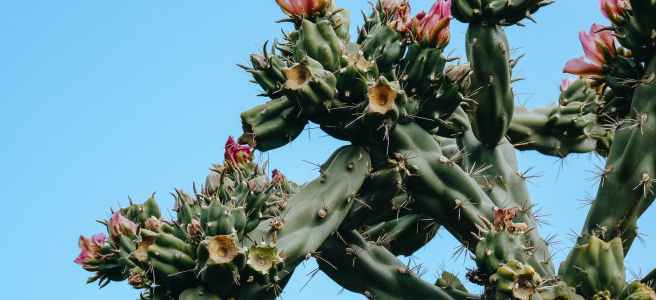
The Hundred Year Cactus

At some point when I was in my early twenties, I heard about a plant called the “Hundred Year Cactus.” I don’t recall where I heard about it or any specific details except that this plant supposedly bloomed once every hundred years, but when it did, it was the most beautiful bloom in the desert. These were the days before the Internet, and I had no way of quickly verifying the information; I just accepted it. 

In recent years, I’ve tried to see what I could discover through Google, but what I’ve found bears little resemblance to the story I remember. There’s the saguaro cactus in Arizona which can take a hundred years to fully mature, but its blooms don’t wait that long. Then there is the agave, often called the “century plant.” It has been said to only bloom after 100 years, but that’s a fable. Agaves do take a long time to bloom but can do so in as early as 10 years in a hot climate, or up to 25 or 30 years in a cooler climate. 

But this isn’t really about a cactus. In fact, whether or not what I read was true or whether or not I actually read what I think I read doesn’t really matter.  I could have dreamed it. None of that changes the fact that I believed I read about this cactus that blooms only after a hundred years and the blooms were worth the wait. And none of that changes the fact that this story, whether real or exaggerated or completely fabricated, resonated with me on such a level that I still remember it thirty years later. 

During the decade or so after I did or did not read this true or untrue statement about a cactus that may or may not exist, I told the story many times as situations called for it. And I would always say, “I’m the hundred-year cactus.  It’s going to take me a while to bloom, but, baby, when I do, it will be worth it.” I said it so many times that it started to qualify as a mantra. 

Some might say that I affirmed my way into a late-blooming life. I think, rather, that I relieved some of the stress native to the first decade or so of adulthood that compels us to chase success and achievement. Instead, I went with the flow. I had a lot of jobs during that time, bad ones and good ones, embarrassing ones and even somewhat impressive ones. I let life lead and stepped into opportunities as they presented themselves but didn’t actively pursue them. One of those opportunities involved going back to college as a 29-year-old sophomore. For a late bloomer, 29 is a perfect age for college. 

After college and grad school, I started teaching, and I wondered then if this was the blooming. In a way, it might have been, at least the best blooming available at the time. 

But I was still plowing the earth and planting seeds and fertilizing and watering as well. And the cool thing is that after you plow and plant and water, the blooming is out of your hands.  Nature just has to take its course. 

During this past year, many years after I first heard or misheard the cactus story, and many years after graduate school and the start of my teaching career, I started a Tik Tok account that has 60,000 followers; started a podcast which has a few listeners – the most important of whom is listening right now, of course; became the interim minister at an interfaith, affirming, inclusive church; started an interfaith seminary program; and most recently, I’ve been invited to be the commencement speaker at my college’s graduation, something that held the number one spot — I am not exaggerating — on my bucket list.  In addition, I’ve recently received two speaking invitations that would qualify as a definite leveling up from my previous speaking gigs. 

All of this feels like a bloom. 

It could be that my younger self intuitively knew how my adulthood would progress. It could also be that I really did affirm this reality into existence. After thinking about it for almost a lifetime, I think it’s a little of both. 

Pay attention to what resonates. Find the affirmation that fits it like a glove. Say it over and over and over again. Say it every time it comes up. That’s the way you plow the field.  

Then let it go and watch to see what blooms. It might take a while, but it’ll be worth it.