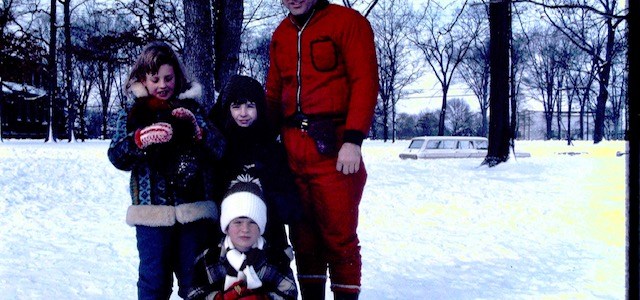
Snow Day

I had a great idea for a poem,

A succinct nugget of insight

which summarized and symbolized

and synthesized

One of the secrets of life.


It was so profound and moving

and true at the core,

I didn’t write it down.

I knew I would remember.

I didn’t.


So, I can’t share it with you.

I can only believe it

still lives somewhere in me,

Somwhere currently incommunicado

with my conscious mind,

and that it can teach me

what I don’t remember

but need to learn.

I Should Get Out More

(Written on Thanksgiving Day, November 23, 2017)

I should get out more,

Walk the woods like William Wordsworth or Robert Frost or Mary Oliver,

Watch nature more closely,

Learn the names of trees and the songs of birds.


I should feel cold more, or hot.

It won’t kill me.

I should get sand in my shoes

and mosquito bites and poison ivy.

I should walk in the woods more.


I should stand next to water more,

a riverbank, a lakeside, a sea shore.

I should skip more stones

and make more ripples.

I should not be afraid of those who live there,

the frogs, the turtles, the fish.

I should dip my toe in and make friends of the natives.


I should buy a kayak

and change my lifestyle

so that it becomes the kind of lifestyle

conducive to kayaks.


I should pass no sunny hours in candlelit rooms with blinds closed

sitting at a desk writing poetry.

I should take full advantage of beautiful days,

follow roads that short of the decision to take them would remain not taken.

I should choose differently, trading this thing I love for that thing I love.

I should live differently.

I should get out more.


Bone Moon

My people called it the bone moon.

A time of hunger.

A time of hope.

Life at the barest essential.

Black bear skin hugged tight around the shoulders.

Snow falling in clouds from shaken cedar boughs.

Woodsmoke curling up from the council house chimney.

Starvation like a penance and a prayer.


I meditate in warmth on this full moon in Leo.

I have a full belly.

Agarbatti smoke curls up from the altar with the

smell of a Hindu temple.

I do not know the council house

or the bear blanket

or the starvation.

But I know the hunger.

I know the hope.


© 2017 Deborah E. Moore

A Mighty Woman With A Torch

“The New Colossus” was written by Emma Lazarus in 1883 as a fundraiser to pay for the base of the Statue of Liberty.  It was engraved on a plaque and mounted inside the lower level in 1903.  One line of the poem is readily recalled by most Americans:

“Give me your tired, your poor, your huddled masses yearning to breathe free.”

But the entire poem is a mission statement, a declaration of purpose for our nation.  It begins:

“Not like the brazen giant of Greek fame,

With conquering limbs astride from land to land;

Here at our sea-washed, sunset gates shall stand

A mighty woman with a torch, whose flame

Is the imprisoned lightning.  And her name,

Mother of Exiles.”

The first line refers to the Colossus of Rhodes, one of the seven wonders of the ancient world.  According to myth, it was a statue of a conquering warrior straddling the harbor which arriving ships had to pass under.  Just think Ancient Greek manspreading.

Lazarus contrasts this to the woman with the torch, this “mother of exiles,” who is putting out the welcome mat.  Re-reading these particular lines just a week after the Women’s March on Washington was especially poignant for me.

The poem continues:

” . . .  From her beacon hand

Glows worldwide welcome; her mild eyes command

The air-bridged harbor that twin cities frame.”

Lazarus emphasizes the gentleness of the woman, the maternal nurturing waiting on the shores of this great democracy.  Her eyes are “mild,” yet they “command,” a paradoxical pair of characteristics evoking the quiet certainty of the divine feminine.

Then Lazarus hits the homerun:

“‘Keep ancient lands, your storied pomp!” cries she

With silent lips.  “Give me your tired, your poor,

Your huddled masses yearning to breathe free,

The wretched refuse of your teeming shore.

Send these, the homeless, tempest-tost, to me,

I lift my lamp beside the golden door!”

Lazarus doesn’t just give us the message of the statue; she puts the words directly in the mouth of Lady Liberty.  The first-person declaration makes it even stronger, even more personal.  She tells whomever will listen that conquering heros can continue to re-tell their stories of past glories. She lives in the present, a present where people continue to strive to rise above the fate handed to them by those same conquering heros, nations too busy bragging of their greatness to care for the least of these.

She doesn’t ask for the best and the brightest.  She doesn’t apply a litmus test of intelligence or wealth or strength.  She asks for the marginalized and the hurting.  She asks for the reject and the refugee.  She asks for the victims.

We may not know the entire poem by heart, but we can still fulfill the mission.  Besides, we’re more and more aware all the time of how unwise it is to piss off a mighty woman.