If You Don’t Like the Weather . . .

 . . . in [fill in the blank], wait five minutes. It will change. I’ve lived in several different parts of the United States, and although I have found great differences between Denver and Nashville, Michigan and Missouri, the one thing all those places have in common is that locals will use that phrase.  If you don’t like the weather, wait five minutes. It will change. 

But, that’s about rain and wind.  What about life changes? Those don’t exactly come along every five minutes.  Do they? Well, maybe not every five minutes, but each one of us goes through many transformations in the course of a lifetime. 

Some changes happen like an explosion.  Maybe a happy explosion, but still abruptly, instantaneously, out of the blue. You win the lottery. You get an unexpected promotion. You go viral on social media. You lose a friend. 

My father passed away unexpectedly when he was just 71 years old. That news came like an explosion. Like a tsunami of grief. 

Some changes happen like erosion. Slowly over time, without even feeling the movement, you shift. Life is different. It may not feel different from yesterday, but if you could place today and one day years ago side by side, the change would be stark and undeniable. 

Spiritual transformation can be explosive or erosive or maybe even both. It can be eruptive, emotive, elegant, electric, . . . it all depends on the weather.  And the good news is, if you don’t like your interior weather or the type of spiritual evolution it’s bringing, you can change it.  Every five minutes, if you feel like it.  

The slow change of erosion comes about from hearing the same messages, engaging in the same practices and rituals, reading, learning, meditating, and letting our awareness unfold gently like a flower.  It is the gentle erosion of the ego that slowly uncovers the true self. 

The fast change of spiritual explosion can happen at any moment that we completely uncover the flame of our essence and reach the enlightenment that is the knowledge of our true selves. This instantaneous awakening often gets a lot of attention, a lot of books written about it, a lot of seminars and workshops created to help bring it about.  But I have found that it often happens after years of that slow erosive work. Enlightenment might appear to be a sudden occurrence, but it usually comes after years of preparation. 

We simmer before we boil. 

Who Are You?

I don’t mean the famous question from the band The Who, the one that sounds like it’s being answered by an owl.  I really want to know . . . who are you? 

When we’re faced with that question, we often begin with our labels.  I’m a teacher. I’m a musician. I’m an artist. I’m an insurance agent. I’m a carpenter. Even our name is really just a label. 

But do those labels answer the question? Who are you? Really? If you stop being a teacher, you don’t stop being.  If you stop being a carpenter, you still exist. You could abandon even your name and still be. 

Those labels are like nesting dolls, those Russian wooden dolls that, when pulled apart, reveal a slightly smaller version of the same doll, which can be pulled apart revealing another slightly smaller doll, and so on. In the same kind of way, we add layer and layer of identity until we forget who we really are and begin to identify with the shells.  

According to many great spiritual teachers, who you are is none of the things that you might use to uniquely define yourself. Those specific parts of your personality, your talents, your intelligence, your sense of humor, might be how you express yourself in the world, but they are not the essence of you.

Our lives begin as a purity of essence that quickly gets covered up. Our parents give us a name. They begin immediately to tell us who we are.  “You’re so pretty.” “Oh, what big eyes.” “Such a sweet smile!” We first know ourselves as seen through the eyes of our caregivers. They are our first mirrors. As we grow, we take on more identifying features. We get them from family and friends and teachers and television and bullies and . . . ourselves until we have completely covered that essence.  Many of us eventually reach a moment when we decide we want to know who we really are deep down inside. This is often initiated by crisis, a dark night of the soul, a collapse of our ego’s scaffolding. 

Advaita Vedanta is the school of Hinduism that focuses on non-duality. It holds that pure consciousness, what Hindus call “Brahman,” is the only reality.  That single reality, that non-dual reality, is unified Divine energy that is the life force in all creation.  There is no dual you and I or I and God. There is only one life. It is nature. It is Divine. It is you. It is me. 

Advaita Vedanta teaches that we are made up of five layers, called koshas. Kosha literally means “sheath,” or you could think of it as a cloak. Like nesting dolls, we wear these cloaks over our Divine Essence.  The first cloak is the physical body.  It is the dense material cloak. The second kosha or cloak is the energy body. This is the layer where the chakras and the divine meridians are located. The third cloak is the mental and emotional layer. The fourth is the wisdom layer. The fifth is the layer of bliss. Vedanta yoga often ends there, though some teachers add the sixth layer, and this layer is referred to as the True Self.

Uncovering this essence, our true self, is our spiritual work.  We are not in search of something because we already are that which we think we’re searching for. 

Who are you? You are pure love, pure peace, pure Divine Presence. You are this pure essence even when you can’t see it for all the layers covering it. You are the you are. I am the I am. 

To Be . . .

. . . or not to be. 

Should I stay or should I go? 

These two roads diverging in the woods . . . which one should I take? 

It often seems that life is just a series of choices and their consequences.  In retrospect, a choice can seem destined and profound, the initiating event of what came next.  Or perhaps it is married to regret and remorse.  Ideally, whether seen in the rearview mirror as positive bellwethers of future good or as negative gatekeepers to coming pain, our choices set the stage for everything else to come. 

Robert Frost’s poem “The Road Not Taken,” about those roads diverging in the woods, is often used to demonstrate the beauty of not following the crowd.  The final lines of the poem say, “Two roads diverged in a wood, and I — I took the one less traveled by, and that has made all the difference.”   But, these are perhaps the most misinterpreted lines in all of American poetry.  We think they’re saying “Ah, what a glorious rebel I have been, and it paid off.” 

But, you see, the two roads described aren’t that different from each other.  The poem says “the passing there had worn them really about the same” and that the roads “both that morning equally lay.” Frost’s final stanza starts “I shall be telling this with a sigh somewhere ages and ages hence,” and that “with a sigh” is important. He’s actually writing about our tendency to romanticize the past, to look back at younger selves as courageous and daring rather than just . . . human, making human choices, and having no more idea than anybody else how it might all turn out. 

The rightness or wrongness, goodness or badness of our choices is often determined by the way we move through the results of our choice rather than the choice itself. 

But while we’re still on the front side of the choice, still standing at the fork in the road, is there any way to get a sense of direction? 

I was once faced with a big decision and unclear how to make it. My sister gave me some good advice.  She said, “Get off by yourself where you won’t be interrupted. Spend a few moments in meditation. Quiet your mind. When you feel completely settled within yourself, take your mind to the place where you have already decided on option A, and see how you feel.  Then clear your mind again and take it to the place where you have already decided on option B, and see how you feel.” 

So, I did it.  I followed her advice.  And you know what? I knew exactly what to do. My intuition, my inner guidance, my emotional self did not let me down. It sent me a clear message. 

Ultimately, though, whichever choice I made was mine. My choices are a primary way in which I co-create my life.  Should I stay or should I go? No one can tell me . . . but me. And by “me,” I mean the higher version of me that lives in the quiet places. 

Beauty is Truth . . .

. . . Truth beauty. That is all ye know on earth, and all ye need to know.

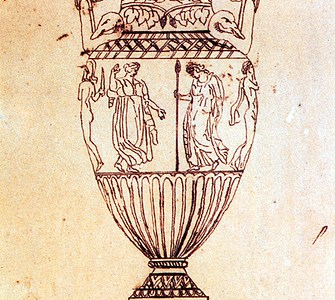
Those are the final two lines of John Keats’ “Ode on a Grecian Urn.” The poem is considered one of the greatest odes ever written in the English language.  

Here’s the nutshell:  The poet, or the persona of the poem, encounters a piece of ancient Greek pottery which depicts two scenes: one of lovers about to kiss and one of a group of people apparently preparing to offer a sacrifice at the temple.  The entire poem is the poet expressing how this work of art will outlast living people. The lovers will always be young and in love, and the people in the other scene will never reveal the purpose of their journey or their sacrifice.  

Those last two well-known lines are the poet’s conjecture about what the urn would say to all who encounter it.  But those last two lines are also some of the lines most debated by scholars.  What do they mean exactly?  Beauty is truth? Truth beauty?

Recently, I had the honor of hearing Lisa Fischer perform. If you don’t know Lisa Fischer, you should look her up.  She has toured as a background singer for Luther Vandross, Tina Turner, The Rolling Stones and others.  She is featured in the 2013 film Twenty Feet from Stardom, and she is a Grammy-Award winning artist in her own right. 

But all that aside, let me engage in the futile attempt to describe an ineffable performance. Her vocals are simply impeccable. Almost other-worldly. She doesn’t perform songs; she moves into them and takes up residence, inhabiting the words of others as if they sprang from her own experience. She is a musician whose instrument is her body — not just her lungs and diaphragm and tongue and teeth, but her feet and hands and knees and neck. Her talent was not just the greatest I had ever witnessed, but it was greater than I might have imagined was humanly possible.

But there was something more than talent on stage.  I sat through the entire performance with my hands in a prayer position against my lips. The unfiltered display of naked authenticity was almost more than I could take. Somehow I knew that I was watching her very essence — uncovered, unhidden, unashamed, unafraid — and in beholding her highest and truest self free and unfettered, I knew in that instant that this way of being was available to us all.  

For 90 minutes, Lisa Fischer stood at the intersection of talent and authenticity, and it was holy ground. 

She didn’t talk about god or spirituality or faith or a journey.  I mean, other than the tanktop under her tunic that had the chakras running down the back.  She didn’t have to talk about spirituality. The moment itself was sacred, and she was fully in the moment.  And by her silent invitation, so were we. 

That is the power of art — to create an image, a sound, a moment that transcends the material world and shows us the truth of who we are.  Like a mirror that reflects our soul.  

For you see, beauty is truth, truth beauty . . .