Love’s Labors

I love the spring visit to the 
garden center. 
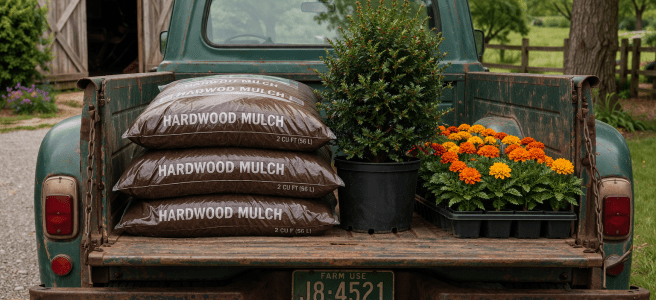
Marigolds, knock-out roses, and
ten bags of mulch in the 
bed of the truck.
Plus birdseed, potting soil, a
Japanese pencil holly. 

Labors of love feed, create, cultivate.
Like a friend listening without judgment,
a teacher explaining one more time,
a meal cooked for others,
a song written to remind us again
of love. 

Did I? 

I dig a hole and let the thought
leaf out.
Did I love enough? 

How many times I missed a chance
to forgive or ignore
a slight or let go. 
But in my heart’s drought,
did I sometimes water pain with
compassion? 
Did I seed the world with life?

Do I? 

I set the holly into the hole,
straighten it, fill in
around the sides of the
root ball with soil I
soften to crumbles in my
fingers. 

“I hope you’re happy here,” 
I say. “I hope I’ve picked a 
good spot and dug a 
good hole. I hope you get
everything you need to 
thrive."

Then I rise from my knees, 
slower than in years past, but
so much more certain of 
love and what it can grow.


A Time I Knew


Digging a hole to plant some
purslane, I found a penny,
old, worn, thin, dirty. I rinsed
it in the kitchen sink and
squinted, then took a picture
I could enlarge.
1982.
I was 18. Graduated from
high school that May, then
off to college in August. Feeling
grown, feeling alone, feeling
hopeful. The world ahead bloated
with possibility.

If I hadn’t planted the purslane,
the penny might have remained
buried for years or longer,
much longer, until it aged into
a relic from a time no one
would remember.

Like this time will one day be – the
demons and the dangers and the demagogues
of this era rubbed thin and rusted
and hard to even read. Buried.
Spent. Their bloated possibilities
nothing but history, nothing but
the dirt-caked bones of a time
no one will know.

Beginner’s Mind

Spring cleaning has me 
in the darkest corner
of the sunroom with a
stick in hand, wrapping
old webs around the far end
like drab cotton candy.

The spiders staked
their claim last fall,
orb-weavers, I think. I
didn’t get too close,
and nights were longer and
cooler and spent indoors,
so I let them have the corner.

When I reclaim it on a warm May
day, the abandoned webs cling
listlessly to wall and screen
and bench and reach as if alive for
the oar I offer from a far shore.

The weaver of the orb
mustn’t mind rebuilding her home.
It seems to be the point, to start
again from the beginning.

The cardinal builds a new
nest every year, sometimes
even twice.
Moles burrow constantly and
don’t use the same tunnel again.

The hostas in my front yard disappear
completely each winter and always
come back, from a tiny green peek
through the dirt to a maturity even
grander than before, fueled by
energy both fresh and remembered.

Everything starts over. Life
is not always added to.
It is sometimes
begun anew.

Ectomy

The medieval physician said it was in 
the spleen, Chinese medicine diagnoses 
liver, this leviathan that comes from 
deep within and threatens 

the life from which it springs. 
It moves to kidneys, gallbladder, 
spreading like an untreated cancer, 
to the pancreas, to the heart, 

to the brain. It’s as prevalent 
as breath, and I am both container and 
contained. It’s an opportunistic species,
this chronic visitor who smells like old fish. 

And it will kill.  Soft things now, and 
everything eventually. I don’t know how 
to treat the condition except to distance 
from the hotbeds, to look for those 

who are not infected and pray they 
inject an antidote of empathy in my 
veins. Or I listen to Deva Premal sing 
Hindu chants, or I read Mary Oliver,

or I walk, walk, walk the roads
and the trails and the meadows
until I have taken root
again in the soft earth of a 

forgiving mother who is so
near the end of her rope that 
any prodigal’s return is offered
the fatted calf of peace, and if I 

sit on a stump long enough and
stare at the water and stay as 
still as the heron in the distance,
I can feel the mending 
in my spleen. 

© 2020 Deb Moore, All Rights Reserved