Rose and Justice — Installment Ten

This is Installment Ten of the novel Rose and Justice. It includes Chapters III.iv, III.v, and III.vi. It is 4,085 words long. As installments are posted, links for each will be added under the tab labeled “The Novel” at the top of this page. Enjoy!

III.iv

            “Over my dead, cold body.”

“But, daddy, you’ve always said it was important to know things, to be well-informed.”

“Everything you need to know you can learn from me.  That’s what tradition is all about, son.  I learned from my father and you learn from me.  The only thing you could possibly learn at the University of Georgia is gonna’ come from those liberal communists who teach at universities.  I won’t have it.”

Justice lowered his head and felt his brain spinning to land on another logical argument.   He had just turned eighteen and had gone about as far in his studies as his mother and aunt could take him.   Colleges had finally realized that home-schooled children were often very intelligent, well-adjusted, and desirable students.  The University of Georgia had developed a special program for evaluating the home-schooled that included a test of math, history, and science, along with a two-page essay.  By the time Justice was 15, his mother had convinced his father that it would be perfectly okay for Justice to periodically visit the public library since he was a much smarter boy than she felt qualified to teach and the library at the St. Simons Welcome Center was only about a mile and a half away, walking distance for an outdoor boy like Justice.  It was in this library that Justice discovered a virtual world of freedom thanks to the computers the nice librarian, Eleanor, had taught him how to use.  He had come across the UGA home-schooled admissions requirements and secretly completed the on-line test and essay.   He never expected to even hear back from the university.  It was just a way to pretend he was a part of the larger world outside the walls of his family’s land.  But then he received a letter from the school.

“Congratulations.  Based upon the test scores and essay you recently submitted, you have been awarded a probationary full academic scholarship to the University of Georgia.”  The letter gave specific details about how to accept and keep his scholarship.  He would have to maintain a 3.5 GPA each semester.  He didn’t even know what a GPA was, but suddenly he was determined to get to Athens somehow.  Before he even approached his father, he had devised a plan for running away.  But he knew his father would find him and there would be no discussion then.  No, his best bet was to try to get his father to approve his plan for school, no matter how disgruntled that approval might be when and if it ever came.

“Dad, you’ve been teaching me for 18 years.  Do you think I’m just going to forget everything you ever told me?  I mean, it’s not off in California somewhere.  It’s the University of Georgia.  I’m sure I’ll meet plenty of good southern boys who are just like us.”

Jared leaned back in his chair and crossed his arms across his chest.  He still felt like a young man, but he was beginning to look exactly like his father before him in these moments of contemplation.  The very act of thinking about it gave Justice more hope than Jared probably wanted him to have.

“What would you study up there?”

“Well, I don’t know.  Business, maybe.  Or history.”  There was no way Justice was going to tell his father that he had every intention of majoring in biology.  Jared hated scientists almost as much as he hated the government.  They perpetuated subversive notions like evolution and abortion and racial equality.  And half of them worked for the government anyway, or at one of those damn liberal universities.  Justice, on the other hand, was fascinated by the world and the way it worked, the way it all seemed to fit together, the way that every cell, atom and subatomic particle had a specific job to do.  He wanted to know, as intimately as possible, the world he had been denied for so long.

“Electrical engineering.   That’s what you’ll major in.  The history they teach is all biased.  And business majors are all the sons of rich men in bed with the government.  No, I think some education about electrical engineering might serve us well here.   I want to make this place as self-sufficient as possible.”

The thought of electrical engineering was disgusting to Justice.  There was still a scientific aspect to it, but it was the science of cold hard machines.  He wanted to study living things.  But, that little glitch seemed like the smallest of anthills to him at the moment.  His father had all but said he could go.   They talked a little while longer without Jared ever giving a truly definitive answer.  He avoided them whenever possible.  When they finished, Justice walked calmly out of the cabin and across the common area where he knew his dad could still watch him from the window if he chose.  He strolled with his hands in his pockets until he was behind the storage shed on the far side of the residential section of the compound.  Then he did the first cartwheel he had done since he was 10 years old.

Jared tried to balk a few times before Justice left, but it was mostly for show.  He seemed accepting of his son going to college, and at times even a little proud, but he remained wary of the influences Justice might be subjected to.   Melinda was about to burst with pride.  Justice would never know just how many times Melinda had saved this chance for him, how many times Jared had changed his mind late at night after a half a bottle of Jack Daniels and Melinda had calmed him down and repeated again all the fine and wonderful things Justice would learn and bring back to their little village.

Jared and Melinda drove him to Athens on the Saturday before registration.  The dorms were chaotic with the moving in of thousands of students.  The chaos worked to Justice’s advantage.  No one paid them much attention or stopped to chat.  It was odd for Justice to see his father in this situation.  The man who ruled an entire kingdom, modest though it was, looked almost scared in this crowd.  He walked carefully and peered around like a rabbit in a den of dogs.

Justice was most concerned about the roommate the university would place with him.  He desperately hoped the roommate was some good old boy from South Georgia.  If he was liberal, long haired, tattooed, disrespectful, or, god forbid, non-white, his father would throw his ass back in the truck so fast he wouldn’t even have time to formulate an argument.

Mark Miller seemed ordered up special just to make this work for Justice.  He was a fourth generation Georgian from Waycross.  He wore Levi’s, work boots, a dirty well-molded Atlanta Braves baseball cap, and, most importantly, a sleeveless t-shirt with a rebel flag emblazoned across the back.   When they first met him, Jared actually smiled.  Mark said all the yes sirs and yes ma’ams needed to impress Jared and Melinda, then excused himself explaining that he had to finish helping a friend of his from Waycross move in on the fourth floor.

When Jared and Melinda left later that afternoon, Justice felt odd.  He had never experienced this kind of freedom before.  It was exhilarating and somewhat scary too.    He pulled the desk chair over to the window and sat for a long time just staring out on the campus.  There were people moving about, freely, yelling hellos to friends and playing catch with a football.  He watched them with envy until he realized that he was no longer trapped behind the wall.   He could walk out of this building and across the lawn as freely as any of them.  He stopped seeing the wall altogether.  Just the window.  The wall had been conquered.

III.v

            “Man, you have got to be blowing smoke up my ass.”

Mark Miller’s reaction was pure disbelief.  After two weeks, Justice told Mark the story of his upbringing, about his family and the compound and even the Malone family credo – “I live and would die for God, family and race.”   Justice had never intended to tell Mark, or anyone else for that matter.   But after two weeks of navigating his way tentatively around the university and relying time and again on Mark for help, Justice knew that he was going to have to trust someone.  He needed one person who understood where he had come from and who would cover his backside in this new, strange, and oh-so-wonderful place.

“I wish I was.”

“How did you learn enough to even get accepted to college, let alone get a scholarship?”

“You pick up things here and there.   We were taught at home.  My mom and the other women in the compound were our teachers.  But mostly I read everything I could get my hands on, and listened, and watched.  My dad didn’t care for a lot of books, but he never saw anything wrong with our schoolbooks, so I devoured them.  I could probably recite, word for word, my entire science book from when I was twelve.”

“Shee-it.  And you never left this . . . ‘compound’ except for occasional trips to town?”

“That’s right.  And then my father was always with me.  I mean, we went to town, yeah.  But it was simply to get supplies and then get back to the compound.  When I got older he let me go to the library, but only to the library.  Nowhere else.”

“You never told him you were going to the library and then snuck off to do other stuff?”

Justice opened his eyes wide, as if the thought alone would have gotten him in trouble.  “No.”

“You never hung out with your friends?  You never went to the movies?  You never went to high school, for Chrissakes?  Bo-eh,” Mark sprawled out “boy” in the southern way, “you have got a lot to learn.  And ole’ Mark Miller is just the one to teach you.”

And that was how Justice began the first and best friendship he ever had or would have in his life.   Mark seemed to know just how skewed Justice’s view of the world was, even more than Justice knew himself.   He didn’t laugh as he carefully explained what a GPA was, how it was calculated, and the impact it had on your college career.  He stayed close by when Justice went to his first football game and off-campus party.  He patiently explained what fraternities were and why all the members acted like shit on a stick.  Justice thought they sounded like mini-compounds.  In short, Mark Miller taught Justice much more that first semester than all his professors combined.

It was with Mark that he shared his discontent over the major his father had chosen for him.  Mark had a southern father, too, though nothing like Jared Malone.  He understood that kind of pressure and seemed to know just how to maneuver through it.

“Don’t beat your head against the wall,” Mark suggested.  “Big Daddy wants you to major in electrical engineering, then do it.   And double-major in biology.   You’re smart enough to handle both of them.”

It was an option Justice hadn’t even considered.  And, yes, he was smart enough to do it.  In fact, he was much smarter than he could possibly have known with no one against which to measure himself.  He was the sole reason Mark managed to escape introductory biology and freshman math with a respectable pair of Cs.

Justice loved helping Mark with his homework.  His adoration of his new friend might have bordered on idolatry if he hadn’t been able to pay him back just that little bit.  As it was, they built a friendship wherein each felt immensely grateful for the other’s contributions.  Justice gave Mark a real shot at actually earning a college degree.  Mark gave Justice a whole new world, and a new way of looking at the world he had already known.

As 18-year-olds do, they had a million endless conversations that first semester, often lasting until the sun came up.  Justice had a brilliant mind, but was completely ignorant about the world.  Sometimes it was just in listening to Mark ramble on about girls, politics, girls, religion, and girls that Justice would begin to hear a new way of thinking.  Mark never told him what to think, but more than he would ever know he showed him how to think.

The first semester of college passed as quickly as time had ever passed for Justice.  When final exam week began, he suddenly realized that he would have to go home again in a few days.  The Christmas break was almost four weeks long and Justice knew it would be one of the longest months of his young life.  He talked this over with Mark in a late night confab.

“I know I spent 18 years there and only 16 weeks here, but this feels like home now.  I hate the thought of even stepping foot back in that prison, let alone staying there for a goddamn month.”

“Why don’t you come home with me?  My folks wouldn’t mind.”

“God, I wish I could.  But, you don’t know my father.  He wasn’t sure about me coming here to start with.  I just get the feeling I should be careful.  I mean, if he accepts me going to your house by our junior year then that would be speedy progress for him.   And . . .” Justice had been about to continue, but then abruptly stopped himself.

“And what?  There’s something else, isn’t there.”

Justice moved his gaze to the floor.   His voice softened.  “Actually there are two something elses.”

“’Splain, bubba.”

“Marsh and Hannah.  If they don’t get out of that compound, they’ll be lost forever.  It may already be too late for Marsh, but Hannah, she’s . . . god, Mark, she’s a genius, and far too good to rot away in that hell.”

“So what do they have to do with you?”

“Don’t you see?  I’m the guinea pig.  I’m the test case.  If anything, and I mean anything about this doesn’t set right with daddy, he’ll never even consider letting the others come.”  Justice paused, then put his fingertips to his forehead.  “Even beyond his wall, I’m still in his prison.”

Justice and Mark finished finals, Justice breezing through and Mark gratefully passing, then left Athens behind them.   Waycross was only about 50 miles west of Brunswick, so Justice rode with Mark that far.  Jared had planned to meet them in the parking lot of the Waycross Piggly Wiggly grocery store.  It wouldn’t do for Mark to drive directly to the compound, although Justice knew he would have if he had been asked.  About 15 miles outside of Waycross, Mark did something he never would have thought of doing in any other time or place, or with any other man.  He reached over and took Justice’s hand.

“You keep your chin up, y’hear?”  A slight crack in his voice gave away his emotion.  He pulled his hand away quickly.

They were silent the rest of the way, but when they finally said their goodbyes, Justice saw a slight glistening in Mark’s eyes, the closest to crying a southern boy dared come.

III.vi

            The dread is worse than the doing, so they say.  Justice found the visit at home not as horrible as he had expected.  It was no joyride, but not horrible.   It helped to think of it as a visit.  Seeing his mother brought a happiness he had not anticipated.  In the male-dominated world of the compound, his mother had been only teacher and servant.  Now he saw her with new eyes.  He watched her move through her days, gently living out the life and ideas she had passively accepted, a model of pure grace.  He was determined to tell her he loved her before he left to go back to school.  He had never done that in his life.

Marsh was immersed in compound life.  He had discovered his own brand of freedom when Justice left for college and he was no longer under the shadow of his older brother.  Marsh worked harder than most of the men trying to prove himself to his father.  He seemed to need his daddy’s approval to even survive.  Justice instinctively knew he wouldn’t be able to share his true college experience with his little brother.  Justice loved Marsh, but there was something scary about him too.  When he shot a rabbit there was a gleam in his eye that was more than joy over having provided the family with a meal, but rather a feeling of victory usually accompanied by his own unique war whoop.  Seining the river for shrimp was Marsh’s least favorite job since it didn’t included hooking or putting a bullet into something.  The younger Malone loved to inflict pain, and Justice knew Marsh could make big trouble for him if given half a chance.

It was Hannah that Justice was most happy to see.   Before Mark Miller came along, Hannah been the closest friend Justice had.  Despite their four-year age difference, he felt closer to her than anyone from home.  He had waited four days to meander over to her cabin and then lead her off into the woods, hoping his father wouldn’t see them going off for one of the secret walks and talks they had shared so often.

“Tell me all about college, Justice.  I want to know everything.  Is it just the greatest?”  Hannah walked behind Justice, holding the tail of his shirt.

“Wait ‘til we get to our tree.  Then I’ll tell you all about it.”  There was a giant live oak on the edge of the compound farthest from the cabins.   Moss swung in slow motion from the low curving limbs.   They had spent many hours under that tree together, talking about the world as they knew it, sharing their true feelings with the only other person each felt comfortable doing that with, and singing.  Justice didn’t think he sang too well, but Hannah always wanted to sing and insisted that he sing along.   It took 25 minutes to get to the tree.

“Now, tell me.”

They sat on the ground, facing each other.   “Okay, but you have got to make a solemn promise that everything I tell you will be a secret between you and me.”

Hannah crossed her heart.  “I promise.”

“I mean it, Hannah Elizabeth.  Not one word of this to a soul.  I’m as serious as I have ever been about anything.”

“I promise.”  She emphasized the word as if to say that her promise was all he needed.  And he knew it was.

“College is the best thing that ever happened to me.  Hannah, there is a whole big world out there, and I mean more than just Athens, and it’s filled with all kinds of people with all kinds of ideas.  And those people have fun, and they laugh, and they don’t seem to care if you think something different from what they think.  It’s freedom, Hannah.  It’s freedom.”

Hannah looked as if she were hearing that heaven was real and just a few miles east of Atlanta.   “What kinds of ideas, Justice?  What kinds of things do they think?”

“All kinds of things.  Different ideas about the government and law and religion.  There are about as many different ideas about these things as there are people in the world.  And, Hannah,” he paused, “there is so much music.”

She took a sharp breath in, then whispered.  “Tell me about the music.”

“People come to college to study music.  They play instruments, more instruments than you can imagine.  And they sing, too.  The band plays at the football games – remind me to tell you about the football games – and there are hundreds of them.  Hundreds of people marching around and playing trumpets and drums and clarinets and saxophones and tubas.  Every time I see the band, I think of you, Hannah.  And that’s why this has to be such a secret.”

“Why?”

Justice paused.  “Because I want you to go there some day, Hannah.  I want you to get out of this place and play music and sing all you want.  So all this stuff about all the different ideas people have has to be a secret.  You do understand, don’t you?”

“I understand.”  Hannah was as serious as she had ever been about anything.  “Nobody will ever hear a word from me.  Nobody will ever keep me from going to college and playing music.”  She paused.  “Will they, Justice?”

“Not if I can help it they won’t.”

They talked for as long as they dared stay missing from the cabins.  Hannah kept wanting more.  She wanted to know about even the tiniest details of life outside the compound.

“Are there mud people there, Justice?”  She didn’t use the term the way Jared did, spewing it out with spite and hatred.  She simply used the only term she had ever heard to describe people whose only difference was one she couldn’t see.

“Yes.  And they’re not ‘mud people,’ Hannah.  They are just like you and me except their skin is a different color.  I mean, as far as I can tell, at least.  They’re African-Americans.  And some people are Hispanic and some are Asian – that means they’re from China or Japan or Korea or someplace way on the other side of the world.  There are all kinds of different people in my classes.  There’s a guy in my math class and he’s an African-American, and, Hannah, he is the funniest guy in the world.  He sits right behind me and is always making jokes under his breath about the teacher.  He’s really nice, too.  He even invited me to his church once.”

“Church like we have?”  Sunday morning church was mandatory on the compound.  It consisted of everybody singing some lame old song, out of tune, and Clete Camden reading from the bible and talking about how you should fear God, and then Jared talking about how the bible clearly gave the white man dominion over all other animals, including mud people, and how those animals should fear the white man just as the white man was to fear God.

Nothing like we have.  I went to his church with him.  It was kinda’ scary because, you know, I hadn’t ever been around a lot of Black people – that’s another name for African-Americans.  But, in nothin’ flat they made me feel like I wasn’t supposed to be anywhere else that Sunday morning.  Everybody shook my hand and the ladies all hugged me.  And then church started.   You talk about music.  Everybody sang for almost an hour.  Then the preacher started shouting about how good God is and then everybody started singing again, and then he would shout, and then everybody would sing again.  It felt like there was electricity in that room, Hannah.”

“Did he shout about the white man having dominion over all the animals?”  Hannah was testing the line she had been fed all her life.

“He never once said that.  But he did say that everybody was an heir to God’s kingdom, and I just assumed he meant white and black people.   He said that God had health and happiness and prosperity and every good thing, and because we are all God’s children we automatically have all those things too.   And then he said that God was everywhere and ‘workin’ in every situation.’  Those are the exact words he used – ‘God is workin’ in every situation.”  I remember that because he said it like 50 times.”

Hannah had a look of deep thought on her face.  She was a natural philosopher and often read into situations what Justice could not see.  Rarely did she have to retract anything she said since she never said anything that she hadn’t thought through and determined to be true.  She took in a deep breath and said, “Well, that sounds like what God oughta’ be.  And if that is so, then God is working in you being at college and us having this talk and me being here at the compound, too.   That would mean that God was even working when he made us cousin’s, huh, Justice?”

Justice smiled through a tear.  “God musta’ been workin’ then most of all.”

© 2011 — Deborah E. Moore
Oh, You Gotta Have . . .

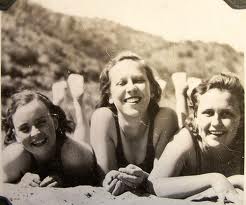
Everybody sing!  “Friends!” (You know you’ll be singing that song for at least the next 18 hours, right?)

Have you ever noticed that whenever you have something on your mind, pretty much every fourth Facebook status update alludes to it in some way?  Well, lately, I’ve been thinking a lot about friendship.

Here are the top ten things I need in a friend (DISCLAIMER:  This list will and SHOULD change for you.  This is MY list.  Make your own.  Damnit.):

  1. Laughter.  O.M.G.  You must make me laugh, or laugh at my jokes, or laugh with me, or laugh at me.  I don’t care which, but laughter must be involved.
  2. Consistency.  In some way, I need to know I can count on you.  Note: You do not have to be consistent in all ways; nobody is.  But, I need to know that some element of our relationship provides a touchstone in my life.
  3. A sense of unconditionality.  Face it.  The only way I’m going to tell you my deep, dark secrets is if I have some assurance that on the deepest levels they won’t change a damn thing about the core of us.
  4. Predictability.  I want to have a basic ability to know what you would say or what you would do . . . because you’re just so darn solid.
  5. Spontaneity.  Don’t be TOO predictable.  Every now and then, I would want you to be the one to say, “Hell, yeah.  Let’s go!”
  6. Intelligence.  Sorry about this one, but you’ve got to be intelligent.  You need to stimulate my thinking.  Fortunately, my best friends all do this almost constantly.
  7. Flexibility.  Although I rarely change plans, I like to be around people whose response to changed plans (mine or others) is, “No problem.”
  8. Faults.  There should never be more than one perfect person in any relationship.
  9. Analytical skills.  If I could figure my way through my own problems, I wouldn’t need friends.  And, lord, do I need friends.
  10. Compassion.  I will need it from you when I make mistakes, and the best way I will know I can get it from you is by watching you express it toward others.

I make no claims that this list is complete or in any way perfect, but it’s pretty damn close for now.  My dearest friends have all of these.  I only hope I can give them back even half of what they give to me.

Rose and Justice — Installment Nine

This is Installment Nine of the novel Rose and Justice. It includes Chapters III.i, III.ii, and III.iii. It is 5,818 words long. As installments are posted, links for each will be added under the tab labeled “The Novel” at the top of this page. Enjoy!

III.i

            The Light Council was not elected.  It consisted of beings who had reached complete enlightenment and then returned to earth, not just for love, but for the ultimate love of all beings and the overwhelming desire to assist them in their journey toward the light.  When these beings returned to the Light world, they were automatically accepted as members of the council.  No announcement was made.  No one would come to them and inform them of their position.  It was just automatically known to all in that world, including the being newly admitted to the council.

These beings were never referred to by their last earth names, but rather by the Light title they naturally possessed.  Therefore, Jesus was referred to as Teacher, Mother Teresa was Mother, Gandhi was Mahatma, Buddha was Enlightened One, Martin Luther King, Jr. was Father, and Mohammed was the Prophet.  These six had in some way given their entire lives to elevating the consciousness of the world — some through human death, others through long human life dedicated to teaching the truth and justice of love.  Their word was not questioned in the light world since all knew their spiritual evolution to be so complete that they were incapable of making a wrong decision.  Thus, all of their decisions were unanimous and final.

Hal and Malcolm sat in the circle waiting for the council to complete their morning meditation.  There was no separation from the great six when one was called into their presence; you simply joined their circle around a large white bowl of glowing water.  There was no sense of sitting in judgment when one came to the Light Council.  Judgment was a human invention.  The Light Council needed only truth.

The Enlightened One opened his eyes first and mentally called the others out of their state of nothingness.  “Our guests have arrived.”

“Do you know why you are here?”  Mother asked gently.

“I have no idea.  I am sure there must be some mistake.”  Malcolm piped in.  He knew he would be going back, but he was determined to fight it to the end.  Hal just sat quietly knowing he would have to bear witness to Malcolm’s indiscretions.

Mother spoke gently, “Do not lie to me, my son.  You do know why you have been asked to meet with the council, and there is no good reason to resist the inevitable.”

“You have manipulated the destiny of another being,” Mahatma intoned.  “You have shown resistance to the way of the Light since your last incarnation ended.   You have insisted on remaining in a combative state even on the plane of no conflict. Therefore, you must return again to learn the lessons you have thus far refused to accept in your soul.”

“Please, no.  Give me one more chance.  I promise to love everyone, even if they treat me badly.”

“And in your very words you express the lesson you still have not learned,” Teacher said.  “No one treats you badly, Malcolm.  They simply reflect back to you what you impose on your own existence.  If you would be wise enough to take my advice, then I would suggest that you begin setting your intention now for an incarnation that will be filled with lessons so that you might just get to stay the next time you are fully realized on this plane.”

“Oh, Jesus,” Malcolm muttered.

“Yes?”  Teacher asked.

“Oh, uh, . . . nothing, Teacher.”

“And now for you, Hal,” Mother said.  “It is with some sorrow that we inform you that you, too, must return.”

“Begging your pardon, my Mother, but . . . what??”  Hal was stunned.   There were no secrets on the Light plane.  All knowledge was available to all beings if they simply asked for it.  He could have known he was destined to return if he had inquired of the Light, but it was a possibility so far removed from his thoughts that he hadn’t even considered it.

“You even more clearly manipulated the destiny of others.  Your evolution was so near completion that, frankly, we had you pegged for the council at some point in the future.”  Father spoke.  “But, regardless of your rather benign and certainly well-intentioned misuse of light principles, you would have chosen to return anyway.”

“I would have?”  Hal asked in disbelief.

“Yes,” said the Enlightened One.  “Your soul had already decided even if you were not yet consciously aware.  You were going back to help Juliet — yet another small bending of the rules.”

“Therefore,” Prophet interjected, “you will both be sent back to learn a great lesson from this particular event.  Hal, you will be returning to assist in the muddle you have helped to create for Romeo and Juliet.  And, of course, to learn.  Always to learn. You will see just what it is you have done to two lovers who so desperately want and deserve to find each other after so much time of searching.  You will see that a love destined to be fulfilled on the mortal plane has been given overwhelming obstacles because of the both of you.”

“Oh, my god, no,” Hal felt a greater pain than he had ever known in the Light world.  His pain had nothing to do with his return to the weight and restriction of a physical body.  No, it was based solely upon the way his desire to assist Juliet was going to cause her pain and trouble.  If the council spoke of hardships for her, than they were sure to come.  His heart was breaking for what he had done to Juliet.

Mother reached out her hand and placed it on the back of Hal’s neck.  She stroked his hair and spoke quietly.  “Already you feel the pain of being human.  You acted from a human place, Hal.  You acted from a human place and yet with spiritual wisdom and love.  You knew that the Light would bring all things to their natural and perfect conclusion, yet your love for Juliet was so strong that you felt you knew her needs better than the Light could know them.  Even love has consequences, my child.”

Teacher took Hal’s hand.  “You have a specific mission on this trip, Hal.  If Romeo and Juliet can fulfill their love on earth in spite of the incredible odds against them, then you will have completed it.”

“But, wouldn’t that be manipulating their destiny?”  Hal inquired.

“No.  You have a mandate from the Light.  You are going to provide balance to the predicament they will find themselves in.  If it had not been for your involvement on this plane, their job would have been much easier on the earth plane.  You must do everything you can to make that right.  And, Hal, it won’t be easy.”

“So, what’s my mission?”  Malcolm asked.

Mahatma answered for the council.  “Your mission is to learn to live in the Light.  Hal is going for Juliet and Romeo.  You are going for yourself.   You are going to the same place so that you can learn from Hal, if you choose, and also from Romeo and Juliet. You are going to learn that war in any form is in direct opposition to the Light and the most unloving of all behaviors.  Your war is within yourself, Malcolm.  Thus, you know of no other way to interact with others than through conflict.  War and Light cannot inhabit the same place.  Violence always happens in the dark.  And the Light is simply illuminated love.  To live in the Light, you must learn to love, not fight.  Be certain that you meditate as much as you can before you return so that you will be certain to truly learn that lesson this time, my friend.”

And this was how it came to be that Malcolm returned to the earth as the second son of Jared and Melinda Malone – Marshall Jared — and Hal returned to earth as the first child and daughter of Aaron and Mary Malone — Hannah Elizabeth.

III.ii

            Hannah Elizabeth Malone was three years old and learning to eat on her own.  It was a task replete with problems for the toddler.  For one thing, her mother had to get her to stop humming long enough to make the attempt.  Hannah was born with music in her soul and seemed to sing her first word rather than say it, the first “ma” a pitch-perfect G followed immediately by a second “ma” that slurred up to a C.  The only music available on the Malone compound came from the radio in Uncle Jared’s house, and Hannah would often be found changing the dial from conservative talk radio to a music station any time she could get into the main house undetected.  She had honed in on that device like a needle pointing to magnetic north almost as soon as she could walk.  She wasn’t choosy in her musical tastes — she would listen to rock or classical, country or pop, although Uncle Jared flew into a rage the one time he had caught her singing along with the latest R&B star to hit the airwaves.  Hannah could hear a song once and remember it word for word and beat for beat from then on.

Once, when Uncle Jared had allowed the children to go into town for the weekly supply trip, Hannah disappeared from the small pack.  Aaron and Jared took all the children back to the truck and left Clete, Jr. in charge while they began a sweep of downtown Brunswick looking for her.  They had searched several businesses on the Gloucester Street when they came across the small girl in Manley’s Music Store.  She was sitting at a piano, with every employee of the store gathered around her, and playing the melody line of Mozart’s Andante from Piano Concerto 21 in C flawlessly.

Jared had jerked her by the arm without a word.  The manager of the store followed him out, trying to reason with him the entire way.

“Is this your child?  She’s . . ., well, she’s a prodigy.  There’s no other word for it.  Please consider getting some lessons for her . . . or a piano.  I don’t even care if you buy it from me, just get this child a piano.  Talent like hers is one in a million.  Sir!  Please, sir.”  As Jared began walking down the sidewalk with a smiling Hannah in tow and her father, Aaron, walking three paces behind as if he had done something wrong, the store manager shouted after him, “She can come back anytime!  She can just sit in the store and play anytime she likes!”

Jared did not buy a piano.  Even if he had believed it was a worthwhile investment, he would never spend so much money on a worthless child like Hannah.  He inwardly blamed her blindness on Aaron’s weakness.  He believed that Hannah’s visual impairment was some kind of genetic reproach against his brother and his brother’s wife.  He was incapable of understanding that Hannah’s blindness was the very reason for her musical prowess and her ability to see things Jared would never see.

“Now, Hannah Elizabeth, settle down and focus on your plate.  Here, touch it.  Your pork chop is on the left side, the peas are on the top of the right side, and your mashed potatoes are at the bottom.”  Mary Malone struggled with her child for well over 30 minutes until she had the idea that would work.  She assigned each section of the plate a song.  From then on Hannah fed herself, humming between bites according to where she had retrieved that bite from the plate.

Mary struggled with opposing feelings where Hannah was concerned.  She loved her child more than she would have dreamed possible.  Even with her blindness, Hannah seemed perfect to her.  Yet she felt a sense of shame around the others, knowing they either pitied her or blamed her for her child’s seeming handicap.  Thus, Hannah grew up believing that love was something that must be hidden.   Yet, she felt it so purely that even with the lessons of her environment, she could hardly help but express love to those around her.  From the beginning, Hannah’s most prominent personality trait was a gentle kindness that endeared her to even the most closed hearts.  All except Jared, who refused to see any good in her at all and continued to believe that she was an indictment against her parents.  The only way it would have been worse would have been if she were a boy — a blind boy, all that wasted maleness.

Jared had at first refused to allow his sons to play with their cousin.  This had little to do with her blindness.  He simply believed that young boys should have no interest in girls until puberty at least.  But he couldn’t police everyone on the compound 24 hours a day and so Hannah spent quite a bit of time with Justice and Marsh.  Justice was four when Hannah was born and he watched over her like she was his little sister.  He was learning the ways of his father, yet adored his little cousin in a way he couldn’t begin to understand, yet alone explain.  Justice’s brother, Marsh, was exactly three days younger than Hannah, right down to the minute, and this was a source of constant irritation for the youngest Malone boy.  Whenever he was difficult to deal with, which was often, Hannah would remind him that she was the oldest and he should listen to her.  She never did this haughtily, but rather as a kind reminder.  His reply was often an echo of his father’s beliefs, “Well, I’m a boy, so you should listen to me.”

Justice learned his father’s ways and followed them because that was all he knew.  Jared allowed the boys very little exposure to life outside the compound, so they could hardly be held responsible for the rigid beliefs they inherited.  Had Jared known the true heart of Justice, he would have been very disappointed.  Justice did what was expected and said all the right things, but he felt no passion about life on the compound as his father did.  Mostly he felt that something must be happening beyond the fence that he was missing.  From the time he could walk, he was in constant search of a way to sneak away, if only for a little while.  As a very young boy, his escapes were limited to Saturdays in town with his father.  As he grew, his excursions would become increasingly more daring and more secretive.

Marsh, on the other hand, believed everything his father told him, held it like a precious gem, and produced it again, verbatim, at every opportunity.  He lived under the heavy shadow of being the second born in a family that followed the right of succession almost as religiously as the English monarchy.  His adoration of his father was a subconscious begging, a repressed plea for attention and love clouded by the belief that it was nothing more than a strict adherence to the chain of command.  Marsh needed love more than anything, but hid that need under an aggressiveness he thought his father would admire.  He detested Justice’s status as the heir apparent, yet held an unexplained attraction to his big brother.  There was a part of him that would have plotted Justice’s demise had it not been for the mysterious fact that Justice was the closest friend he had.  It was Justice who seemed to understand Marsh with an intuition that was almost psychic.  Marsh felt immense love for Justice, yet despised the firstborn Malone.  It was a paradox that would haunt him for years.

III.iii

           Hannah Elizabeth was missing.  It was two days after her 10th birthday and the day before Marsh’s.  She had been playing in the sandbox with Marsh when a rabbit had grabbed Marsh’s attention and he took off in chase, wishing he had the .22 rifle he knew he would get as a present tomorrow.

Every Malone boy got a toy gun at birth, a pellet gun at the age of five, and his first real gun, a .22 rifle, on his 10th birthday.  Once he had received his gift at the noon party, his father would spend a good hour teaching him how to handle, clean, load, unload, and, finally, shoot his gun.  Then father and son would go hunting until the sun went down.   On this excursion of male bonding, Jared would give his son the same talk his father had given him on his 10th birthday.   Over the course of the afternoon, he would explain how the younger Malone was now a young man and that he had been given a proud legacy which it was his duty to preserve and protect.  Marsh would be told how the government had stolen his family’s land and that the laws of society were designed to benefit Jews and mud people, not real Americans like the Malones.  And it would be explained how it was the mission of his young life to counteract to the best of his ability every attempt to bring down the superior white race.  Finally, he would be given the mantra of the Malone clan in an almost ceremonial procedure that included him kneeling before his father and repeating the words he already knew so well, but would say for the first time aloud tomorrow.  “I live and I would die for God, family, and race.”  Marsh couldn’t wait for this twisted Malone version of a bar mitzvah.

But, for now, he was in deep trouble.  He had not been directly told to keep an eye on Hannah, but it was always understood that she was less capable and therefore needed the protection of the boys.  That would have been understood in the compound even if she wasn’t blind.  She was a girl, and that was enough to determine her need for protection.

“Damn it, son.  You’re gonna’ be ten tomorrow and not even man enough to watch out for your cousin.  I don’t know if you’re ready for a rifle or not.”

“I am, papa.  I really am.  I was only gone for a sec.  She jes’ scooted out like a greased pig.  You know how she is, papa.”

“I know, boy,” Jared eased up on his son.  He was determined to find the little girl and protect all Malones, but Marsh was much more valuable to him, and he couldn’t quite find it in his heart to be too hard on the boy for losing a little blind girl.

Jared gathered the men on his front porch.  Mary Malone was close to hysterical with worry.  Aaron was worried, too, but never showed too much concern for Hannah in front of Jared.  He knew what his older brother thought of his imperfect daughter.  Jared had even hinted to Aaron several years back that he ought to consider having Hannah’s tubes tied when she got older, “so she won’t have more blind babies.”  Aaron inwardly refused and vowed to never do as his brother suggested, but he couldn’t quite defy Jared to his face.

The men, including Clete Camden, Jr, who was now 20 and considered a full-fledged man of the compound, and Justice, who was 14, set off to methodically sweep the 48-acre compound.   It stirred Marsh’s blood that he was not allowed to go along.  In 24 measly hours, he would have passed the first mark of Malone manhood and probably would have been one of the search party.  But, partly because of his current status as being officially still nine years old, and partly because he was held responsible for this crisis, he was left at the cabins with the women and the growing cadre of smaller children which had begun to populate the Malone village.

A thorough search of the 48 acres, including each of the 12 buildings, took the party of eight an hour.  This was a procedure they practiced routinely so they could determine any breach of security within a short time.  It was done quickly, but without any chance of an oversight.  Hannah had truly disappeared, a seemingly impossible task, and in a relatively short time — it had only been an hour and 25 minutes since her absence was discovered.  It would have been difficult for a sighted child of 10 to get on the other side of an almost impenetrable fence that was quite a distance from the circle of cabins in such a short period.  How Hannah had accomplished it was beyond Jared Malone’s comprehension.  The only other possibility was that she had waded into the marsh and drowned, an option they had each thought of but no one had yet voiced.

The men met back at Jared’s front porch within minutes of each other with the same report: no sign of her.  They fancied themselves all expert trackers, so this was an exasperating situation.  After they had discussed their options, or lack thereof, for almost 15 minutes, Justice finally spoke up in a quivering voice.  As the youngest, he was not expected to even voice an opinion.  His words now grabbed the others’ attention.

“I . . . I think I might have an idea.”

“What?  What did you say, boy?”  Jared asked in a rough manner.

Justice swallowed hard and spoke with a little more conviction.  “I said, I think I might have an idea.  About how Hannah might have gotten out, I mean.”

Jared’s eyes narrowed to slits.  He lived in constant suspicion of everyone and everything.  “Out with it, boy.”

Justice looked at the ground.  “There’s a spot.  In the fence.”  Justice gulped hard and labored on.  “It’s near the, . . . near the east watchtower.  You can get out if you know where it is.”

Jared Malone walked slowly to his son as the rest of the men held their collective breath.  They had all seen his temper and waited for the firestorm certain to land on the boy’s head.  But, Jared spoke with a quiet and controlled voice, almost a whisper.  “And how do you know about this ’spot’ in the fence?”

“ I . . . I just know, that’s all.”

Jared stared at the top of his son’s head for a long tense moment.  “Take me to the spot.”

“Yes, sir,” the reply was inaudible, but no one questioned Justice’s answer.

“The rest of you men get the four-wheelers and start searching outside the compound.  Two teams.  One leaves from the south gate and sweeps around to the east side.  The other head to the north side and sweep east.  Take the dogs and be sure to check the marsh.  We’ll meet up at the east wall by the watchtower.”

“S-s-sir?”

Jared turned around slowly.  “This had better be good, boy.”

“The spot.  It’s too small for you to get through.  You’d be stuck inside the fence, sir.”

Jared quickly calculated the amount of time it would take to enlarge the hole in the hard timbers fencing in the east side and considered the increased effort in patching up the hole.  He hesitated, then decided.  “I’ll go with the south team.  Justice, you go through your spot.”  He said the words “your spot” with such venom that Justice knew he was going to pay dearly for his secret once Hannah was found.

It was about half a mile from the east side of the Malone compound to the Atlantic Ocean.  The first stretch of land was a marsh little visited by any other than biologists and the most hardcore fishermen.  Once you crossed Ocean Road, the ground was more solid and a narrow residential community was all that separated you from the dunes spotted with wild sea oats and occasionally loggerhead turtle tracks.  The marsh was federal property and it was against the law for anyone to have a gun on this tract of land.  All the men knew this.  And all knew better than to ask about leaving their guns at home.  Jared cared little for the law and would probably shoot a federal agent before handing over his weapon.  But this particular marsh was rarely visited by anyone.  On the off chance that a St. Simons police cruiser was poking down Ocean Road, the men were quite capable of evading an officer’s eyes.  Jared had grown up as a regular marsh rat and had trained the men to be the same, such that they would be aware of any other human long before the other human was aware of them.

Justice paused at the small hole in the fence.  He didn’t use his secret passageway to freedom often — he mostly just felt better knowing it was there — but when he did, he always left his gun leaning against the fence inside the compound.  He didn’t relish getting into trouble and hated his gun besides.  He often wondered why his father measured manhood by an instrument of killing.  They shot wildlife for food and even while eating the deer or rabbit Justice could only think of how one-sided the fight for life had been.  He secretly believed that if his father were a real man, he’d catch the rabbit by hand and even the playing field a little.    But this time, Justice knew his father would ask about his gun once they met up outside, and he was already in for the tanning of his life.

Justice scooted the gun through, then flattened out on his belly to inch through the hole.  Within the year he would have had to enlarge it to keep up with his own growth, but he knew plans for that project were futile now.  The hole was almost directly underneath the east watchtower.  Jared had taught his son too well.  Justice knew that the men in the tower always looked out, away, beyond.  By making his escape 30 feet directly beneath them, they never saw a thing.

Justice didn’t really care for the marsh much.  It seemed so big once you were in it and he felt so alone here.  From the watchtower, there was a clear view of the grass and water, the high spots and low spots.  Justice could easily determine a trail to Ocean Road that would only include a little wading.  But, from the ground, the marsh stretched out like a wet grassy puzzle.  Once he had snuck out at night and about wet his pants at the sight of marsh grasses swaying in the moonlight.   What drew him to this place was a mixture of variations on the same theme.  He was away from his father.  He was on property that any other citizen could be on if he or she so chose.  He was able to look in the direction of Brunswick and Savannah and Atlanta and, though not seeing them, not see a wall either.  That one short wiggle on the ground brought him freedom.  His father talked a lot about freedom.  Justice always felt it ironic that his father was the barrier which kept that feeling of liberty so elusive, more so even than the fence.

On the few rare occasions when Justice had dared to use his secret door to freedom during the day, he usually stayed close by the fence, hating it and somehow needing it at the same time.  It was his prison and his shield of security.  Everything beyond it was unknown and a little scary.   Twice he had dared to venture as far as the shore.  Both times had been of equal magnitude.  The persistent waves and salty air were like the sound and taste of a kind of freedom with no borders at all.  He could just barely make out the northern tip of Jekyll Island on his right, but other than that there was only ocean, an ocean that seemed to go on forever.  He had paid enough attention when his mom gave him geography lessons to know that if he could see far enough and if his vision was subject to gravity then he would see the western coast of Africa.  But it was the idea of infinity that was real to him as he watched the sea meet nothing but sky in the distance.  He had been lucky enough to spot a school of porpoises on one of his two trips to the ocean.  He had seen them before in Postell Creek, the north border of their property.  They often swam up the tidal rivers, but seeing them in the ocean was different somehow.  They seemed to be playing as they leapt from the surf effortlessly and then slid back into the depths.  Justice had remembered feeling jealous of the way they so easily accepted their freedom.

The day Hannah disappeared was a beautiful day in early April and Justice wished that he was out on his own under other circumstances.  He couldn’t even enjoy his freedom today, proving it was his father and not the fence that kept him imprisoned.  This trip out of the compound was a sweet sorrow, a blessed excursion through the wetlands and a mournful goodbye.

Why had he told Hannah about the hole in the fence?  And how had she gotten to it so quickly?  He had known she would never tell, but now she had inadvertently caused the truth to come out.  He wouldn’t blame her for this; finding fault wouldn’t erase the tape of the past few hours.  He hadn’t really needed to tell his father about the fence.  The men would have begun a search outside the compound eventually anyway, and he knew his father wouldn’t stop until he had discovered just how she could escape the fence and marsh that held them all in so well.  He also knew that a secret his father uncovered would bring twice the fury as a secret he willingly told.

Justice moved through the marsh with his thoughts on his father, but his awareness on the water.  He needed to find Hannah.  It was the only possible way to reduce his punishment at this point.  And, besides, he loved his cousin dearly.  He was worried about what his father would do to him later.  But, he was much more worried about Hannah.  Finding a safe walkway through the marsh was difficult enough for him, a trained young man with all of his faculties.  He knew one thing about Hannah, however, that his father didn’t.  Blind though she was, she was also extremely savvy and capable.

Justice moved swiftly and methodically for twenty minutes.  He didn’t call out for Hannah.   He knew that if she was out here, he could find her.  He got to Ocean Road and wondered if it was possible that she could have gotten this far.  He crossed the street knowing that Hannah would not have known to listen for cars and the thought made him shudder.   A small park separated the houses on his left from those on his right.  To his right, in the middle of a development of rental cottages, was the old Coast Guard station.   The park was the route he had taken to the ocean on his other trips and the most direct, although he was uncertain just how directly Hannah would have traveled.  The land had changed when he crossed the road and the park was heavy with live-oaks, the Spanish moss draping off of them like it had rained on God’s canvas before the paint was dry.  He got momentarily detained by a copperhead in his path and wondered if Hannah was capable enough to avoid a poisonous snake she couldn’t see or hear.   But his concern about this ended quickly when he saw the back of her dress.  She was standing, the front half of her hidden by a large oak, and she appeared to be playing a hand-clapping game with an imaginary friend.   When Justice got within 20 feet of her, he propped his gun against a sego palm and called her name so she wouldn’t be frightened about someone approaching her.

“Hannah Elizabeth!  It’s Justice.”

“Justice!   I knew you’d come.”

“Hannah, what are you doing?  You’ve got the whole com –”

“This is my new friend, Rose.”

Justice stopped, stunned, speechless.  The first thing that struck him about Rose was the last thing Hannah could possibly have noticed.  She was black.  The second thing that struck him about Rose was that she was as beautiful as her name.  No, more beautiful.  By any name, she would have been as beautiful and perfect as a rose.  The third thing that struck him about Rose was that she carried a copy of Gone With The Wind under her arm.  It struck him as odd because it was the only novel his father had ever read.

“Hi.  I’m Rose.  You must be Justice.  Hannah has told me about you.”  Rose stuck her hand out to shake.

Justice closed his gaping mouth and looked at her hand.  It was slender and graceful.   He reached out slowly and took her hand in his.  Hers was the softest skin he had ever felt.

“Hannah didn’t tell me you were so quiet.”

“I, . . . uh, Hannah, we better go.  Everybody’s looking for you.  We’re both in a heap of trouble.”

“I just wanted to see the rest of the world, Justice.  You’re not mad at me, are ya’?”

“No, I’m not mad.  I don’t blame you a bit.  But, we really gotta’ scoot now.”

“It was nice to meet you, Justice.  I always hoped there would be justice somewhere in the world, and now I’ve found you.” Rose smiled.

Justice smiled quickly, then grabbed Hannah’s hand and led her away as she hollered her goodbyes to Rose.  Justice fought the incredible impulse to turn around.  He felt as if he had never seen beauty until today.

Rose watched the pair until they disappeared across the road and into the marsh, a strange place to be walking she thought.  The boy, Justice, somehow compelled her.  Was that a gun she saw him stoop to pick up?  He was just a boy of 14 or so, and she was 19, a sophomore at Spelman.   Yet, she felt an odd urge to call him back, to be in his presence again.  She felt almost embarrassed at her internal reaction to this boy, and a white boy at that.  Surely, she must have been reading too long in the sun.  Maybe it was her subconscious urging her to put down her book and interact with people, like her mother was always harping.  Whatever it was, it didn’t seem to leave for hours, and over the years she occasionally would think of the boy by the seashore.

© Deborah E. Moore – 2011

Write It Down

In my World Literature class, we spend some time studying biblical literature, as well as literature that predates the Judeo-Christian bible.  I explain to my students that the ancient Hebrews weren’t really all that impressive.  They were a wandering group of shepherds who only produced two great kings — David and Solomon.  They didn’t create great urban centers along the known world’s great rivers.  They didn’t develop an alphabet or contribute medical, architectural, or economic developments to humanity’s knowledge base.

There were far more complex societies such as the Akkadians, Sumerians, and Egyptians which left their mark on the ancient world.  In short, the Hebrews didn’t do much of anything, except . . . they wrote their story.

 As I was going through old boxes of pictures, cards, and letters yesterday, I ran across the beginning chapters of my father’s autobiography which he had mailed to me in 1999.  It was mostly random memories of his early childhood and teen years, but chock full of long-past moments now fascinating to me.  His homerun record in Little League.  The first family vacation to Florida.  Driving himself to get a haircut when he was ten (with his father’s permission to take the car).

I also have some journals of sorts that had belonged to my maternal grandfather.  I say “journals of sorts” because grandpa was far too busy to spend much time in a writer’s necessary pondering.  He kept pocket-sized datebooks in which he would record events.  When he died, my mother gave each of us the book from the year we were born.  On April 5, 1964, grandpa wrote, “Debbie born.”  That’s it.  Just those two words.  Yet, when I read them, in his handwriting, I can imagine him pulling out his datebook after receiving the call and making a notation of the fact that I had arrived.  By writing those two words, he put a pushpin into the map of time, a reference point that somehow validates that I was here.

I love blogging, but there is something precious about my personal journal.  It tells my story in a much more intimate way.  It explores my relationships and personal process in ways that I may not always feel comfortable making public.  I love writing a secret to the universe and wondering what will happen to those secrets.  Will someone read them one day?  Will a niece or nephew discover them when I have passed from this earth?  Will a stranger, picking through the garbage after the estate sale, pick up a plain brown-covered book I hunched over years before and find it interesting or even perhaps instructional?

Write your story.  In whatever way you desire.  Whether it is a two-word comment in a tiny date book or an epic narrative.  I can’t promise you’ll influence the world in the way Moses has, but you just might leave your children the most precious part of you, memories you know so well but which will be a secret kept from them forever if you don’t write them down.