Routine

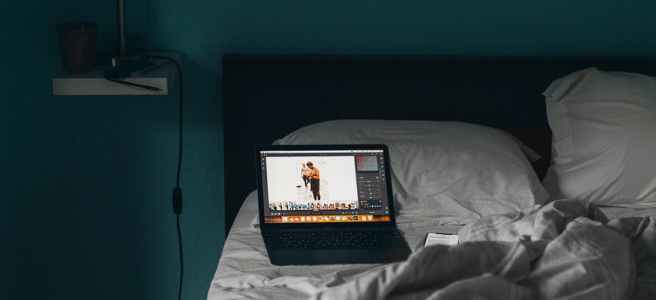
Office reruns in bed

late at night

(Jim plans a prank)

We laugh so

hard we have to

pause the show

We catch our breath

You press play again

My toes reach for yours

under covers

You play 

a game online

Me, a crossword puzzle

(Dwight planning Jim’s demise)

My right hand clutches

pen and book

My left reaches for

your fingers

gripped on your phone

I stroke the back

of your hand

(Jim grins at the camera)

Subtly, not suggestive

You say nothing

But I see you

smile

© 2020 Deb Moore, All Rights Reserved

Spirit Guides or Menopause?

I work in academia, and friends of mine like to play a little game called “Academic or Homeless.”  Here’s how it’s played: You drive around the neighborhood of a university, preferably a major research center, and determine whether the people you see walking down the street are academics or homeless.  At first it’s quite difficult, but after a while you start to get the hang of it.  Academics are usually not dressed as well.   

Anyhoo, I have my own version of the game.  I call it “Spirit Guides or Menopause.” 

“Spirit guides,” by the way, is a collective term for all of the unseen spiritual forces constantly interacting with us.  Some people have deceased ancestors or archangels or ascended masters nudging them from beyond the veil.  I have something more like a full glee club of deceased vaudeville acts.

My spirit guides must have some difficulty getting their message across because they have been known to resort to some pretty dramatic ways of getting my attention.  But, I’m also a menopausal woman, and that can get confusing.  I’m not always sure if specific experiences are an abundance of heavenly energy or a deficit of estrogen.  I can hear some of my spiritual friends now saying, “It’s all speerit.”  Perhaps it is.  But, I’m pretty sure my reaction to you saying that is pure menopause. 

Okay, so, . . . hot flash.  Spirit guides or menopause?  Well, are you in a sweat lodge?  That would be your spirit guides.  Or it could just be your biological reaction to hanging out in a life-size tandoori oven, but we’re going to give the guides this one.  But, let’s try a different scenario.  Are you breaking into a full sweat after stepping out on your front porch still wet from a shower early on a January morning when the National Weather Service has just predicted a record-breaking low?  And you’re naked?  That’s menopause. 

Mood swings . . . spirit guides or menopause?  Do not think for a moment that your Spirit Guides won’t give you mood swings.  Especially when they’ve been drinking.  If you’re torn between two important choices, and you feel like the direction of your life could be dramatically altered based on your decision, any mood unpredictability could be your spirit guides attempting to plant some road signs in your psyche.  However, if you’re experiencing what could be a contender for the greatest day in the history of great days, — sun is shining, temperature is not too hot and not too cold, birds are singing, you had a good night’s sleep— but you just cussed out an 80-year-old woman at the grocery store for having 13 items in the 12 items or fewer lane, and she was a nun, that’s menopause. 

Trouble sleeping . . . spirit guides or menopause?  If you are awakened at precisely 3:15 each morning, but you feel refreshed, and within about 20 minutes you are astral traveling to the Pleiades, yeah, that’s spirit guides.  But, if you’re awakened at 12:15, 1:15, 2:15, and 3:15 feeling like meat in a grinder and within about five minutes you’re traveling to the bathroom or to the kitchen for a snack or maybe even out to the end of the driveway to take out the trash you forgot to take out the night before because you could have sworn it was Wednesday, but now you remember that it’s Tuesday, and the garbage truck will be rumbling by about 7:00 a.m., . . . that, all of that, is menopause. 

Memory problems . . . spirit guides or menopause?  Your spirit guides will cause you to forget past hurts, futile regrets, and personal slights, both real and imagined.  Menopause will cause you to forget why you’re driving down the road, what colors go with blue, and your cat’s name.  

Decreased sex drive . . . that’s just menopause.

A few years ago, a friend asked me whether it could all just be menopause.  Being a middle-aged woman brings so many changes it feels like second puberty at times.  Perhaps the hormone fluctuations are solely responsible for both early morning pee breaks and out-of-body experiences.  Maybe the shutting down of the baby factory is the only cause for both forgetting where you set your keys and forgetting that 30-year-old heartbreak, the remembering of which, by the way, has never really done you any good.  So many women I know hit warp speed with spiritual development at this time of life, so maybe it’s all just menopause. 

Or, maybe it’s all just speerit.  You decide.  You can play the game any way you choose.  

© 2020 Deb Moore, All Rights Reserved
Blackberry Winter

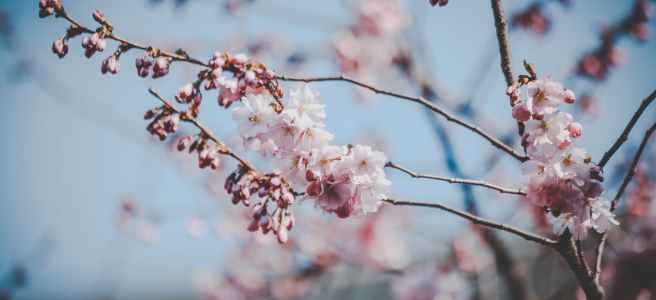
It’s that time of year                                                                                                                      when the world is half awake.                                                                                              Upright, sure.  Eyes open, mostly.

Daffodils are history.                                                                                                                      Redbud color has come and gone.                                                                                    Dogwoods still razzle-dazzle.                                                                                                          The elm looks almost full.                                                                                                              The maple has already                                                                                                                    put in a full day’s work. 

But the mimosa out front                                                                                                                has yet to crack open an eye.                                                                                                          The walnut looks as tucked in                                                                                                          as the middle of winter.

Gaia hits snooze                                                                                                                                and back we go to                                                                                                                               locust winter                                                                                                                                     dogwood winter                                                                                                                       blackberry winter.

She doesn’t rush things.                                                                                                                  She lets this one get the worm                                                                                                         and that one sleep in.

Everything in due time.                                                                                                              Everything in its season.

© 2020 Deb Moore, All Rights Reserved
You Can’t Chew Gum And Read Hamlet

I read out loud whenever I’m alone.  My grandfather advised me to do this when I was just seven or eight.  He told me it would improve not only my reading comprehension but also my speaking voice and vocabulary, so I have done this religiously ever since. 

The satisfaction this brings is difficult to describe.  When I recommend the practice to my students, I can read their eyes clearly.  They think I’m crazy.  They can’t imagine that anyone would actually do what I’m suggesting.  I do my best to sell them by delineating the academic benefits they may derive.  Perhaps I’m afraid that fully expressing the pure pleasure I get from reading aloud will forever damage my reputation with my students.  I’ll be on the express train from cool professor who cusses and understands social media to virginal cat-lady whose punny allusions to Pope or Emerson are met with blank stares. 

I could never tell them that not only do I read aloud, I often stand up and act out the parts.  I could never tell them how many common household items have been used as a microphone.  I could never tell them that Austen and Woolf and Wordsworth and Dickens must all be read with a British accent.  And I could certainly never tell them that, because of all of the above, reading one of Shakespeare’s plays is practically a sexual experience. 

How do I begin to describe how delicious the words are as they line up in my throat, roll around in my mouth, and bounce off my teeth?

Even before that, though, words begin in the eye.  The very shape of them on the page cues cognition, emotion, mood, energy, lungs, diaphragm, sometimes even tiptoes.  What do they ask in terms of volume, emphasis, feeling?  How long is the sentence?  Where is the next breath going to come?  

The t.  How could I ever express proper love for the t?  An alliterative t is like a multiple orgasm.  Two to tango.  Trick or treat.  Turn the tables.  Trials and tribulations.  Test of time.  You can feel that in places only euphemistically acknowledged in polite company.  

The t is so sexy that it makes other letters hotter than they would be alone.  The h, for instance.  All by itself, h is a lot like my Uncle Harold—warm, friendly, but not exceptionally exciting.  If t is tantalizing, h is hearty.  If t is tasty, h is healthy.  No part of the mouth is actually required for h.  Have a heart.  Hem and haw.  Happy holidays.  But put a t with it, and now you’ve got something.  Thick and thin.  Thick as thieves.  Think it through.  Hither and thither.  And throw me out with the bathwater if I fail to mention “thrust.” “Thrust” is so deeply satisfying that one almost needs to smoke a cigarette afterward.

Perhaps the best t is the one sandwiched between s’s.  Exists.  Dentists.  Instrumentalists.  Anti-capitalists.  Linguists. Geneticists.  This t is a bit of a sadomasochist.  It’s in charge, but you’ll never really know that.  At just the moment when it would drown completely in the stormy, sputtering, swelling seas, it pokes its head up and hisses, “Not without me, you don’t.”  It broadcasts its existence in tiny bursts, like catalysts for suppressed sound.  

The k or hard c sound is a kick in the pants as well.  A comedian told me several years ago that this consonant sound is the secret to comedy.  The word “fuck” isn’t favored by comedians because they all have potty mouths. The k sound is actually known to be the funniest sound in the English language. It hits the ear in a way that tickles.  Even comedians who don’t cuss that often (do they exist?) will try to find a way to put that sound in most of their punchlines.  A conk to the cranium is simply funnier than a blow to the head.  

In the earlier reference to reading Shakespeare, I was tempted to describe it as “life-altering” or “transcendent,” mostly because I was concerned I might have too many sexual references in this piece.  But, those choices would cause me to lose the hard k sound.  The x is actually a plural k; it’s phonetically rendered as “eks.”  So, while transcendence may be descriptive, sex is funny.  

D, on the other hand, always means business.  It’s a serious sound.  It’s the strength of dad, the finality of death, the suing for damages.  In order for d to be funny, it has to be doubled—diddly—or paired with z’s—dazzle, dizzy, drizzle. 

R’s can be problematic.  The Scottish part of my DNA wants to linger on them just a wee bit.  They really should roll.  R’s are more susceptible to accent variations than most other letters.  They don’t exist in Boston.  They’re inserted where they don’t belong in the American South and parts of the Midwest (warsh the car).  The British soften it in the upper class and squawk it in the lower.  Pirates rely on it almost exclusively.  I don’t know what Bostonian pirates do, but if I ever meet one, I’ll be sure to listen closely, hoping against hope to hear, “Parrrrrrk the carrrrrr in Harrrrrrrvard Yarrrrrrrd.”  

(Note:  Those of you who think consideration of how pirates would pronounce an r is only included for comedic purposes have obviously never read Treasure Island aloud.) 

Only people who read out loud—newscasters, actors, and me—take the time to extensively parse all 26 letters and all 44 sounds in the English language.  We know how to make a humble n sing or sink.  We know the treasure of an azure sea.  We know that a caged giraffe and an edgy soldier have something in common, though we might have to exaggerate to prove it.  We know that jilted brides put the bouquet back in the box.  We know that yo-yo and hallelujah share no letters.  

Knowing these things begs for the practice of them like the feel of a baseball seems to demand at least a toss in the air.  The more it is practiced, the more pleasure it brings.  A first sexual experience is rarely a virtuoso performance, but most of us still feel compelled to put in the time required to become an expert.  And, much like copulation, reading aloud is a physical, cerebral, emotional, and spiritual experience.  You will know this to be true when you read Wordsworth aloud to a class of sophomores and end through a voice cracking with tears.  If you can read “Tintern Abbey” without feeling emotion, without expressing emotion, then you’re doing it wrong.  

In fact, in my opinion, all teachers should take an acting class.  Elocution alone is enough for Henry Higgins, but it took more than that for Rex Harrison to earn the Oscar.  Proper enunciation will cause your students to understand your words; acting will make them believe you.  And I’ll go one step further: really knowing what you’re saying — the words, the sounds, the meaning — will bring out your latent thespian tendencies.  

Without the emotion, the complete surrender to every sound and meaning, Whitman’s “When I Heard the Learn’d Astronomer” becomes as boring as photosynthesis.  But with proper attention to intention and adherence to diction, with the well-placed breath and the correct rise and fall of volume and emotion, you will swear you can feel the “mystical moist night-air,” and see Andromeda on the ceiling of your classroom.  

Sometimes I even forget, temporarily, that students are in the room with me.  Perhaps in those moments when they see the exuberant joy, they get a brief glance at the cat lady.  But, I believe, every now and then, one or two of them get it.  I see it in their eyes, where the words begin and where they sometimes slip out the corners in liquid form.  In that moment, I envision one of them, maybe, possibly, will someday stand in front of a classroom and encourage students to read aloud. 

Purely for academic benefit, of course.  

© 2020 Deb Moore, All Rights Reserved