I See You

If you’re a fan of the film Avatar, then you recognize the greeting of the Na’vi. “I see you” was both a literal acknowledgment — I see you standing before me — and a spiritual one — I see your heart with a seeing that is also knowing. 

The Maori people of New Zealand practice a traditional greeting known as the hongi. When two people meet, they press their noses and foreheads together. It is the literal act of the breath of life being exchanged as a symbol of unity.  This greeting may be performed by both Maori and non-Maori. You are welcome to participate in a hongi greeting with no fear of unintentional cultural appropriation.  For the Maori, unity can only be unity if all are included. 

In Malaysia, there is a particularly lovely greeting.  You take the other person’s hands in yours for a moment, then release their hands and bring your own hands to your heart while nodding slightly to symbolize meeting with open hearts and in good faith. It would, of course, be considered polite for the other person to do the same. 

Many Asian countries greet others with a bow. In India, you take on the posture of the anjali mudra, or prayer hands in front of your heart, and you say “Namaste” as you bow.  Namaste literally means “I bow to you.” The Indologist Stephen Phillips suggests the essential meaning as it is practiced is “salutations to the divine child in your heart.”  Namaste is a bow of recognition, a bow of acknowledgment, just as the Malaysian heart-hands, the Maori hongi, and even the fictional Na’vi “I see you” are all something more than a simple “hello.”

This acknowledgment, being seen, is something we all desire, and beyond that even, something we all need. It is comforting, affirming, and empowering when we feel seen by others. 

But when was the last time you were seen by you? 

Sometimes acknowledgment from others doesn’t come. Perhaps your life has become rather insular and the encounters with others who might see you as a whole and valuable person have become rare. Or perhaps you do experience acknowledgment from others, but it doesn’t seem to be quite enough. There is still a void in you that cries out to be seen.  What we seek from others is often an indication of what we withhold from ourselves. 

Brene Brown said, “Talk to yourself the way you would talk to someone you love.” This is simple advice, but the kind of wisdom that can change everything if we put it into practice. 

The act of fully acknowledging yourself, spending the time to talk to you as if you were someone you loved, might need to begin with a greeting. 

You can make that look however you need to, of course, but here’s a suggestion, in case it helps. I recommend taking time with each step:

  • Stand in front of a mirror. 
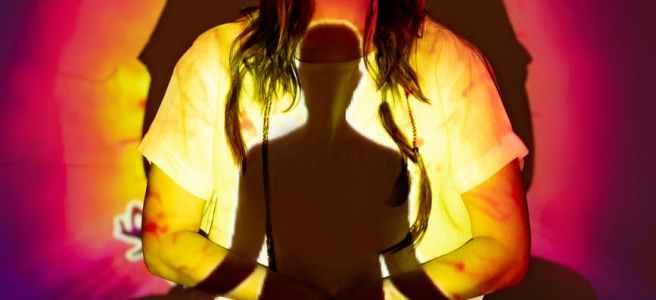
  • Make prayer hands. 
  • Lean forward slightly in a bow until your forehead and nose touch the mirror. 
  • Take two or three breaths, breathing in through the nose and out through the mouth. Feel your own warm breath bouncing off the mirror and returning to you.
  • Lean back and put your hands one on top of the other over your heart. 
  • Speak these words out loud to the person in the mirror: “I see you, divine child of my heart. Namaste.” 

Whatever happens from there, let it happen. You might cry. Let yourself cry. You might feel compelled to say words of affirmation or comfort. Speak them. You might just want to continue staring into your own eyes. Then do so. 

It’s possible even that nothing will happen. You may have no real reaction. But at the very least, you’ll know you were seen. I hope it was by someone who loves you. 

Namaste. 

I’d Like to Thank . . .

. . . my producer, my director, everyone in the cast and crew. 

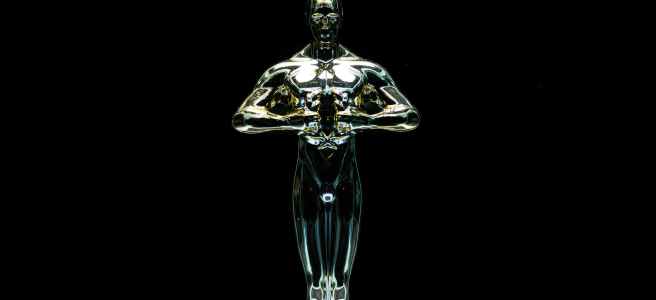
Who hasn’t, at some point in their lives, practiced their Oscar acceptance speech?  Or maybe yours was a Grammy or a Tony or an Emmy. This seems to be a fairly common undertaking, almost a rite of passage for many. We see people receiving great acclaim and being celebrated, and then we daydream about having that experience. We roleplay. We practice it.  

Humans like to win. We like to be celebrated. We seem to be hardwired for desiring acknowledgment and recognition and appreciation. We are primed and ready to accept our award. 

But most of the time when we use the word “acceptance,” it is not followed by the word “speech,” and it is not thought of as an opportunity for celebration.

We most often talk about acceptance as the reluctant agreement to acknowledge aspects of our life we don’t consider desirable.  Learning to accept our situation, whatever it may be, is often seen as a type of emotional maturity. Acceptance is the final step in the five stages of grief as outlined by Elizabeth Kubler-Ross. It is the first step in the Serenity Prayer — God grant me the serenity to accept the things I cannot change. In other words, acceptance is what we do once we’ve tried everything else. We realize we’re facing a situation that we can’t avoid or alter, so then, and only then, we step into the practice of acceptance. 

What if we treated the acceptance of life-as-it-is in a similar way to how we might accept that Oscar?  

If I was an Oscar nominee sitting in the audience and my name was called as the winner, I would stand up and walk on stage.  That is, in essence, a “yes.” You want to give me an award? Yes, I will accept it. The word “yes” has a transformative power. What if in the process of learning to accept something more unpleasant, we found a way to put “yes” in somewhere. 

“Yes, I am experiencing this situation.” 

Even before we have passed judgment or determined outcomes or engaged in any analysis, we can acknowledge with a “yes,” and that “yes” can signal to the brain and the body and the spirit to prepare for that which is good and positive and “yes.” 

After I walked on stage to receive my Oscar, I would deliver a speech.  This speech could be crafted in many different ways, but almost always its main ingredient would be gratitude.  When life hands me a challenge rather than a trophy, gratitude becomes even more necessary.

“Yes, I am experiencing this situation. I’m so grateful for every resource, friend, and belief I have to help me through.” 

In the moment of struggle, what we’re experiencing might not feel like a gift or an award, but the act of acceptance can have the same vibration in either situation. Accepting my present moment exactly as it is can be an act of gratitude and a moment of “yes.” 

Do You Believe . . .

 . . . in magic? I do.  

The earliest memory I have of magic is the way I felt at Grandma’s house at Christmas when I was a child — the tree, the presents, the family, and the midnight ham sandwiches because we all just wanted another excuse to be together, and it was Christmas, and the normal rules were suspended. It was a feeling not easily described with true emotional accuracy, and that’s either magic or poetry. 

My grandmother was the quintessential grandmother, the archetype of grandmothers.  She had a soft face and a perpetual smile. Her house felt safe, soft like her. She laughed readily and often. She loved with sincerity and gentleness. Grandma passed away in 1976, just a few months before my twelfth birthday. 

At some point in my early twenties, during a season of angst and despair, I stood out under a night sky, scanning the heavens until my eyes rested on the brightest star, what I once believed to be the North Star, but I now understand was probably Sirius.  Though I was at least a decade beyond my grandmother’s passing, she came strongly into mind as I stared at that star.  I decided the star was grandma, the one person who had always felt safe to me, the one person I believed I could have talked to about all my struggles, had she lived to see me through them.  And I poured my heart out to that star. 

This began a practice I have continued ever since. Problems spoken into a night sky transform into a magic that brings purpose to our challenges and healing to our wounds. They are met with answers, and if not answers, then a form of acceptance so deep and primal it feels like its own kind of answer.  And whether this magic comes from Grandma, or that star, or the simple act of breathing the air of the quiet darkness, it does indeed come. Sometimes profoundly, sometimes subtly, but it comes. 

This week is Halloween, Samhain in the Celtic tradition, followed by All Saints Day on November 1st for the Christian World and Dia de los Muertos or the Day of the Dead in Mexican culture. All of these observances, to varying extents, involve the interaction of the living with those who have already passed beyond the veil.  In fact, that veil between the incarnate and the spirit world is said to be at its thinnest on October 31st.  

On October 28 of 2013, eight years ago, my father passed away suddenly and unexpectedly. He was an otherwise healthy 71-year-old man who had been hiking just that morning. He was lean and muscular, still cutting a dashing figure and able to scamper over the East Tennessee mountains like a billy goat.  He lived that way even on the last day of his life, and then he sat down in his easy chair and had a heart attack.  We held his memorial on October 31. Halloween. 

When my grandmother passed, I was a child. But I was a middle-aged adult when my father passed. The grief was full-grown. 

In many ways, I felt him around me more intimately than when he was alive. There were times I knew that I knew that I knew that he had paid me a visit or sent me a sign. And I could talk to him about things we wouldn’t have touched when he was alive, our differences far too profound on certain subjects.  But now I knew him as a father who loved me not through a veil of disappointments or expectations, but with unlimited compassion and understanding.  

He became the other inhabitant of the brightest star in the sky, and Grandma seemed happy to share. 

So, on Halloween, or the next full moon or new moon, or any night, really, when a problem is haunting you or a general unease is hovering about in your person, try stepping outside and talking to whomever you believe might live in the brightest star.  There’s plenty of room for them there, and they are happy to listen as long as you need.  

And through that conversation can come healing and release and understanding and peace. 

And I call that magic. 

Practice makes . . .

. . . better. Practice makes that which once seemed difficult easier.

In athletics, and even in playing a musical instrument, or doing any other action requiring motor skills, practice can create something commonly called “muscle memory.” The repetition of an action makes the action more natural and less dependent on intense concentration. An accomplished basketball player might be able to spin a ball on the tip of her finger, for instance, a skill I would find immensely difficult and even, at least currently, impossible.  The basketball player does it almost without thinking. 

Our spiritual journey can also benefit from repetition.  That’s the part we call “practice.” 

I think it’s important that we differentiate between beliefs and practice. Someone can have beliefs with no practice. It’s also possible to have a practice without specific beliefs. But when we combine the two, we create a spiritual life that is alive and growing and engaged and the source of a consistent river of peace and joy that flows through our lives.  Perhaps most important, it is the ongoing practice of our beliefs that strengthens our intuition and allows us to be the primary guide on our own journey. It’s how we become our own guru. 

A spiritual practice can be almost anything as long as it occurs with some regularity and is meaningful to you. Meditation, yoga, mindfulness, mantra chanting, prayer, reading a spiritual text, listening to music that centers you — these are some of the more common spiritual practices. But a practice can also be planting flowers or looking up at the full moon or lighting incense or volunteering or acknowledging the four directions or making good use of that magic wand you bought on a whim at The Wizarding World of Harry Potter.  You give symbols their meaning, and whatever you decide is significant . . . is. 

The paradox is that it’s not the practice, but it is the practice.  Let’s break that down a bit. It’s not the practice in the sense that any physical action or practice we engage in within the temporal realm of ego and this physical existence is not inherently important. The Truth with a capital T is that the Divine Essence that you are remains the same regardless of any act you carry out.  Whether you meditate today or not, you remain the Presence of Divine Love. 

But, in this dynamic life, the life of time, the life of beginnings and endings, it sometimes takes a practice, even just a quick breathing exercise or making prayer hands, to remind us again, and again, and again, of who we truly are and what is truly real.  And in time, we create a spiritual muscle memory that helps us to live more consistently from the core of our being, the place where only love and peace and joy reside. 

That’s what practice can do.  It can help us uncover our Divine Nature, and it can help us live from that place more and more consistently all the time.  It can be the conduit to the the most important discovery of this life — the discovery of the Self. 

But there is one thing practice won’t do.  Practice won’t make perfect. Because it doesn’t need to. You already are.