One Thing I Learned in Sunday School

A few weeks ago, a friend of mine and I were having a chat when she asked me a question I had some difficulty answering.  We were discussing race relations/equality/justice and so forth, all issues about which I am infinitely passionate.  My friend asked, “Where did you get your intense devotion to issues of racial equality?”

Hmmm. . . where did I get it?  I can think of oodles of examples that nurtured it along the way, but the initial springboard seemed a bit of a mystery.

My friend asked, “Did you come from a liberal family that cared deeply about social justice?”

After L-ing a bit too OL (thanks for the line, Modern Family writers), I said, “No, that would not have been it.”  My family was about as equality minded as any other conservative white family in the 60s and 70s.

“Do you think it has something to do with being a lesbian?  You know, your own experiences with inequality naturally transferring to other minority experiences?”

I think that certainly has an impact on my ability to understand the pain of being on the shorter end of the “equality” stick, but still not the source.

I pondered this question further on my own over the next few weeks.  I wondered if, in the words of the sage philosopher Lady Gaga, I was simply “born this way?”  I’m sad to say that probably wasn’t the case either.    So, what was it?  Could I go back and discover the seed?  I pondered this question in depth, as I am wont to do with just about any single thing one can imagine.

Then I thought of Mrs. Soper.

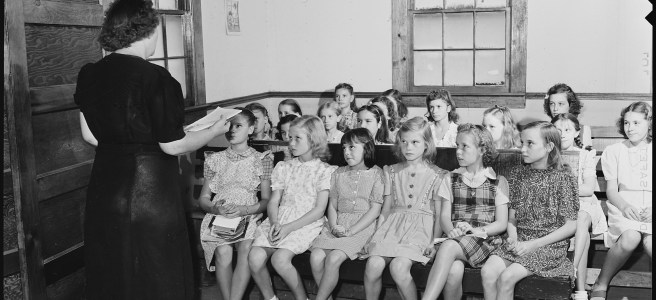
Mrs. Soper was my first grade Sunday school teacher.  If you had told me then that she was 112 years old, I would have accepted that without reservation.  I’m pretty certain she had taught the first grade Sunday school class for 86 years already by the time I arrived.

One Sunday morning, Mrs. Soper was asking for a volunteer, probably to lead the prayer.  No one jumped at this golden opportunity, so I started pointing my pudgy six-year-old fingers at each member of the class and reciting, “Eeny-meeny-miny-mo, catch a nigger by the toe . . . ”

Mrs. Soper pointed her gnarled, 112-year-old finger at me and snapped, “We don’t say that word.”

I slunk back into my chair, cowed and embarrassed.  There is no greater humiliation for a budding comedian than to learn that an attempt to be funny is not only not funny but horribly inappropriate.  Besides, I had enjoyed the protected status of preacher’s kid my entire life.  It was the rare and courageous adult who dared chastise me publicly.  Well, Mrs. Soper was both rare and courageous (in addition to being the mother of the church treasurer, the woman who wrote my father’s paycheck).

Until that time, the little engine in my spirit that could contemplate issues of social justice had only followed the track laid by my family.  In an instant, Mrs. Soper threw the switch and sent me in a new direction.

I have no idea if I ever said that word again in my childhood (I know that I haven’t as an adult, with the rare exception caused by academic or narrative necessity, as evidenced above, and usually not even then).  I would not be surprised if I did, but I can tell you one thing with certainty: I never said it again without thinking how disappointed Mrs. Soper would be with me.  In fact, every time I hear that word to this day, whether coming from the mouth of one of my students or in a rap song, I think of Mrs. Soper.

It’s not an easy responsibility for an adult to undertake, to transform a child’s ignorance into a choice they can never make again without knowing it is a poor one.  I have done it in the past when my nieces were younger, and let me be the first to tell you, I didn’t enjoy it.  It was embarrassing for them and unpleasant for me.  But, I also know they remember those instances as clearly as I remember Mrs. Soper.

The writer of the Proverbs said, “Train a child in the way (s)he should go, and (s)he will not depart from it.”  I think the part of the verse that gets most overlooked is the concept of the true way to go.  I learned lots of stuff in church that I have long since abandoned, but I have never departed from the track Mrs. Soper switched me to.

From now on, if anyone should ask where I get my passion for social justice and equality, I know exactly what to say — “Mrs. Soper.”  She planted the seed which my life experiences have watered and nurtured.  But, she planted the seed.  Would that we all  contributed to the gardens of the young people in our lives in such a profound way.

What 9/11 Didn’t Take

There will be a lot of remembrances of September 11, 2001, taking place today.  I won’t bore you with my personal memories when I know you have your own.  But, after the shared horror and devastation of 10 years ago, I will tell you this:

I still believe that war is not the answer.

I still believe that love is stronger than fear.

I still believe that an open hand is stronger than a clenched fist.

I still believe that a country that welcomes others to her shores is better for it.

I still believe that religious diversity and tolerance must be a part of a truly democratic nation.

I still believe that people are basically good at heart.

I still believe that the Osama bin Ladens of the world are the aberrations.

I still believe that a “War on ____________” breeds more ___________.

I still believe that retaliation never brings closure.

I still believe that kids and schools and communities are more worthy of our time, attention, and money than are bombs and guns and political posturing.

I still believe in liberty and justice for all.

Pat Summitt: Queen of the Court

I am a Pat Summitt fan from way back.  I know that doesn’t make me unique.  It is always interesting to hear someone claim to be the “#1 Fan” of someone like Summitt.  I understand why someone might say that; it’s a fan’s way of saying, “No, I really, REALLY love her.”  But the fact is that a lot of people love her.  I’m satisfied just being among that group.

Today is “Wear Orange for Pat” day.  Just a few days ago, Summitt announced that she had been diagnosed with early-onset dementia at the age of 59.  Like several other people I’ve talked to, I remember watching a few games last year and thinking, “Pat doesn’t look good.”  There was something in her eyes that seemed different.  But, those subtle hints didn’t make this announcement any less shocking.

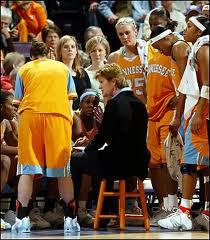
Pat Summitt began her career in a dead-end profession: women’s basketball.  She began coaching the University of Tennessee Lady Vols when she was still a graduate student and Title IX was in its infancy.  It is hard to find a comparison for what she accomplished in almost single-handedly creating women’s basketball as we know it today.  Perhaps Henry Ford comes closest.  In our celebrity-driven culture, Pat Summitt is one of those rare celebrities who earned every ounce of her renown and paid for every magazine cover and sports article with sweat and determination.

This blog post started out to be a discussion of how people are diagnosed with early-onset dementia every day.  And where is their parade of orange?  It started out to explore the rather morose obsession we have with whatever illness a celebrity has.  Thousands of people suffer anonymously until a famous name makes an announcement of a recent diagnosis and suddenly it becomes the illness-of-the-week.  Honestly, how long do you think it will take for the Pat Summitt Dementia Care and Research Unit to become a part of the UT Medical Center?  Must we have a celebrity connected in order to care about (and fund) disease research?

That was SUPPOSED to be my blog post today, a minor rant on our nation’s Celebrity Obsession Syndrome.  But, . . . this is Pat we’re talking about.

I stood in line at Davis-Kidd years ago to get her signature on my newly purchased copy of her book.  Me, and about a thousand other people.  I watched every televised game of the three seasons which brought back-to-back championships in ’96, ’97, and ’98 (the Lady Vols have won a total of eight national titles, all coached by Summitt).  I shook my head in amazement over the years as she broke record after record.  Now, even the fact that she is the all-time winningest coach in NCAA Division I basketball (men or women) has become somewhat old news.  Most importantly, I admired the way she found to win consistently while never losing sight of the importance of education for her student-athletes.  One of the most honored moments in a Lady Vol’s life is when she gets to sign the pole in the locker room, and she only gets to sign the pole when she graduates from college; it has nothing to do with basketball.

I’m not so much a women’s basketball fan as I am an admirer of anyone who practices and perfects the specific purpose of her life.  The mode of Summitt’s accomplishment is completely secondary; the accomplishment itself places her on a par with some of the greatest names in history.  Excellence that pure is incredibly rare, and Pat has it.

I wanted to kibitz and quibble about the sudden awareness of early-onset dementia now that a famous person has it and put forth at least a soft indictment of our obsession with celebrity.

But this is Pat we’re talking about.  This is Pat.

Deb’s Life: Take 48. And . . . Action!

For the last 29 years, I have been primarily focused on, motivated by, and invested in a primary relationship.  For those who know me, you know it hasn’t always been the same one.  There have been two profound and lengthy relationships, ones which I would call “marriages” despite the legal limitations.  Those two relationships dominated the last 18 years.  There were others, not as long but also important.

During those 29 years (and, yes, every time I write that number I taste a little vomit in the back of my throat), my energy, my earning power, and my ego were all wrapped up in the identity I clung to as one half of a coupled whole.  I heard myself introduced as the unit so often I now have to remind myself that my first name isn’t actually “Deband.”

These relationships were deeply important to me, and I certainly don’t want anything I write to imply otherwise.  My most recent relationship, especially, is still a tender place deep within that alternately sends waves of sadness and release flooding through my spirit.  I mourn it daily.  But, this particular post isn’t really about that, . . . the “that” which is still too real and close and painful to take life in the written word.

This post is about what I didn’t focus on for the past 29 years.  My drive, my natural abilities, my career, my professional fulfillment.  It is about the Ph.D. I didn’t get (yet!), the job security I didn’t manifest, the retirement fund I didn’t build.  This is not the fault of my relationships; it is the fault of the way I was in my relationships.  I operated on the principle that relationships always took priority, but I never realized how I neglected my relationship with myself.

I was a hell of a partner in many ways.  I knew how to show up, support, be strong.  I knew the characteristics of a “good partner,” and I knew just when and how to display them.  I knew how to appear the way I knew others, my partner AND friends and family, expected me to appear.

Some might say I was playing a part.  If you are currently mad at me, your verbage would be that “it was all a big act.”  But the only act a person can keep up for 10 years (18 years, 29 years) is a delusion perpetuated on self.  A consciously directed duplicity would be a role that I, for one, could never maintain for an extended period without breaking out of character.

What really happened is this:  I loved some people really well for a long time over the last three decades, but I never had the proper perspective on where I fit in those equations.  I helped to create a sense of home and family, but I forgot to build in my personal aspirations or pave a way for my core needs to be met.  Deband was all over it, but Deb was nowhere to be found.

So, I’m 47.  I’m filling out grad school applications.  My car is the bottom-of-the-line Toyota, the kind I would have bought at 22 when I still could only dream of the cars I would yet own.  I fold my own clothes and toast my own bagel.

I have two dogs and a five-year plan.  Most importantly, I have me.  Perhaps for the very first time, I have me.