How an Election Set us Free

I’ve spent a considerable amount of time wondering why Donald Trump is the President-Elect of the United States.  This is not the kind of “why” that is actually asking “how.”  I’m not contemplating what did or didn’t get said by the Trump Camp or the Clinton Camp to Rust Belt workers or West Virginia coal miners or disillusioned Bernie-or-Busters.

No, this is a true why.  If every development in life has meaning (and I believe it does), then what is the meaning here?  If every event has purpose (and I believe it does), then what is the purpose now?  In other words, why?

I believe there are probably scads of answers to the why, maybe one for each of us.  I may have landed on one that works for me, though.

There is a concept called “American Exceptionalism.”  It is the belief that America’s history (including her world-changing Revolution) and democracy (which the rest of the world needs, of course) place this nation in a superior position.  It is the belief that the United States is truly exceptional, truly better than the rest of the world.  This belief is so widely held in political circles that President Obama was “accused” by Louisiana Governor Bobby Jindal of not adhering to it, a claim that might be considered “fightin’ words” to many on Capitol Hill.

This sense of American Exceptionalism oozes from the pores of our society.  We see it in the cocky strut of an NFL player scoring a touchdown.  We hear it in the chants of “USA! USA! USA!” at the Olympics.  Any teacher can vouch for the unearned level of confidence displayed by a student population that ranks unremarkably in the middle of the worldwide pack in science and math.

The truth is we’re not exceptional.  This is especially true for those, like me, who believe in the unity and equality of all humanity.  Yes, we had a remarkable Revolution and established an early model of modern democracy.  I know how profound all of that was; I teach it on a fairly regular basis.  But we didn’t invent democracy, the Greeks did.  And we didn’t win a revolution on our own; the French helped considerably, as did others.  And in the midst of lofty ideas of civil liberties were the more base motivators of taxes, trade, and economy.

No, we’re not exceptional.  We’re another link in a long chain of human evolution.  We have some truly admirable qualities; we also have many that are not.

In 1630, John Winthrop preached a sermon to Puritans on board the Arbella.  The sermon was called “A Model of Christian Charity,” and in it he referred to the society they would form in the New World as “a city upon a hill.”  The phrase comes from Jesus’ Sermon on the Mount, but since Winthrop, it has been synonymous with first the colonies and then the nation.  The concept maintains that this “city upon a hill” is a model for the world.   It was not merely a 17th century idea.  John F. Kennedy, Ronald Reagan, George H.W. Bush, and, yes, Barack Obama all made references to it during various speeches.

And that brings us back to Donald Trump.  During the 2016 Presidential Campaign, Mitt Romney made this statement about Trump:  “His domestic policies would lead to recession; his foreign policies would make America and the world less safe.  He has neither the temperament nor the judgement to be president, and his personal qualities would mean that America would cease to be a shining city on a hill.”

And there’s my why.  We’ve thought we were hot shit quite long enough.  We’re not.  We sometimes make terrible mistakes.  If we can manage some humility, we might learn something through this.  At the very least, we can finally put down that heavy mantle of greatness we’ve lugged around for so long.

Let’s Ask the Atheist to Say Grace

IMG_0573.PNG

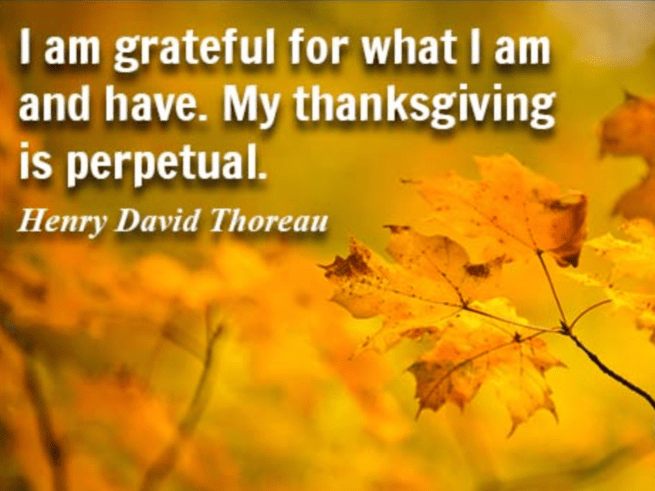
In First Thessalonians, the Christian New Testament tells us to give thanks in everything.  The Psalmist of the Old Testament bathed in gratitude.  The Quran tells us that “any who is grateful does so to the profit of his own soul.”  The Buddha taught gratitude as the response to both a kindness and a slight knowing that both contain lessons, the latter often more so than the former.  Hindu practice hinges on living from a place of constant gratitude.  Countless examples of Native American literature emphasize again and again the practice of gratitude to the Great Spirit.

I could go on, but I believe my point is made.  Spirituality, religious identity, holiness — whatever you want to call it — exists in gratitude, regardless of which brand name you prefer.  Thankfulness is perhaps the most consistent element in the history of religious thought.

But, what about those pesky atheists?  Can they even DO Thanksgiving?

I’ve heard people ask that question before.  The assumption underlying this question is that gratitude requires a celestial being as the source of all giving to whom one expresses thanks.

I read a story this past week that came from Hasidic teachings which I will (grossly) paraphrase here.

The student asks the teacher, “Teacher, why did God create atheists?”

The teacher replies, “To teach us compassion.  When an atheist sees a person in need and responds to that need, he does so not to win favor with his God, but simply to act compassionately.  Whenever you see someone in need, you should become an atheist.  Act from a heart of pure compassion and remove any possibility that you are acting out of a selfish need.”

Perhaps also in Thanksgiving we should be atheists.  Rather than thanking whatever your version of God might be — man on a cloud or ethereal energy — perhaps consider who actually provided that for which you feel grateful.  Thank the farmers who raised the turkey and threshed the wheat and bogged the cranberries.  Thank the factory worker who assembled the car you drove over the river and through the woods.  Thank the furniture maker who built the couch you can potato on all afternoon watching football.  Thank the football players who gave up their holiday for your bash-’em-up pleasure.

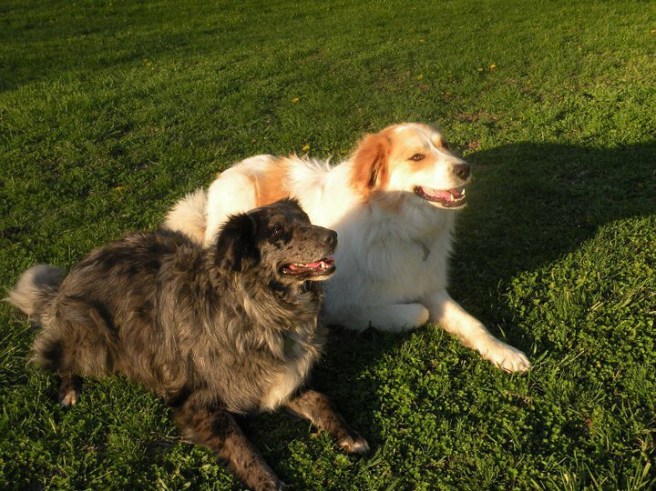
Thank the breeder who raised the puppy who “helps” you cook.

Now, it just so happens that I believe there is a Source in the universe (though I lean  more toward ethereal energy than man on a cloud).  I have no problem thanking that Source for everything in my life.  Here’s the thing though — when I thank the farmer and the factory worker and the football player, I feel gratitude to both the conduit and the source at the same time.  If I just thank the source, well, I sorta’ skip the middle man.

We are the brokers through which Divine goodness flows from source to other people.  We show up as God in each other’s lives all the time.  I have to believe that being grateful to each other pleases God, however you see her.

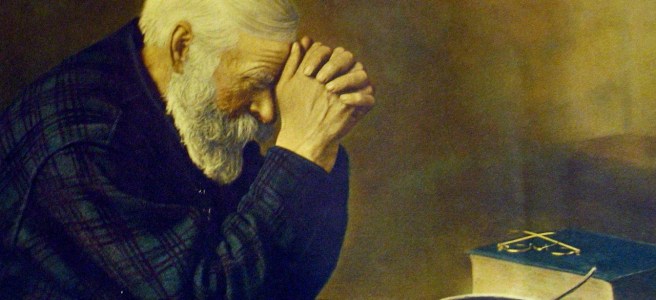
So when the big feast starts, bow your head and give thanks, if that’s your preference.  Just don’t forget to kiss the cook as well.  And, always, ALWAYS, ask the atheist to say grace.  You know, just for shits and giggles.

How Do You Say “Safe Space” in Conservative?

The student held the placard boldly over her head.  “No Safe Spaces Here,” was printed in handwritten scrawl.  The protective part of my Aries nature kicked into high gear.

Those of us who work in higher education operate from the position of in loco parentis, a Latin term meaning “in place of the parent.”  Our students are adults (barely) and have a lot of freedom, but they are also in our care.  One of the first responsibilities we have is to keep students safe, hence the endless emergency drills and sexual harassment trainings.

Seeing this sign, I thought first not of the person holding it but of the students walking by and reading it.  I summoned all of my authoritative energy and approached the small band of protestors.

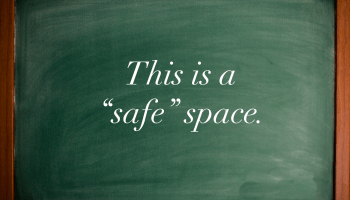
In the short exchange that ensued, I became aware that our primary difference rested in a basic communication challenge.  We were, quite simply, defining terms differently.  I define “safe space” as a place where people of diverse races, religions, sexual orientations, and ideologies can relax in a sense of security and personal safety.  This group of students defines “safe space” as a pansy-ass kowtowing to political correctness.  They interpret the phrase to mean a restriction of free speech, while I see it as fertile ground for free speech, albeit while maintaining a level of mutual respect.   They see it as a liberal agenda to make everyone warm and fuzzy (which is a perfectly fine agenda, in my personal opinion), and I see it as the very philosophy that allows them freedom to express without fear.

Despite the difference of definitions, I had to wonder why anyone would ever want to send the message “No Safe Space Here.”  Do we only allow dangerous spaces here?  Is this a demand?  A warning?

Interestingly enough, I had already been thinking about definitions this week.  In fact, I was toying with the idea of posting a Facebook request to my conservative friends to define “conservative” as they understand it.  I was beginning to think that perhaps the real problem is that we simply define our terms in different ways.

I think many conservatives define a “conservative” as a fiscally-careful, small-government, bootstrap-pulling individualist while many liberals would define a “conservative” as a racist, homophobic, misogynistic, gun-loving bully.   Conversely, I think many conservatives define a “liberal” as an out-of-touch, tree-hugging, politically correct socialist while many liberals define a “liberal” as an intelligent, sensitive, big-tent/big-picture lover of democracy.

We are quite simply speaking two different languages.  We’ve created code words and buzz words and spun words until we sometimes aren’t quite sure what our own side is saying, let alone the other.  It is so rare to hear a politician speak in a simple, declarative manner that we become practically weak-kneed when they do.  We ask for clarification on matters, the politicians dance around it, and then we whimper back into the woodwork with a mild, “well, ok, then.”

Before I left the exchange with the protestors, I turned to the few students who had gathered.  “My office is SRB 317.  It is a safe space if any of you ever need one.”  I don’t know how to fix the linguistic challenges we face as a nation, but I do know how to do parentis, and I’m a flat-out genius at loco.  While we figure it all out, my students will have a space space.  And we can play with puppies there.  And sing “Kumbaya.”

Elect to Love

“It’s really a wonder I haven’t dropped all of my ideals, because they seem so absurd and impossible to carry out.  Yet I keep them, because in spite of everything I still believe that people are really good at heart.”  ~ ~ Anne Frank

Like so many others, I woke up this morning enveloped with despair.  How could this be?  What didn’t we do?  What does this say about us?  Something that seemed so certain slipped out of our fingers as surely as if we were trying to clutch at vapor.  And then, along the way, there have been moments of such sweet serendipity that I have been moved to tears in their preciousness.

One of my first acts of the day was posting something to Facebook.  It was my attempt to set the tone for how I would respond to our new reality.  I wanted to convey a peaceful resolve.  A family member from the other side of the political spectrum commented in appreciation for my stance.  We sent a few kindhearted messages back and forth.  I asked for his help; after all, his party won, and those in my tribe need folks like him more than ever now to hold our new leader to the highest standard.  He assured me he would do so.  And then he wrote, “Deb, I lock arms with you.”

At first, I admit, I felt the internal confusion that comes from seemingly mixed messages. I wanted to say, “How can you cast your support in the direction of one who promises to restrict and remove my freedoms and then say that you lock arms with me?”

And immediately a new thought fell in line behind that one.  I realized that I had a choice.  I could chew on the mixed message or I could savor the sentiment of unity.   I could focus on the confusion or I could focus on the connection.

In every moment, we are called to be better people.  We are called to love each other with a spiritual fire.  We are called to shine a light on the best in each other; and we are called to remind each other that everything else is not the truth of us.  We are called to inspire and uplift and encourage.

But also in every moment we are given another option.  We can dive into the depths of suspicion and discontent.  In every single opportunity we have to shine, we can decide on the darkness.

We have to choose.

I gathered my students in a circle this morning and talked to them openly and honestly about this election, about the fear a lot of people have, and about the personal impact it has on me as a lesbian.  I told them that nothing about this election can take away our freedom to decide each morning just how we want to show up in our world.  I told them that love is still stronger than fear.  I told them that love comes a lot easier when your side wins, but the love that you have to reach into the depths of your soul for and muster in the face of defeat is the one that is actually, bygod, love.  And I told them that no matter how they feel today, whether joyous or forlorn, we’re all still going to make it through.

In other words, I told them that I lock arms with them.  And we all felt a little better, a little safer, and a little more assured that everything would be okay.