Why Interfaith

Interfaith is a term that can be used in two distinct ways: first, interfaith can mean, and usually does mean, when people from different religious traditions join together for a common purpose. This is big. This means that people who identify with a religion that is probably more than just a religion — it is probably also culture and family and possibly even geopolitical ideology — decide to love and welcome and interact with and respect people of other faiths.

But there is another way to define interfaith, and it’s the one with which I most resonate. For me, interfaith is not just appreciating other traditions, but dipping into them as I feel called, creating my own syncretic faith, which, truth be told, is ultimately what we all do to varying degrees.

Picking one great wisdom tradition to claim as a sole identity would be like tilling a half-acre garden and then planting only marigolds. It would be like fielding a Super Bowl team with 11 running backs. It would be like trying to write a great symphony using only B-flat.

From Buddhism, I learn zen and mindfulness. From Judaism, I learn history and tradition. From Islam, I learn reverence and devotion. From Hinduism, I learn true yoga and the wisdom of non-duality. From paganism, I learn to honor the earth and recognize my place on it. From Christianity, I learn compassion and grace. From atheism, I learn respect for science and reason. From Sikhism, I learn service and kirtan worship. From Baha’i, I learn unity and peace.

Should I go on? Because I could. So many gifts from so many sources — how could I ever choose one?

Being a minister from this perspective means that no matter what spiritual identity a person claims, I will hold space for hope and divine connection on their behalf, offer my support for their journey regardless of which path they are on, and rejoice in their spiritual evolution, even if it looks nothing like my own. I will love Jesus with them and chant the name of Shiva with them and revere the Prophet with them. I will pray for them, meditate with them, light a candle for them, or sage them. I will accept them fully even as I am accepted fully by the One Supreme Being with whom I have my most precious relationship.

What a beautiful and glorious work is that to which I have been called. I live in a state of wonderment and delight that the Divine has entrusted me with this sacred task.

Peace be unto you. Om.

How Hinduism Made Me Love Jesus Again

The first Hindu I met was Mahatma Gandhi.  Actually, it was Ben Kingsley in the epic 1982 Richard Attenborough film Gandhi.  I was a senior in high school, and the life of the man who was arguably the most important worldwide figure of the 20th century was, for all rights and purposes, beyond me.  But I remember one statement made in the film and by the actual Gandhi himself: “I like your Christ; I do not like your Christians. Your Christians are so unlike your Christ.” 

Little did I know that hearing that sentence may well have been the first step of my thousand-mile deconstruction journey.  For the next several decades, I would lean farther and farther away from the fundamental, evangelical, protestant Christianity of my childhood and deeper and deeper into the freeing, expansive, profound spirituality I came to realize was ultimately Advaita Vedanta, a.k.a. Sanatana Dharma, a.k.a. Hinduism. 

The religion I left behind was a set of rigid beliefs. Because of that rigidity, it only took one question, one moment of doubt, one raised eyebrow to bring the whole shebang tumbling down. There was great serendipity in the church’s homophobia — it broke the chain binding my questioning mind. 

The spirituality I embraced was a direct experience of Divine Presence.  Advaita Vedanta is the spiritual path of non-dualism.  Rather than a God who is Thou and a me who is pathetically crawling toward the cross, nondualism recognizes the Oneness of all creation, the Unity of all life.  On this path, God is not a being you seek or invite in — She is already there, in you, in me, in all of us, . . . the very life of all of us. 

As I began to know a few more Hindus, I met some who actually keep a picture of Jesus on their home altar right next to their statue of Krishna.  I began to realize that what Gandhi had said all those years back was a fairly common opinion. Hindus had no trouble with Jesus. In fact, many Hindus deeply love Jesus. The Hindu mystic and teacher Ramakrishna even placed Jesus into the Hindu pantheon in the 1870s. This non-restrictive acceptance of any worthy guru opened the door for my own reconsideration.  

I began to read the gospels again through Hindu eyes. I began to see the nondualism of Jesus so clearly.  How had we missed it?  If “the Father and I are one” and “you will do greater things than I have done,” then the Father and this I were one also; the Mother and I shared the same DNA.  Jesus didn’t come to set himself apart; his entire life was one of connection, compassion, and oneness. Considered away from the rigid set of beliefs, I began to see him anew.  

The French poet and writer Charles Pe’guy (1873 – 1914) wrote that “Everything begins in mysticism and ends in politics.” The Benedictine monk David Steindl-Rast (1926 – ) paraphrased it more directly: “Every religion begins in mysticism and ends in politics.” 

The church of my youth has turned into a political force.  But Jesus started it all in mysticism, and that was the Jesus I learned to love again. Not as a Christian. Not even as a Hindu. But as a devotee of Oneness.  

Just like him.     

Letting Everything Go

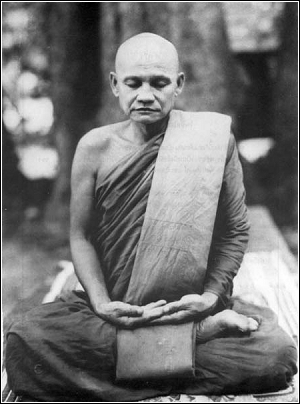
Ajahn Chah (1918 – 1992)

Letting everything go is the spiritual concept I return to over and over. I have spiraled up through the years, elevating my consciousness, but always returning, again and again, to the need for something to be released and the lessons brought by letting go.

The practice of releasing attachments started as a wall against which to kick and scream and beat my head. Over time, it became a closed-bud promise, the kind I knew would bloom one day but still tightly shut against full surrender. Eventually, ever so slowly, the lotus began to open, and wisdom wafted forth like a fragrance in the air.

The Thai Buddhist monk, Ajahn Chah, said, “When the heart truly understands, it lets go of everything.” For me, the opening of the lotus was initiated by the first part of that sentence. During times when releasing everything seemed downright impossible or even a bit irrational, I would choose to focus on a deep and consuming desire for a heart that truly understands. If I couldn’t quite let go, at least I could lean into love. And when I couldn’t do even that, there was always grace.

Grace is when our hearts feel the pull of the divine even while we maintain our death grip on our ego’s desires. Grace is the sacred ability for even our attachments to become guideposts to spiritual awakening. Grace is knowing we are only love even while still feeling the pull of our needs and wants and attachments.

Ajahn Chah also said, “Anything which is troubling you, anything which is irritating you, THAT is your teacher.” And the primary lesson it teaches us is that all the time we’re thinking it has its claws in us, we actually have our claws in it. We can open our hand, open our heart, and learn once again the freedom of letting go.

And when we’ve let go of everything, . . . then we are free.

Cat-tain America

I thought a new cat was a good idea.  After saying goodbye to Shasti through tears and heartache in the vet’s office a couple years ago, it seemed that it was time.  My dog, Buddy, needed a pack mate, and I needed a four-legged family member who would pose for pictures.  

And then kismet got involved.  Oliver was born into a litter on an Arkansas farm, the inhabitants of said farm being the mother and father of a friend at work, this friend choosing to post irresistible pictures of six-week-old kittens on Facebook, and this author deciding all of this was divine timing.  I IM’d the friend, and she drove back to Tennessee with Oliver in a crate.  

Oh, my doodness.  Little kitten nose and little kitten paws and little kitten meow.  How could I have known he would become a terrorist?

The first few months weren’t bad.  He was still small enough to lock in a bathroom when we weren’t around, and his peanut brain was still unaware of options that would render this situation unacceptable.

Then he got bigger.  And wiser.  And faster.  

And more evil.  

It began with the peace lily.  That peace lily had never done a thing to that cat, but somehow it seemed a perfect catnapping location.  I woke up one morning to find gorgeous long stems bent at ninety degree angles and two green eyes mocking me from the bed made of the stalks.  

I bellowed like a bee-stung grizzly.  “Damnitolivergetout!  Get out!  GET OUT!

I propped up the stems the best I could, trimmed away those with no hope, and readied my spray bottle in case he attempted to return.  He did several times, which caused me to bellow anew and run through the house like a lumberjack chasing a leopard and spraying water on the couch, the coffee table, pictures, the television, drenching everything except the actual cat.  

The next morning, I met the same situation.  More peace lily lost to the warmonger.  More bellowing.  More spraying.  

The third morning, the same.  But it was now my fault.  I’d had plenty of time to build a privacy fence around the peace lily.

Next came the furniture.  The couch held up pretty well, but that one chair, MY chair, the chair with words printed on it that makes me feel like a writer when I sit there, sipping tea, listening to Beethoven, and getting lost in Google quicksand because I need to know what year zippers were invented, that chair has only one natural predator – Felis catus.  

When I catch him with claws ripping through my writer’s chair, I snatch him up, take him directly to his scratching post, and demonstrate scratching behavior.  He has yet to follow my lead, but my nails look like Dracula.  

He’s not stupid.  That I know for sure.  He learned what a spray bottle does in one squirt.  In fact, we’re on our third spray bottle because he destroys them when we’re not looking.  He knows that the beep of the alarm system means the door to the sun porch has been opened, and he makes it there from any location in the house with a speed that would bring tears of joy to Pavlov’s eyes.  And he knows the specific sound made by the barely audible whoosh of air created by the almost silent opening of the plastic container in which his food is kept.  

But “no”?  Oh, no.  His only response to “no” is a meow that bears a strong resemblance to “je ne parle pas anglais.” 

I thought it was the final straw when I watched in slow motion as he stretched to full height, curled his paw over the lip of the pot holding the Hawaiian Ti plant, pulled to lift himself up, tipped the pot off the plant stand, sent pot and plant hurtling to the floor, the pot busting into pieces, dirt skidding across the hardwood, plant coming to rest sideways on the ground like an injured soccer player, dog looking on in disbelief, me bellowing, “Daaaaammmmnnniiiiiitttttooollllliiivvveeeeerrrrrrr!”  The world resumed normal speed as the cat dashed by me and into his secret hideaway under the bed, just out of arm’s reach. 

After about 20 minutes of recovering the scene in an appropriately dramatic fashion wherein I called that fur-covered tornado every name in the sailor’s book of nasty names, I started to ease off my demand for his banishment.  The broken pot revealed plant roots squeezing through the hole in the bottom indicating a re-potting was past due, so maybe it wasn’t so bad.  While sweeping the dirt that had slid under the sideboard, I swept up an errant ten dollar bill and grinned like I had done something praiseworthy.  Then I went to the store to buy a new pot and found the most adorable royal blue and teal pot that would perfectly match the sun porch decor, and on the way home I felt myself shifting in the direction of feeling bonafide (sigh) gratitude for the damn cat.

He’s not so bad I suppose.  He snuggles like a baby in the mornings. He settles down sometimes in the afternoon and watches TV from the armrest of the couch.  He sneaks under the covers at night to spoon my back, blanket up to his chin like a child. 

Sure, some days he’s the Scar to my Simba.  He’s the Shere Khan to my Mowgli.  He’s the Mr. Bigglesworth to my Austin Powers.  

But other days, . . . that cute little nose, those cute little paws.  

Oh, my doodness.  

© 2020 Deb Moore, All Rights Reserved